The FAaST Track: Enabling Advanced Packaging Through Electrical Process Control
The semiconductor industry is entering an era where packaging innovation is as important as transistor scaling.
Artificial intelligence, high-performance computing systems, advanced smartphones, automotive electronics, and next-generation networking platforms increasingly depend on advanced packaging technologies to deliver the bandwidth, power efficiency, and functionality these applications demand, often in increasingly smaller footprints.
While much of the advanced packaging process control discussion focuses on defect detection, some challenges take of the form of subtle electrical conditions that can impact downstream yield, device reliability, and manufacturing consistency. These electrical effects are often invisible to traditional inspection and metrology methods, yet they can negatively affect downstream process performance, device reliability, and overall yield.
Residual charge control has emerged as a particularly important requirement for advanced packaging.
As manufacturers adopt new package architectures, they are also introducing a growing number of hygroscopic films and materials which are often combined with insulating layers and substrates. These materials require tighter environmental control, and in drier environments, residual and static charge can become a significant process concern. Plasma-based processing, deposition, cleaning, surface preparation, and bonding steps can further generate localized charge buildup across wafers and panels.
Read more here.
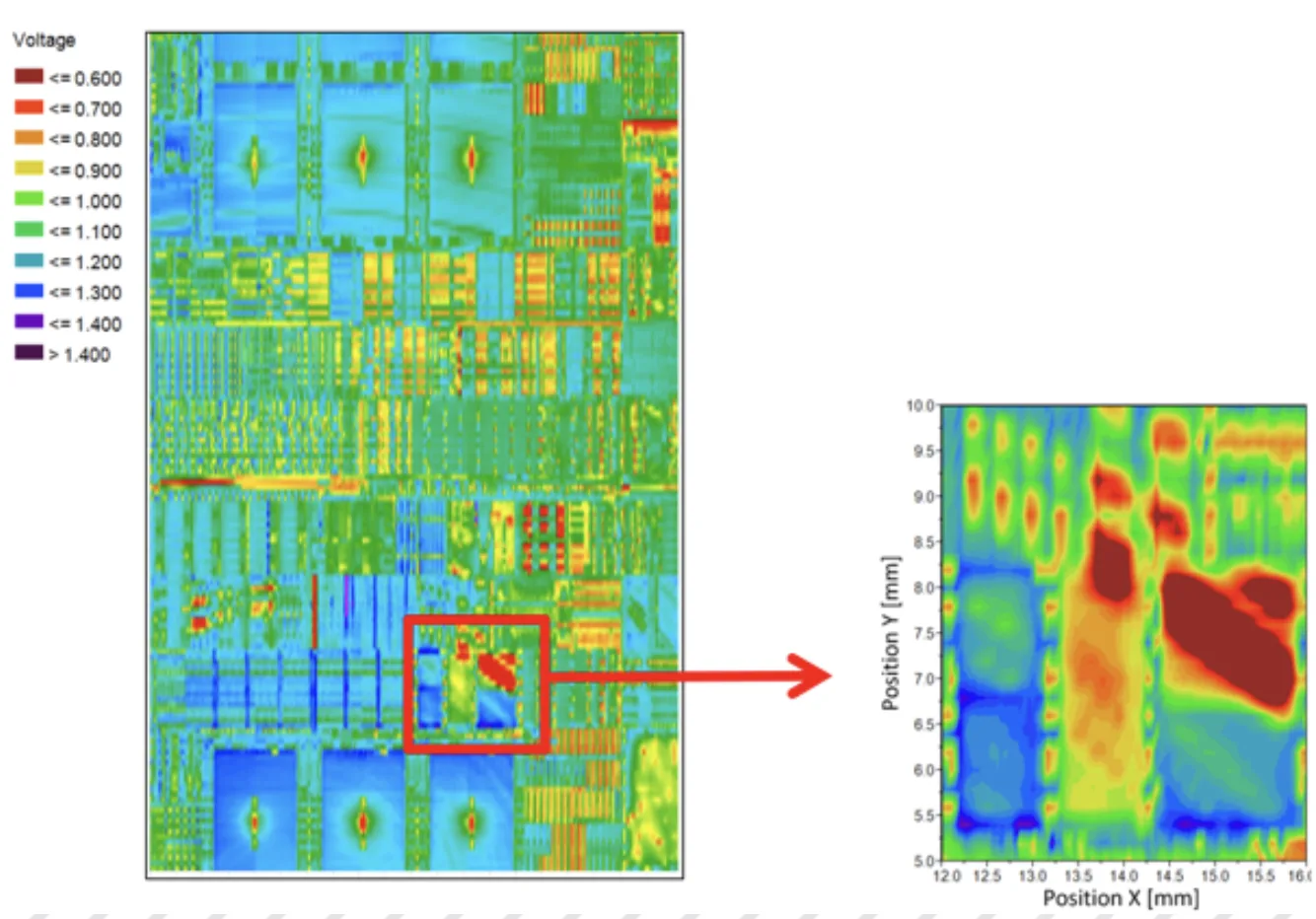
Fig.1: Full wafer mapping highlights local non-uniformities (left). High resolution panel level mapping identifies patterns and localized hotspots (right). Source: Onto Innovation
The post The FAaST Track: Enabling Advanced Packaging Through Electrical Process Control appeared first on Semiconductor Engineering.