Once called ‘Future Boy,’ Shaun White is now shaping snowboarding’s future
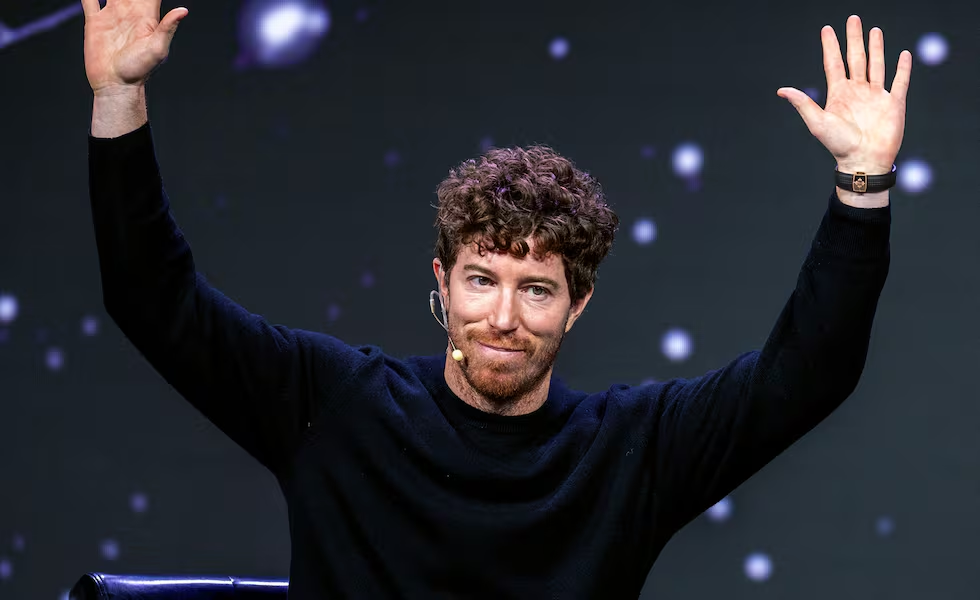
Someone hung the nickname “Future Boy” on Shaun White when he arrived on the pro snowboarding scene as a 13-year-old prodigy more than 25 years ago.
A story I wrote for the Deseret News in 2003 carried the headline “Snowboarding sensation proves the future is now.” White was barely 17 when I interviewed him between training runs at the U.S. Grand Prix halfpipe contest at Park City Mountain Resort.
He narrowly missed qualifying for the 2002 Salt Lake City Olympics, but an American sweep — including bronze medalist JJ Thomas, who edged out White and would later become his coach — in the halfpipe put snowboarding on the map, setting the stage for the career he has today.
White won seven halfpipe and slopestyle contests the following year, including both events at the Winter X Games. His prowess and personality landed him in ESPN the Magazine, Sports Illustrated, a made-for-television surf, skate and ride competition called “Triple Threat,” and MTV. But that was just the start.
I caught up with White for the first time in 23 years backstage at the Zero Gravity Summit in Salt Lake City. He and actor Ty Burrell were the final speakers at the annual technology and national security conference hosted by the Utah-based aerospace and defense industry advocacy organization 47G. Their fireside chat was titled “Built to Win: Performing at the Highest Level.”
Before he went on stage, I asked White about the “Future Boy” nickname.
“I don’t remember how it came about, but there was a couple nicknames floating around like that. And I remember being flattered when I heard it, but then I got annoyed by it because I was like, ‘I’m doing it now, you know?’” he said.
“I think that just came about because I was probably one of the only kids on the scene when I first started. And then slowly kind of — actually quickly — started riding pro with all the guys. I was like nipping at their heels, and I finally made my way up.”
Snowboarding sensation proves the future is now
Reaching the mountaintop
White, 40, did indeed make his way up. And the fame and fortune came hard and fast for a kid whose world at the time consisted of traveling to snowboard events with his family in a van.
Over the next nearly two decades, he competed in five Olympics, winning three halfpipe gold medals. He hauled in 23 Winter and Summer X Games medals along with hardware in other major snowboarding contests. His fame extended well beyond the halfpipe, with movie cameos, late-night television appearances and a stint playing guitar in a rock band that performed at Lollapalooza.
Along the way, the redheaded White shed another nickname he’d picked up in his later teens: “the Flying Tomato.” He didn’t care for that one, either, as he transitioned into an adult athlete, entrepreneur and business executive.
Asked to identify something that people assumed about his career that he wished he could correct, White said some thought “I was all business, that I was like, you know, Mr. Athlete, super serious training, all that, like that consumed my world ... because a lot of interviews portrayed me as that,” he said.
“I really felt like that was a part of me, but it was definitely not me. I’m always making jokes. I’m having a good time. We were having a lot of fun during those touring years ... It was all business when I got to the mountain because I wanted to win and I was dedicated. There’s a lot of work-play going on.”
White’s easygoing celebrity persona often contrasted with coverage of his intense pursuit of success on the snow. “I kind of danced between the two really well. I felt like I was having fun, but I was so dedicated, you know?”
Shaun White, his coach and a protégé featured in new Warren Miller film
17 going on 40
What would the teenage Shaun White find most surprising about his life today?
“Just how in control I am of everything now. Because I think at the time, teenage me, I was just kind of like grasping at sand. I’m trying to build my career, I’m trying to manage my family relationships, other relationships, business ventures,” he said. “All this stuff going on, and I was just kind of juggling things, you know, but I’ve really found this really amazing place in my life now where it’s kind of solidified and I really have a grasp on everything.”
White launched the snowboard and apparel brand Whitespace after the 2018 Winter Games. The name is an obvious play on his last name and the term white space, meaning blank canvas or a void waiting for something new. That thinking has defined snowboarding.
“There’s no real template for how to do it,” he said during the chat with Burrell. “You can really make your own way.”
When he first got into the sport, not many companies were making snowboards for kids. His mom called around and connected with Burton Snowboards, a foundational company that helped transform the sport. It sponsored White when he was 7. Now, Whitespace is doing the same for young riders, the next generation of future boys and future girls.
White’s latest venture is The Snow League, a three-day competition featuring the world’s top athletes in halfpipe snowboarding and freeskiing, live music, fan experiences and a celebration of winter sports culture. Season two kicked off in New Zealand and has stops in Aspen, Park City and Laax, Switzerland.
“Park City was kind of a no-brainer,” he said. “I love it here.”
Riders and skiers in the league compete to accumulate points based on their results from each event that are tallied at the end of the season to crown The Snow League world champion. The competition pits athletes head-to-head in a bracket-style format.
The idea started germinating in White’s head years earlier. “I think I realized we needed some type of change when I was probably 16,” he said.
White had just come off a breakout season where he won every major event — halfpipe, slopestyle, rail competitions, big air contests. But he wasn’t the world champion because the various snowboarding tours crowned their own winners.
“That was frustrating at the time, but it made me take notice of what was going on. And then probably toward the last couple years of my competitive career, I was like, we definitely need change,” he said. “And so when I retired, I was like, OK, I think now is the time to do this, and I think I’m just the person to do it. That’s when it really all kind of kicked off. But it was definitely something that I noticed from way back.”
Shaun White bringing this winter event to Park City
Next generation of snowboarders
White figures he’s on snow somewhere about six months of the year filming for his catalog, meeting up with Whitespace athletes, running The Snow League or just riding for fun. He’s in Park City “quite a bit.” He noted that after the league event in Park City, the superpipe will remain in place leading up to the 2034 Winter Games in Utah.
“What can be better than that? It’s amazing. I think just focusing on the youth, focusing on the athletes. I mean, they have the training center here. There’s so much. I would say out of all the places in the U.S., Utah is probably doing the most for their athletes. That’s why I trained here. That’s why I continue to bring athletes here and I come here,” he said.
White predicted that we’ll see athletes on the Olympic podium in 2034 talking about how they trained at the Park City superpipe, in their own backyard.
Part of him misses the competition, the thrill of being in the pressure cooker.
“I only get so many of those situations in my everyday life. The stakes are not as high. But yeah, nothing really replicates that feeling. And some of the reasons I retired was because of those feelings. And I was like, this is just too much. Then you stop and you’re like, God, I kind of miss it. Yeah, we’re really alive in those moments.”