Opinion: Reflections on the legislative branch
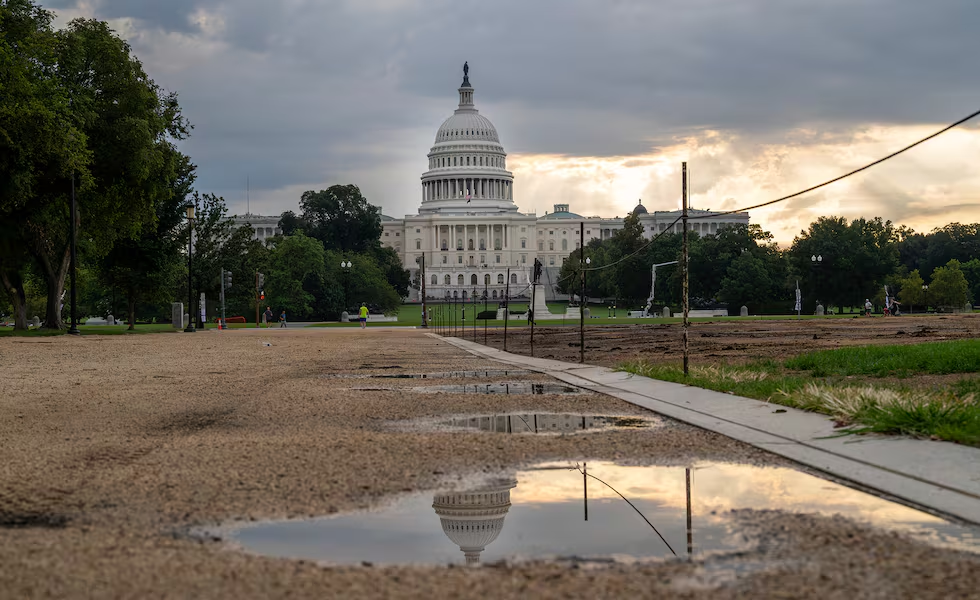
Q: If pro is the opposite of con, then what is the opposite of progress?
A: Congress!
Attributed variously to Paul Harvey, Will Rogers and other wags, that old joke gained new currency this year when Speaker Mike Johnson, R-La., put the U.S. House into recess in mid-September, far earlier than usual, to avoid a potentially embarrassing vote on the impeachment resolution against self-styled Secretary of War Pete Hegseth.
Without expressing any opinion on the merits of that resolution, or all the other unfinished business the 119th Congress left behind, may I share a few reflections on the legislative branch?
Utah voters still favor Republicans in midterms even with Trump approval underwater
The Congress the founders intended
In the interest of full disclosure, I nearly became a member of that branch 16 years ago, from California’s 11th Congressional District. On Nov. 15, 2010, I reported to my campaign supporters: “I’m writing from the Capitol in Washington, D.C., where I’m attending the orientation for new members of Congress. Since we don’t yet know whether I’ll become a new member of Congress, I’m participating with a unique blend of apprehension and hope.”
The morning after the election, I led by a slender 23 votes out of 240,000 cast, and the House Administration Committee invited me to attend New Member Orientation. But the counting of late absentee and provisional ballots continued well after Election Day, and the race remained undecided.
Back to my dispatch: “Last night, at a dinner in the Capitol’s magnificent Statuary Hall, I sat just a few feet from the site of John Quincy Adams’s old desk as soon-to-be Speaker of the House John Boehner spoke of our charge from the American people. He is determined to restore representation as the founders intended — a House that does the people’s business through the cumbersome, unpredictable, messy, but democratic means of legislation.”
What matters most, in this and every election, are the qualities of character that enabled the Constitution’s establishment — and will ensure that it endures.
That restoration was necessary because the institution had deteriorated to the point that few representatives were actual legislators. Most merely voted along party lines on proposals negotiated by others behind closed doors, with little opportunity to participate in investigation, persuasion, negotiation or debate.
Whether Speaker Boehner succeeded in his stated intent, I’ll leave to the judgment of history. But the kind of Congress he described was the kind I aspired to help create, and I believe the kind the founders intended.
The first branch of government
Asked to name the three branches of government, most respond, “Executive, legislative, judicial.” Right labels; wrong order.
The Constitution first establishes the legislative branch; Article I devotes 2,268 words to the task. Article II takes only 1,025 words to establish the executive, and Article III a mere 377 words to establish the judiciary. The order is intentional; as Madison said in Federalist 51, “In republican government, the legislative authority necessarily predominates.”
Ukraine divides Republicans in final sprint to midterms
Likewise, the word count is instructive, reflecting the scope of powers delegated. The founders created a strong executive — but a stronger legislature.
We sometimes refer to “coequal” branches, but that’s not quite right. Although the Constitution enables each branch to check and balance the others, the branches are not equal in authority. Over time, the legislature has abdicated considerable authority to the executive; even so, it remains primary in importance under the Constitution.
The real miracle of the Constitutional Convention
Several Founding Fathers characterized the outcome of the Constitutional Convention as miraculous. I used to believe that the miracle was the work product — the text of the Constitution itself. And that is indeed miraculous. But the more I study the founding, the more I perceive the real miracle as being the process that led to the Constitution’s creation, or more fundamentally, the qualities of character that enabled that process to work.
That group of alpha males — each of them brilliant, many of them wealthy, all of them influential, and most of them accustomed to getting their way — agreed to subsume their individual and parochial interests for the good of the whole. That’s the miracle: they agreed to agree. George Washington later wrote to the Marquis de Lafayette:
“It appears to me, then, little short of a miracle, that the Delegates from so many different states (which states you know are also different from each other in their manners, circumstances, and prejudices) would unite in forming a system of national Government, so little liable to well-founded objections.”
The DOJ is sending election monitors to Utah. The state’s voters already trust the process
In his cover letter transmitting the Constitution, Washington characterized it as “the result of a spirit of amity and of that mutual deference and concession which the peculiarity of our political situation rendered indispensable.”
Civic virtue is indispensable
Might our present political situation likewise benefit from amity, mutual deference and concession? Such civic virtues have become all too rare in politics, but remain, in Washington’s word, “indispensable.”
As the midterm elections approach, our responsibility as citizens has little to do with party or policy, and everything to do with the qualities of character prerequisite to effective representation and legislation. Put simply, decent people can’t vote for indecent candidates and expect our republic to function as the Founding Fathers intended.
What matters most, in this and every election, are the qualities of character that enabled the Constitution’s establishment — and will ensure that it endures.