What Do Sarah Lawrence Administrators Know About Their Own Campus?
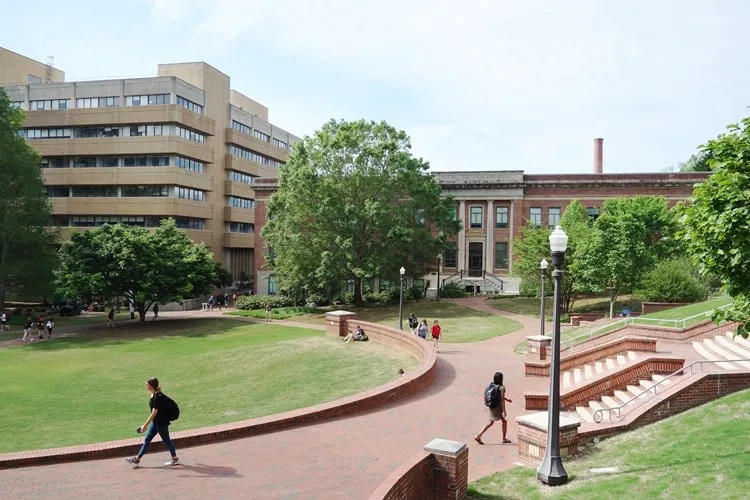
I recently wrote about a vigil organized by Students for Justice in Palestine (SJP) at Sarah Lawrence College, which was planned for the anniversary of October 7, a day of mourning for Jews after Hamas killed 1,200 people in Israel and took hundreds into captivity. SJP advertised a “Sunset Vigil for 3 years of Genocide in Gaza” at Remy Amphitheater and declared, “glory to the martyrs” and “victory to the resistance.”
My primary concern was the October 7 date itself. Holding a vigil and exalting “the resistance” on the anniversary of the deadliest attack on Jews since the Holocaust seemed calculated to cause pain to the college’s Jewish community. It also raised a basic question about a college whose principles of mutual respect ask members to “inflict no harm on one another, in word or deed.”
College President Cristle Collins Judd has now responded to a parental concern about the vigil, and Judd’s response makes me wonder how much administrators know about their own campus.
Judd responded, “We first learned of this event when the social media post you referenced was brought to our attention.” She said SJP had not followed the college’s reservation procedures and had been told it could not use Remy. I had assumed the location was approved, as SJP has habitually used campus spaces for three years. Once I learned otherwise, I added a note to my original piece.
As a Jewish professor who has faced antisemitic harassment on campus because of my faith, Judd’s email leaves me deeply concerned about her leadership. While Judd acknowledged the event’s impact on Jewish and Israeli students, she then talked about room reservations rather than the choice of October 7 or the language of “martyrs” and “resistance.” Moreover, despite saying SJP could not use Remy, a photograph posted on social media shows a vigil at the amphitheater anyway. Did anyone in the administration know? Did anyone try to enforce the decision, and will there be consequences?
SJP regularly advertises events in campus facilities. In September 2025, it announced a general meeting in the Pillow Room and an event in Titsworth Lecture Hall. Another advertisement promoted a fundraiser and reading in Heimbold 208. Were those events approved? Did administrators know? If yes, why was October 7 different? If not, how often is this happening?
SJP is not some minor group Judd just learned about. It has been at the center of major campus controversies, including the violent occupation of Westlands, home of Judd’s office, and the disruption of an Ezra Klein event. There is even a viral video of Judd sitting on stage while protesters heckled Klein.
This is why I keep coming back to the congressional record. Sarah Lawrence is now under investigation on multiple fronts, and the House Education and Workforce Committee’s March 2026 report included correspondence about the college’s handling of antisemitism complaints. After October 7, 2023, Vice President and Dean of Students Dave Stanfield described concerns from Rachel Klein, director of Hillels of Westchester, as “exaggerated and alarmist.” Judd replied, “agreed on her alarmism.” When Hillel’s board later pressed the college to act, Stanfield wrote to Judd, “I suppose she will recommend . . . that we disband SJP. Yeah, not gonna happen.”
Judd’s parental email is incredibly powerful because it makes me look at those old exchanges differently. If the administration did not know about a publicly advertised October 7 vigil, sponsored by the very student group that has repeatedly propelled the college into the national spotlight, until someone sent them the post, what was behind the confidence that Rachel Klein’s concerns were “exaggerated and alarmist”? What did administrators know? What had they looked into?
Maybe they had a much fuller picture in 2023. I don’t know. But if they did, I would like to know what it was, because now the president says the college did not know about a well-publicized vigil until somebody else told them.
And here is the very real problem. Sarah Lawrence’s administrators have repeatedly minimized and trivialized concerns about antisemitism and what Jewish students and employees have experienced, often talking instead about “expression” or “tension.” The Stanfield exchange with Judd directly illustrates this dismissal. But there is a big difference between knowing something did not happen and not knowing that it happened.
I don’t expect administrators to know everything. Of course they won’t. But if you don’t know everything, you should be awfully careful before deciding and judging that the person raising a concern is exaggerating, alarmist, or simply wrong.
People now must be skeptical when Sarah Lawrence tells us what is, and is not, happening on campus. Before asking the community to trust those accounts, the college needs to explain what it knows, how it knows it, and what happens when its own rules are ignored.