Rep. Burgess Owens forwards bills empowering vets transitioning to civilian jobs
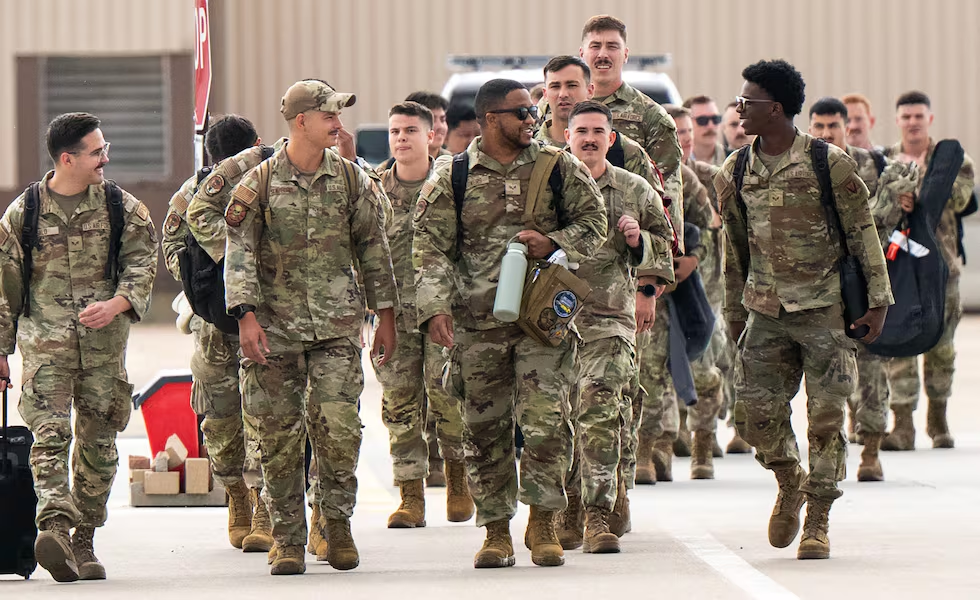
About 200,000 U.S. military members leave the ranks each year and most will be looking for a good job.
It can be a bumpy transition, especially in a volatile hiring market.
One of the key challenges for job-seeking Americans separating from the military is effectively marketing and utilizing the technical and leadership skills that they acquired in uniform into their civilian careers.
Military-acquired skills, according to Utah Rep. Burgess Owens, are often undervalued and unrecognized as service members transition into civilian life, forcing them to repeat training or earn credentials for work they have already mastered.
To better optimize the military-to-civilian employment transition, the Republican lawmaker on Thursday introduced a pair of bills: the Servicemember Experience Recognition and Validation for Industry Credentials and Employment (SERVICE) Act and the Military Units for Separation, Transition, Employment, and Readiness (MUSTER) Act.
Owens told the Deseret News that both bills were prompted by “a workforce deficit that’s coming at us like a tsunami.”
Manufacturing and trade industries, he said, will have dire challenges filling essential jobs in the coming years. That’s a national security issue that can be addressed, in part, by the very people who have worn the nation’s uniform in defense of the country.
Sen. Curtis: Pay Utah's federal workers legit wages — or wave bye-bye to talent
The SERVICE Act calls on the Defense Department to work with sister federal agencies such as Education, Labor and Veterans Affairs to develop a process that ensures military training and experience can be applied to civilian employment.
The measure includes a call for a list identifying the training and education provided to service members — while also pinpointing their civilian equivalents such as college-level training, certifications and apprenticeships.
If it passes, the SERVICE Act also would ensure that every service member leaving the ranks is discharged with a “digital wallet” — a portable record of the training and skills that he or she acquired while in uniform.
That key provision of the SERVICE Act builds on Owens’ MATCH Act, introduced earlier this year — a proposed measure that would authorize states to create digital “talent marketplaces” to connect workers, students, employers and training providers by using standardized and interoperable data.
The MATCH Act, which is awaiting consideration by the full House, aims to move job seeking beyond the traditional resume process by empowering workers with a portable digitized system — or a Learning and Employment Record — that captures a would-be employee’s job history and training, workplace achievements, degrees and certificates.
Owens calls MATCH a win for both workers and employers because it establishes a nationwide talent marketplace, making hiring more efficient.
And the military community, he added, is the ideal place to launch digital LERs. “There’s a culture of hard work and of developing skills, through merit, that people in the military do automatically.”
But many service members struggle to connect their high-value skills to the private sector. The provisions being advanced in the SERVICE Act can ease many of those struggles, said Owens.
“We have a need for a national security workforce,” he said. “We have an environment, particularly with the military, where they’re already doing a lot of the heavy lifting — whether it be in manufacturing, or AI, or nuclear welding.
“Those are the things that they are doing already. So when they come out into the private sector, if they know that (opportunities) are available for Day 1, they can monetize that with a fulfilling career.”
Mustering ‘separation battalions’ to aid departing troops
Meanwhile, Thursday’s proposed MUSTER Act calls on the DOD to explore the feasibility of establishing dedicated “separation battalions” to assist separating service members through their final 90 days of service as they transition to civilian life and employment.
“It’s all about getting your records together, making connections and making sure that anything you need is taken care of,” Owens said.
The separation battalions would also issue digital interoperable Learning and Employment Records to troops leaving the military to assist them with their civilian job searches.
“The MUSTER Act seeks to help our men and women in uniform accurately take the skills and abilities they’ve acquired through their service and translate them into opportunities by opening doors to high-demand, high-wage careers, in a way that is transparent and portable across states, industries, and employers,” said Owens.