Her mother lost 24 years of voting rights. Sheba Williams fought to make sure others wouldn’t.
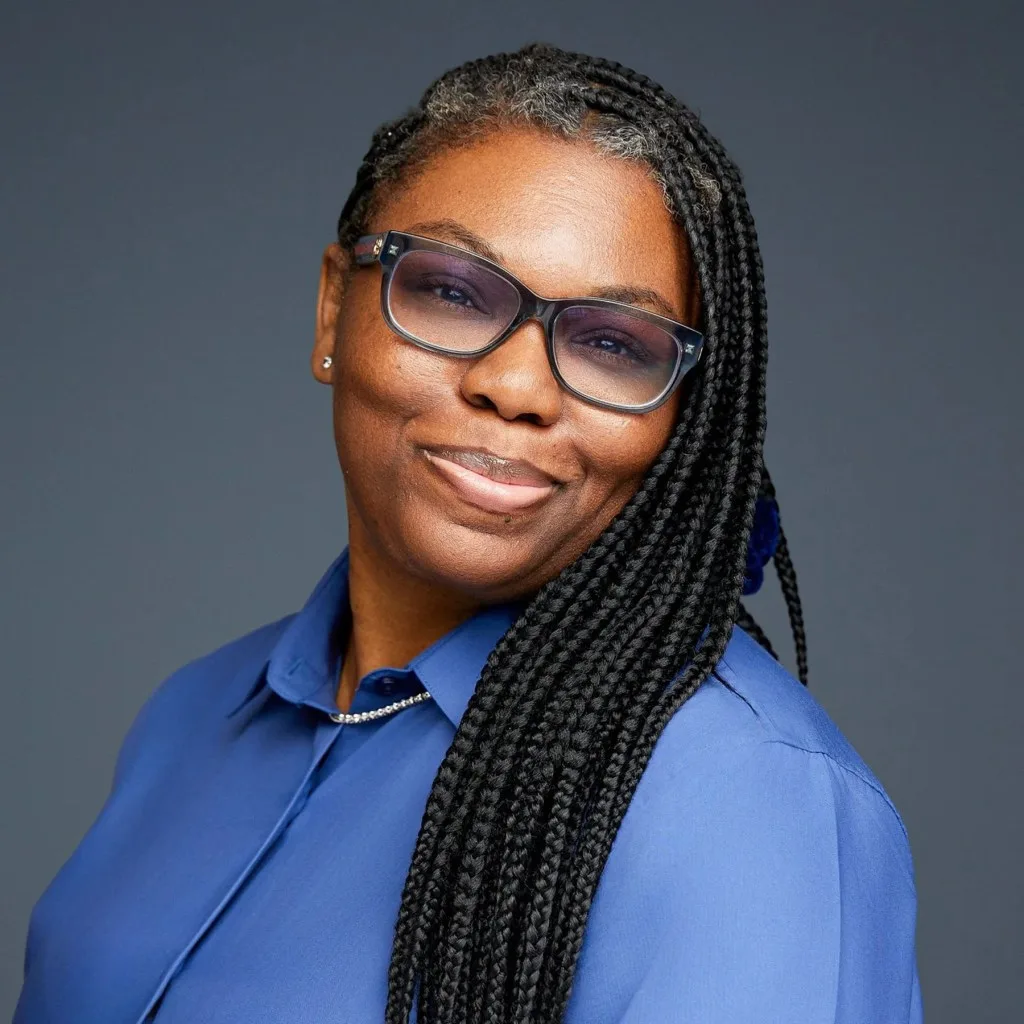
Each election brings a mix of emotions for Sheba Williams. For nine years, Williams lost the right to vote due to a Jim Crow-era state law that disenfranchised Virginians with a felony conviction. Williams wasn’t the only one: Her parents also faced felony convictions when she was a child. Her mother, Lynette C. Brockington, could not vote for 24 years.
In 2013, Williams and Brockington successfully petitioned then-Virginia Gov. Bob McDonnell, a Republican, to have their voting rights restored. Since that time, in spite of the law that pushed them to the margins of society, the mother and daughter chose to serve as poll workers for every election and spoke openly about the value of voting to anyone who would listen, Williams said.
“She just was always talking about it, and always like, ‘If you got your ID, you can go online to get registered,’” Williams told The 19th about her mother. “I remember thinking, ‘She’s just gonna do this everywhere.’ But I love that I could witness that, and, you know, I probably became the same person after a while.”
Williams went on to become a voting rights organizer and began a decade-long campaign to overturn the Virginia law that stripped away her family’s civil rights. On Election Day five years ago, her mother died from lung cancer before she could bear witness to the victory that her spirit helped shape in this year’s midterms.
Virginia voters approved a ballot measure last week that will amend the state’s constitution to enshrine a “fundamental right to vote” for all citizens and automatically reinstate voting rights to people convicted of felonies once they are released from prison.
The victory was the culmination of hard-fought advocacy, spearheaded by Black women organizers and legislators who traveled the state to educate voters about the racial history of the law and its ripple effects for generations of families.
“This gives hope,” Williams said. “Virginia went from the absolute worst in the nation, an outlier in disenfranchising people, to probably one of the absolute best.”
Since 1830, Virginia’s constitution has stripped voting rights from people convicted of crimes deemed to be more serious. As part of negotiations to readmit Virginia to the United States after the Civil War, Congress passed the Virginia Readmission Act in 1870, permitting the state to deny voting rights as punishment for 11 “common-law” crimes like arson, burglary, murder and rape.
But the state adopted a constitution in 1902 that expanded the voting ban for all crimes classified as felonies. This number grew to include more than one thousand offenses, though a federal court ruling earlier this year narrowed the list of crimes that could result in a voting ban.
At the heart of these restrictions was the intent to restrict free Black residents from gaining access to the polls during the Jim Crow era, when states enforced racist laws that dictated how Black Americans could move through society.
Then-Virginia state Sen. Carter Glass, a key architect of that state constitution, pointed to the felony voting ban’s motivation, stating that it would “not necessarily deprive a single white man of the ballot, but will inevitably cut from the existing electorate four-fifths of the negro voters.”
“That was the purpose of this Convention; that will be its achievement,” he added at the time.
Unsurprisingly, the law hit Black citizens hard, a throughline to the modern-day criminal justice system where Black people comprise 18 percent of the Virginia population but represent nearly 52 percent of those in prison, according to The Sentencing Project.
“It was based on a history of racism in our state,” Williams said. “We think, ‘Oh, Jim Crow is dead,’ but Jim Crow was alive and well because we kept this policy in our constitution for 196 years.”
Williams was 10 in 1989 when her parents were arrested. Her mother was sentenced to six months in jail, and her father was imprisoned for nearly 20 years, Williams said. Williams’ encounter with the court system came in 2004, when she says she was wrongly convicted of a crime. She petitioned to have her record sealed.
With Virginia’s felony disenfranchisement law in place, those with felonies on their record had few options to regain voting access. Gov. McDonnell, who took office in 2010, established a formal process for people to apply to renew their rights, but the number of voter restorations fluctuated between administrations. Democratic Gov. Terry McAuliffe restored rights to more than 150,000 people during his time in office, and Republican Glenn Youngkin approved about 10,000 applications between 2022 and 2026.
“My group I started with a student back in 2013, Revive My Vote, we had a very close relationship, starting with the McDonnell administration,” said Rebecca Green, a professor at William & Mary Law School who co-directs its election law program. Her team at Revive My Vote assisted people navigating the application process to get voting rights restored and worked with the governors’ offices to help manage a backlog of applications, she said.
“That ended with the Youngkin administration, which sort of had this very opaque process and was not at all clear about what was happening behind the scenes.”
Williams said she and other advocates wanted to take the power to determine voting rights out of the hands of the governor to establish an automated system instead.
People with criminal records often describe a kind of societal stigma that spills into every aspect of their lives, tainting opportunities for stability or growth. Williams said she felt this firsthand and also observed how this criminal marker altered her mother’s quality of life, forcing her to take backbreaking warehouse work at 60 years old to pay her bills and being repeatedly denied housing applications.
During a period of time when Williams lived in public housing with her three children, she said the Richmond housing authority barred some people with criminal records from visiting the property, including her mother.
“She was still coming, but she was taking a chance that she was violating the law in order to visit her kid and her grandkids,” Williams said. “No other convictions after 1989 and still having to answer to that conviction. That was something that always kind of stood out to me.”
Despite the challenges she faced, Williams’ mother always had a positive attitude and showed up for others, her daughter said. Her mother had a distinct, infectious laugh and was the type of person “who would give her last,” Williams said, whether it was working for a community food pantry or caring for sick relatives.
In May 2016, Williams founded Nolef Turns, a nonprofit that advocates for the rights and well-being of people with criminal records, works to reduce recidivism and supports individuals after incarceration. She co-founded the Virginia Right to Vote Coalition with more than 20 state and national organizations, including the American Civil Liberties Union of Virginia and the League of Women Voters of Virginia.
The coalition helped boost support for a voting rights effort Black women legislators were already fighting for. State Sen. Yvonne B. Miller first introduced a constitutional amendment to the Virginia General Assembly in 1997 that would allow the legislature to make laws restoring voting access for those with felony convictions. Miller continued to introduce similar bills in nearly every legislative session until she died in 2012. From there, Virginia state Sen. Mamie Locke, who had already been working with Miller for several years, took up the mantle.
Locke went on to work closely with Williams’ coalition, which provided on-the-ground education to voters across the state and gave testimony detailing how disenfranchisement affects people with records.
“If the Department of Corrections has deemed that an individual is now able to be released from incarceration, then who are we to question what the nature of the crime was? That’s not our role,” Locke said. “Why not have that person’s political and civil rights restored?”
To successfully amend the state’s constitution, both legislative chambers must pass the proposed amendment. The amendment is then held until the next general election for the Virginia House of Delegates. In the legislative session following the election, the same amendment must be reintroduced and passed again by the state House and Senate. At that point, the measure can be put on the ballot for voter approval.
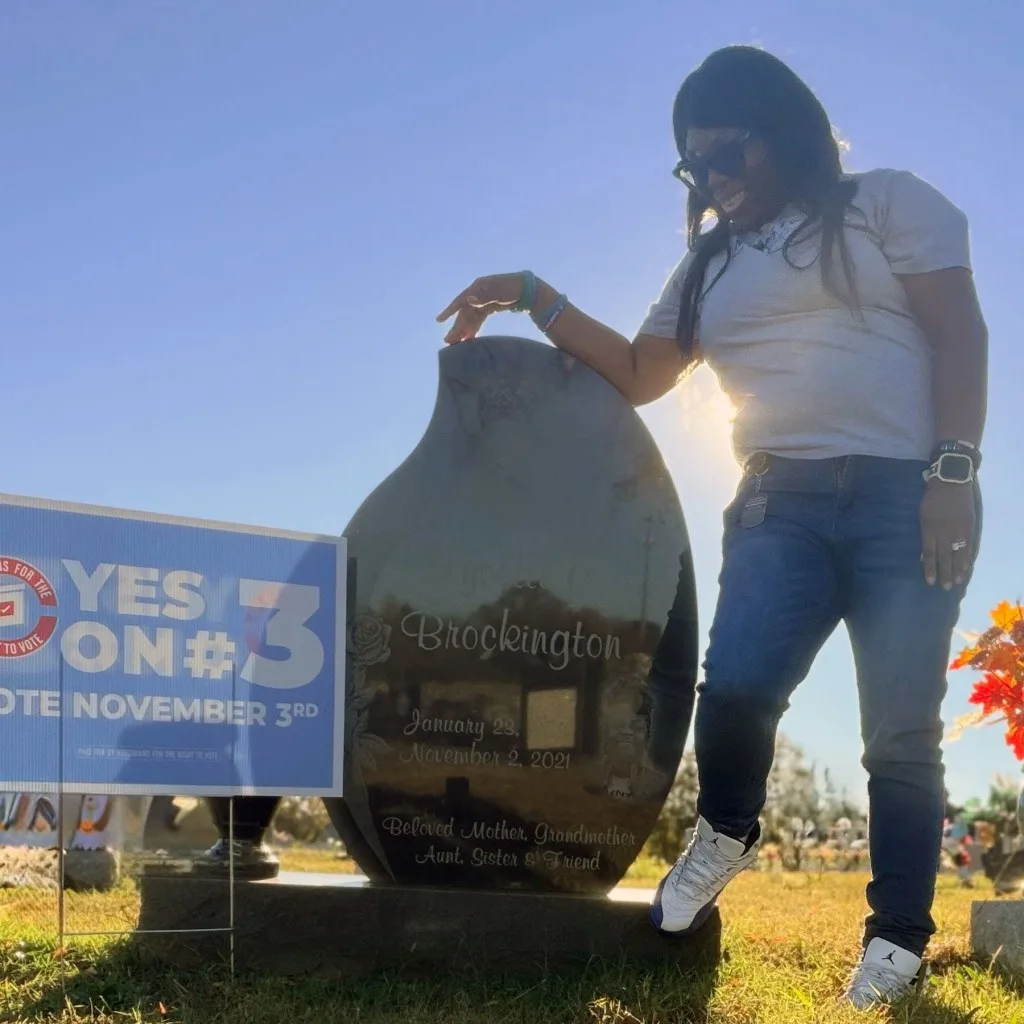
The cycle of shifting party control from year to year was a key barrier in the push to change the constitution. But in the 2025 and 2026 legislative sessions, the measure made it through, allowing voters to pass it with 56 percent in favor on Nov. 3.
In the days after the election, Williams said she was filled with both happiness and exhaustion. She spent years traveling to communities, speaking on panels and sharing her personal story to convince the public that “everybody deserves redemption.”
She did this work while carrying grief over lives lost, including her mother and other loved ones, as well as Sen. Miller, who cared deeply about this work but did not get to see it come to fruition.
In the rush of feelings, Williams said she remembered a note her mother left as she was dying, which — true to her optimistic style — encouraged her family to keep pushing forward with love.
“Don’t be sad, we shared the best life ever,” she said. “I carry all the love each of you had to give with me always and forever.”