How Jensen Huang’s return impacts Nvidia stock
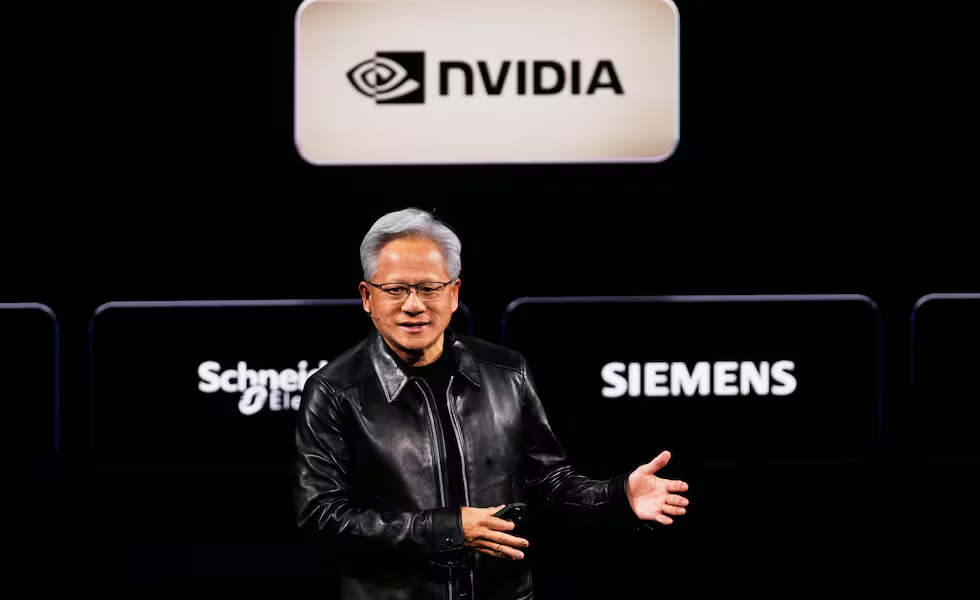
Eleven days after resigning following revelations of extramarital affairs, including with one woman U.S. intelligence services suspect of being a Chinese spy, Nvidia co-founder Jensen Huang is back at the helm of the microchip giant.
Nvidia stock, which had shed almost a third of its value following news of Huang’s departure earlier this month, was up almost 30% in early trading Monday, recovering nearly all of those losses. The company, which is the leading producer of the advanced microchips that power artificial intelligence platforms, is among the most valuable in the world and was riding a market capitalization just over $4 trillion around midmorning.
In a Monday morning announcement, Nvidia said its board of directors had voted unanimously to reinstate its embattled former CEO “following a series of discussions and meetings with Mr. Huang, after which the board was satisfied with respect to Mr. Huang’s candor and ability to lead NVIDIA.” The company said the decision to reinstate Huang included “input from senior levels of the United States government, and based on that input, the board is confident that Mr. Huang’s reinstatement poses no national security risk.”
“The board believes Jensen is the right person to lead NVIDIA, and that his reinstatement is in the best interests of our stockholders, employees, partners and customers,” Harvey C. Jones, board chair, said in a press release. “We have every confidence in Jensen and look forward to working with him as he resumes his leadership of the company. We are grateful to Colette Kress for her outstanding service as interim CEO, in addition to her continuing responsibilities as NVIDIA’s chief financial officer.”
Huang, who helped launch the company in 1993, had been at the helm of Nvidia on its rise to the world’s most prominent maker of advanced microprocessors, propelled in large part by evolving AI development and the sector’s hunger for ever faster and more efficient computing power. He issued his own statement, accompanying the company’s Monday announcement.
“I am honored to return to NVIDIA and lead one of the most consequential technology companies in the world at the beginning of a new industrial revolution. I take this responsibility with the greatest humility and renewed commitment. I want to thank the NVIDIA Board for its confidence and deliberation through this process. I am especially grateful to Harvey Jones for his leadership as chair, and to Colette Kress and our executive staff for leading NVIDIA during this period,” Huang said.
“I am also deeply thankful to our employees, shareholders, leaders across the industry and partners around the world for their extraordinary support. Above all, I am grateful for the love and support of my family. I can’t wait to get back to work.”
In an email sent to Nvidia staff earlier this month, Huang said he had an affair with Alice Huang, not a relation, who is affiliated with Megaspeed, a company based in Singapore that is a prominent Nvidia customer. According to reports from the New York Times and other outlets, Alice Huang is suspected of passing information about Nvidia to Chinese government officials.
“I was unfaithful to my wife. My actions hurt her and our children. There is no excuse for what I did,” Huang wrote in the message. “I am deeply sorry.”
Other reports, following Huang’s admission, alleged he had also had an extramarital relationship with an Nvidia employee.
Following the revelations, Nvidia announced it had launched its own independent investigation exploring whether Huang had been “the target of a foreign intelligence effort.”
How Nvidia CEO Jensen Huang’s resignation impacts the market
Trump celebrates Nvidia decision
President Donald Trump, who advocated for Nvidia to bring Huang back to the company following his ouster and said he had communicated with the company’s board ahead of its decision, celebrated the move in a CNBC interview.
“I’ve been speaking to the board directly and indirectly and I felt very strongly about it and felt more strongly as I saw what was happening with the company because that was, to me, a very important part of our country,” Trump said Monday. “This represents something very special what he’s done and what the company’s done.
“The board was placed in a very bad position. I think the board acted really responsibly. Some other board would have fought it and if they would have fought it would have been a disaster in my opinion.”
How Nvidia became one of the world’s most valuable companies
Nvidia’s rise to power has been driven by its design and development of graphics processing units, the microchips most sought after by AI developers. The company has a virtual monopoly on the advanced chips, controlling some 90% of the market and is “18 to 24 months ahead of all-comers in the quality and performance of its top chips,” according to a report from Fortune.
Typical data centers, which are the engines behind both the training and deployment of AI tools and platforms, can house 30,000 to 100,000 of the advanced chips and newer, so-called hyperscale facilities are deploying GPU clusters well in excess of those figures.
For example, Elon Musk’s xAI data center complex in Memphis, Tennessee, housed across multiple facilities, is aiming for over 1 million GPUs on full buildout. OpenAI’s Stargate data center in Abilene, Texas, is designed for 450,000 GPUs.