Survey reveals Americans’ growing financial strain
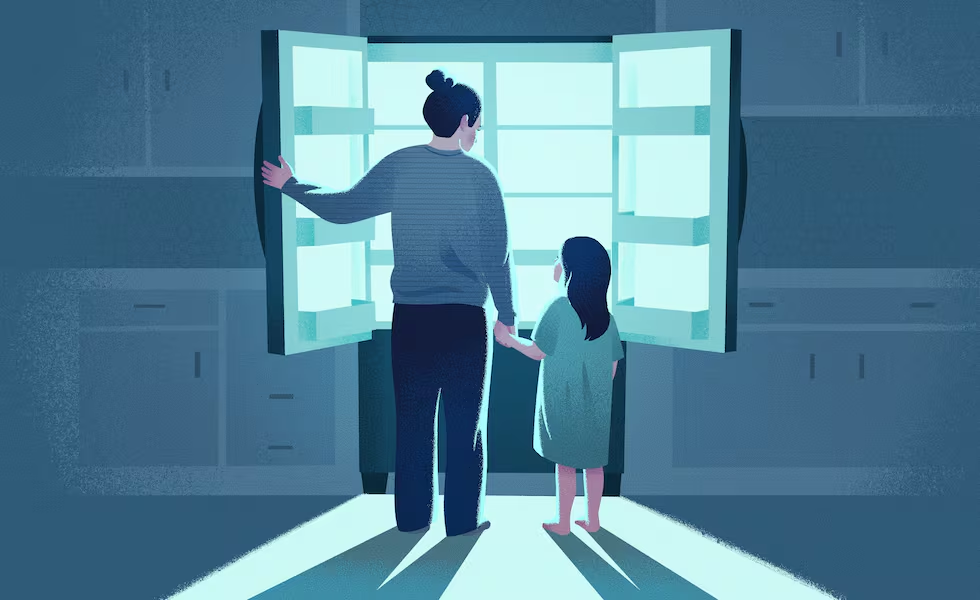
Fiscal woes are plaguing U.S. households at the highest levels in over a decade and the litany of hardships includes issues like hunger, the inability to pay important bills and foregoing needed medical care because of costs.
That according to the latest nationwide data gathered in the 2026 American Family Survey, a collaboration between Brigham Young University’s Wheatley Institute, the Center for the Study of Elections and Democracy at BYU and Deseret News.
This year’s survey, conducted by YouGov July 20 to Aug. 6, includes a nationally representative sample of 3,000 adults plus an additional sample of 1,500 adults ages 18 to 40, which allows a more detailed look at young adults’ experiences and attitudes.
Data gathered in the new survey comes with a margin of error of plus or minus 1.8 percentage points.
American Family Survey dives into marriage, challenges and values
Economic hardship highest in 12 years
The American Family Survey found 42% of all respondents reporting at least one hardship event in the past year, jumping 7 percentage points from 2025 and the highest level since the first survey in 2015.
The six hardship categories included going hungry; being unable to pay an important bill in full; borrowing money from family or friends to pay bills; moving in with others because of financial problems; staying somewhere not intended for housing; and forgoing necessary medical care due to cost.
Borrowing money from family/friends along with failing to pay an important bill were the leading hardship incidents among the poll participants, each event affecting approximately 24% of respondents. Almost 1 in 5 respondents, 17%, reported going hungry in the past year and 16% said at least one household member was unable to access needed medical care due to financial constraints.
Report co-author and BYU political science professor Chris Karpowitz told the Deseret News that while the rate of household hardships declined during the pandemic, when families received substantial government assistance, that relief has since faded. This year’s hardship incident rate was up 15% from 2021.
Nearly two-thirds of adults ages 18–40 with household incomes below $50,000 reported experiencing financial hardship. Younger adults also expressed greater concern about unemployment than older Americans, suggesting anxiety about both meeting expenses and maintaining an income.
“I think young people are entering an economy that has a lot of question marks,” Karpowitz said. “And it’s an economy where they’re worried about both cost and income in terms of having a job. This is a frustrating and worrisome situation.”
The report found that financial vulnerability was not confined to low-income households. Nearly one-third of young adults with household incomes of $100,000 or more reported hardship. Karpowitz pointed to borrowing money to pay bills and being unable to pay an important bill in full as signs of households struggling to balance their budgets.
“It’s striking that even young people doing well financially, comparatively speaking, are feeling the pinch,” Karpowitz said.
He noted that the rate of food insecurity issues in this year’s survey was especially troubling — nearly one-fifth of those ages 18–40 reported going hungry because they could not afford enough food.
“Food insecurity is a significant challenge,” Karpowitz said, describing the finding as evidence of how difficult it can be for young adults to establish themselves.
The pain of rising costs
U.S. inflation has been running north of the Federal Reserve’s target annual rate of 2% for nearly six years. While the latest report from the U.S. Bureau of Labor Statistics did not include a standard 12-month annual inflation rate for October 2026 due to missing data from last year’s federal government shutdown, the cost of consumer goods and services rose 0.4% on a monthly basis in October. The bureau’s most recent annual report in September pegged annual inflation at 3.7%.
Those persistent cost increases topped the list of concerns in the survey, with 89% of respondents reporting that they were very or somewhat worried about inflation’s impacts on household finances. Rising taxes was the next biggest concern among survey participants at 83%. Interest rates rounded out the top three financial concerns for respondents, with 73% reporting they’re worried about the cost of borrowing and debt.
Here’s how the Fed’s rate hike will impact your household budget
Phil Dean, chief economist and research director at the University of Utah’s Kem C. Gardner Policy Institute, reviewed the latest American Family Survey data and noted the findings illustrate how economic growth can coexist with financial hardship. He sees the results as broadly consistent with an economy in which gains are unevenly distributed, inflation remains a top concern and housing costs create particular challenges for younger people.
“It doesn’t surprise me to see the high incidence of people worried about inflation,” Dean said in a Deseret News interview. “Rising costs, particularly when it comes to basic necessities, always figure largely among household, kitchen table-type issues.”
Dean noted the relatively broad-based financial improvements many households experienced during the pandemic have now devolved into an uneven distribution of benefits.
The housing market, Dean said, helps illustrate that divide. While rising home values can benefit existing owners, that same equity-building dynamic makes it harder for prospective buyers to enter the market. Similarly, he said, stock market gains do not benefit everyone equally, and money held in retirement accounts may not be readily available to cover everyday expenses.
“High housing prices benefit current homeowners but it creates an even bigger challenge for those trying to get into the market,” he said.
States with strong economies feel the strain
Utah is an example of how residents in states with strong economies are still feeling a financial pinch.
Dean highlighted that even as Utah’s economy has outperformed the rest of the country in recent years, the state is inexorably connected to national trends. Stronger growth does not insulate Utah households from affordability problems, particularly the gap between what the average Utah worker earns and rising home prices.
“It is that wage-to-home-price ratio that underscores that we’re just not as affordable as we once were,” Dean said.
The 2026 American Family Survey
Dean said that while wages have recently been growing faster than home prices in Utah, offering some gains in closing the affordability gap, the relationship remains out of line with historical trends and housing remains a central issue for state and local policymakers.
“We have made progress as a state, but we also have a lot of work to do,” Dean said.
Age is another important dividing line, he said. Young adults trying to establish themselves may face both expensive housing and difficulty securing employment. Among survey respondents in the 18- to 29-year-old category, 32% reported they were very worried about employment issues.
“New college graduates are having a harder time finding jobs in the current low-hire, low-fire environment,” Dean said.
Inflation rose higher than expected in last report before midterm elections
Partisanship and economic perception
Data gathered over the course of the American Family Survey since 2015 clearly illustrates the impact of partisanship when it comes to inflation worries, and the report notes “context matters for who indicates the most worry.”
To that point, during President Joe Biden’s administration, Republicans who participated in the survey were much more likely than Democrats to say they were very worried about inflation. That pattern flipped when President Donald Trump stepped into his second term and this year’s data continued to bolster the trend. The 2026 survey found 64% of Democrats very worried about inflation compared to 54% of independents and 36% of Republicans.
“This reversal is a reminder that expressed economic concern can reflect more than exposure to prices or household resources,” the report reads. “Evaluations of economic conditions are also connected to the political context and which party controls the presidency.”
Karpowitz noted that partisan leanings have an outsize impact on how most individuals evaluate the root causes of the issues that impact their lives, particularly so when it comes to the economy.
“Partisanship is a lens through which people tend to view the world,” he said. “Especially when asked to report on the state of the nation, including the economic state of the nation.”
He cautioned against treating presidents as solely responsible for economic conditions, while acknowledging that presidential decisions can affect prices and household finances.
“Americans tend to give the president more credit than he deserves when things are going well and more blame than he deserves when things are going poorly,” Karpowitz said.
Despite those partisan differences, he sees a wider dissatisfaction running through Americans’ assessments of the economy.
“What I’m seeing in this economy is a broader undercurrent of pessimism and frustration,” Karpowitz said.