How abortion became a stand-in for voters’ distrust of politicians
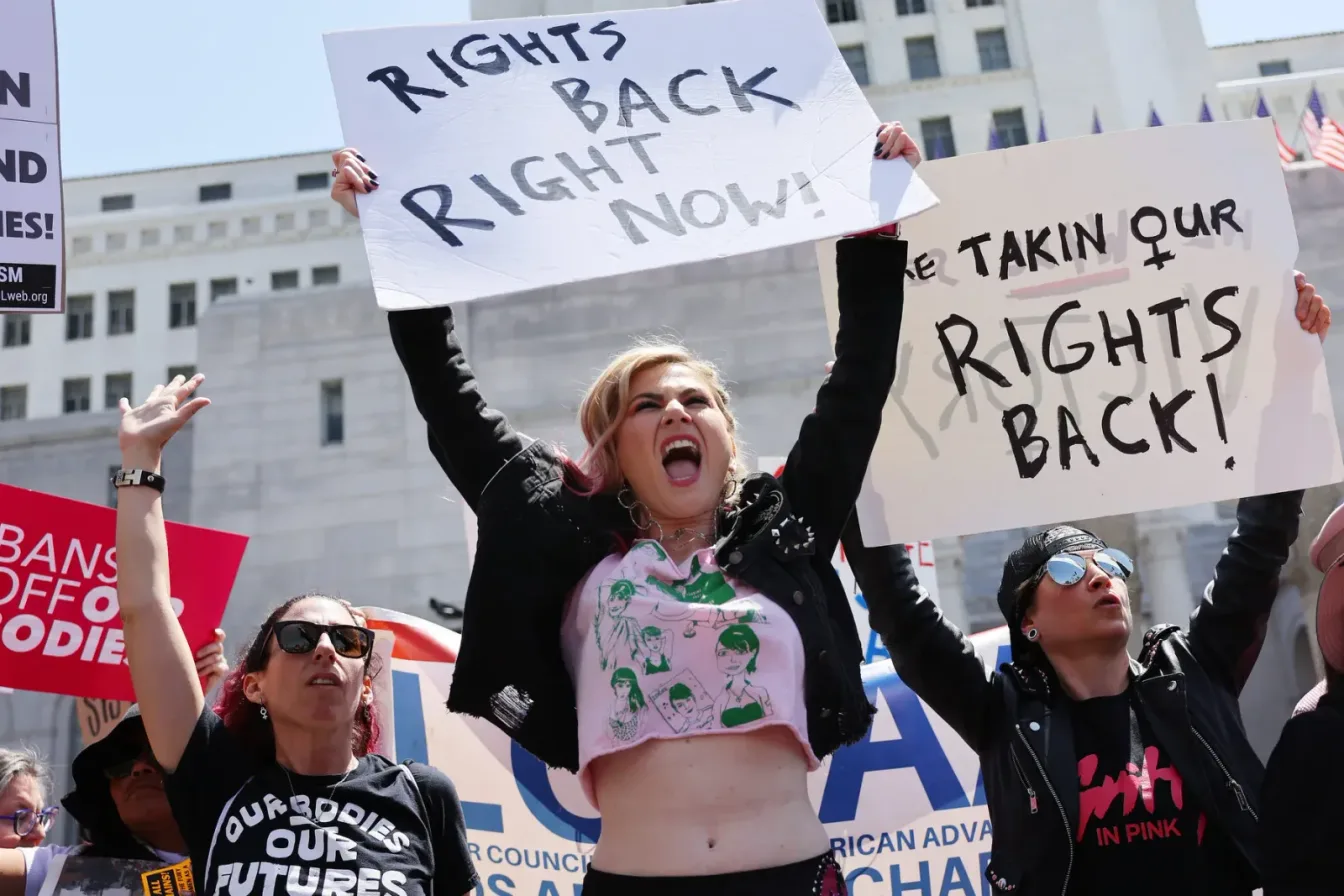
Even as abortion was not a top issue for voters in the midterm elections, Americans repeatedly rejected ballot initiatives and candidates they perceived as anti-abortion — a sign that reproductive rights have become a stand-in for broader questions of trust in lawmakers.
In Missouri, voters rejected a ballot measure advanced by the state’s Republican leadership that would have overturned the abortion rights protections voters enshrined just two years ago.
In Maine, voters turned against 30-year incumbent Republican Sen. Susan Collins after Democrat Troy Jackson hammered her over her vote to confirm Brett Kavanaugh, the Supreme Court justice who helped overturn Roe v. Wade in 2022. Jackson argued that the vote demonstrated poor judgment and that Collins could not be trusted to represent her constituents’ interests.
And in the Michigan Senate race, Democrat Abdul El-Sayed defeated former Republican Rep. Mike Rogers after leveraging attacks on Rogers’ anti-abortion voting record in the closing days of the campaign.
“Abortion is both the issue itself and it’s a value on where does a candidate stand on understanding my life and respecting freedom on a more core fundamental level,” Molly Murphy, a president at Impact Research, a Democratic polling firm, told The 19th before the election.
Voters consistently ranked the economy and corruption as their top issues in the 2026 midterms, in which Democrats wrested control of both chambers of Congress and won Senate seats in conservative strongholds such as Kansas, South Carolina and Texas. Recent polling from The 19th News/YouGov poll and others found that abortion ranked low when voters were asked to identify their top electoral concerns.
But when reproductive rights appeared on the ballot — directly or as an issue in a campaign — it fit into a broader statement.
“If you’re taking away abortion, you’re not showing you’re focused on what matters to me,” said Murphy, who has conducted numerous focus groups and polls focused on how independent voters feel about abortion.
The dynamic was perhaps most visible in Maine, where Democrats and outside groups including Planned Parenthood’s political arm focused their spending on advertisements highlighting abortion and reproductive rights. Older women voters — historically a key source of support for Collins — cited the Republican’s vote for Kavanaugh as disqualifying.
“It also was a very powerful way of saying she’s a liar,” Mini Timmaraju, the head of the advocacy group Reproductive Freedom for All, told The 19th.
“She’s like, ‘I’m pro-choice, I care so much about abortion rights.’ Really? Then why did you do that?” said Timmaraju, who campaigned alongside Democrats in states across the country, including Michigan, Maine and Minnesota.
In Michigan, El-Sayed closed his campaign with an advertisement highlighting Rogers’ record on abortion, which Michigan voters enshrined in their state constitution in 2022. Rogers responded with his own ad, saying that if elected, he would not back a federal abortion ban.
“It’s very important as a character issue as well as a policy issue,” said Celinda Lake, a Democratic pollster who has polled on abortion for years and who advised the El-Sayed campaign. Voters in states like Michigan, she said, view opposition to abortion as “a deal-breaker.”
In governors’ races across the country — notably Wisconsin and Georgia — Democrats won in part by emphasizing their willingness to protect abortion rights and highlighting their opponents’ opposition.
Republicans have tried in some states to distance themselves from abortion bans — referring to the issue as a “settled matter’ in several governor’s races. Some, like Rogers, said they would not back a national ban. Republican Michele Tafoya called herself a “pro-choice Republican” — while suggesting in some cases that she might support a 12-week ban — in her failed bid to flip a Senate seat in Minnesota.
Some prominent abortion opponents said that the GOP’s failure in those races suggests that the party should embrace strict bans.
“You cannot spend years telling your base to sit down and shut up, then act surprised when they don’t stand up for you on Election Day,” Marjorie Dannenfelser, the president of the anti-abortion group SBA Pro-Life America, said in a statement. “Republicans must stop running from the pro-life fight and start giving voters a reason to fight for them.”
Still, some analysts questioned the notion that abortion may have shifted these races meaningfully.
“When it comes to people voting for Republicans versus Democrats, I just don’t see a lot of evidence that it is the decisive factor,” said Patrick Brown, a scholar at the Ethics and Public Policy Center, a conservative think tank.
Abortion rights supporters did not win across the board. In Idaho, a volunteer-backed measure to overturn the state’s abortion ban failed, leaving the state’s near-total prohibition in place. Compared with other abortion rights measures across the country, national reproductive rights groups spent relatively little money on the Idaho effort, which faced a strong opposition campaign from the Church of Jesus Christ of Latter-day Saints.
“They didn’t put resources into it early enough,” Lake said of the Idaho measure. “I think if we had put resources earlier we could have won.”