Opinion: The reason Veterans Day endures
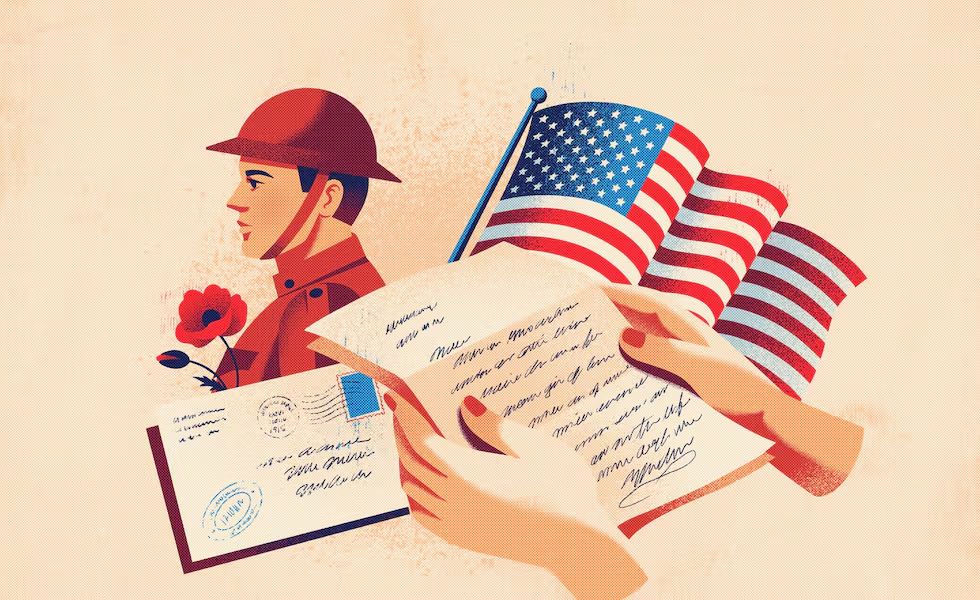
To get an idea of the joy felt on the 11th hour of the 11th day of the 11th month in 1918, it may help to read parts of a letter a U.S. serviceman sent home from France on that day, the precursor to today’s Veterans Day.
“Dear Grandma. This has been some day. We got news this morning that the (Germans) had given up and signed the armistice. There is a big church here which is partly destroyed, but it has a bell still intact, and it has been ringing since noon. … I’ll soon be walking in your door on a nice clear day and can then tell you what I have seen of this great war. I never thought that one’s part would be such a small part. But I found out that it is true when you say you are going to do your bit — it is a little bit. You will read something very great about us in history. We are wanted to take part in a big parade in England because we have been fighting with their boys. Good night. I remain as ever, Pvt. Carroll Hosbrook.”
How Meta is offering ‘sight’ to Utah’s blind veterans
His nephew provided excerpts from Pvt. Hosbrook’s letters to the Deseret News for publication in 2014. Like so many other letters home, they are evidence of the everyday sorts of people who too often are called upon to do extraordinary things in the preservation of freedom.
War to end all wars
The letters are filled with an energy of optimism and youthful idealism, which makes world history from that point until the present a sad irony. H.G. Wells called that first World War the “war that will end war” in a book written in 1914. It became popularized and attached to World War I with the phrase, “The war to end all wars.”
President Woodrow Wilson reflected the exuberance of that day in a statement that said, in part, “It will now be our fortunate duty to assist by example, by sober friendly counsel and by material aid in the establishment of just democracy throughout the world.”
The end of all wars and the establishment of universal democracy sounds wonderful, but the truth was much harsher. That first World War already had sown the seeds of the second. It had caused an astronomical 53,402 U.S. battle deaths and 63,114 additional deaths from accidents and disease. World War II would take the lives of more than 400,000 American personnel.
A never-ending need for soldiers
The National Park Service estimates that all conflicts since the end of World War I have cost the lives of “well over 600,000” U.S. soldiers.
Today, America is at war in Iran. Regardless of your opinion on this conflict, it is further evidence that brave young men and women will always be needed to fight the nation’s battles.
Opinion: I research World War II for a living. How had I never heard of these women?
Unfortunately, Veterans Day — originally begun as “Armistice Day” to remember those who died in World War I — will never fade away due to a lack of new veterans. Threats to freedom and liberty abound and never rest.
A more realistic slogan than those from the World War I era is the one engraved on the granite wall of remembrance at the Korean War Veterans Memorial in Washington: “Freedom is not free.”
The rights guaranteed by the Constitution, the lofty foundational ethos of the Declaration of Independence, the nation’s many freely worshipping churches, its democratically elected governments from Congress to the local mosquito abatement district and even the warm, welcoming glow of a neighborhood party would cease to exist without men and women willing to give their lives to protect it all.
The need for gratitude
On this Veterans Day, let all Americans pause to give thanks — to those currently serving, to the veterans, especially the roughly 30,000 World War II vets still alive, and most of all to God for preserving the nation for 250 years.
Opinion: General MacArthur’s fight and the victory over Japan
Don’t make the mistake of thinking people on Nov. 11, 1918, were naive in their hopes at the end of a horrible conflict. They were grateful, hopeful and optimistic, just as all of us who enjoy the fruits of that day should be now and forever.