The Federal Reserve at a Time of Uncertainty
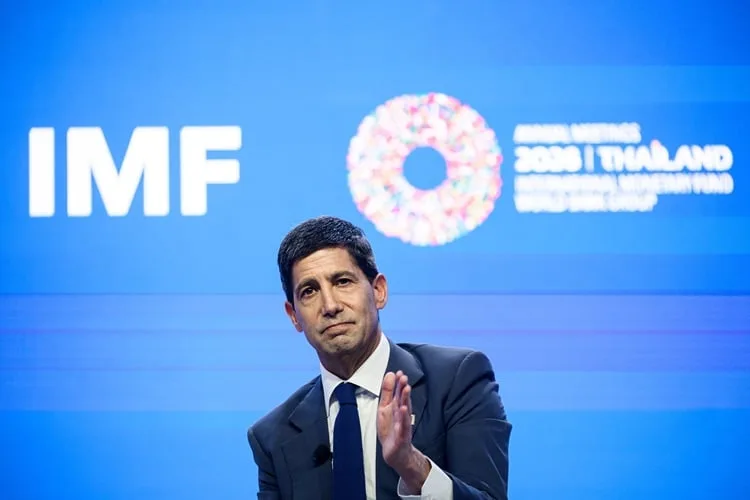
If there is one thing about which Federal Reserve Chair Kevin Warsh has been consistently clear, it is that he sees no merit in the Fed offering the markets forward guidance as to the course that interest rates might take in the year ahead. When the Fed meets next week, Mr. Warsh might feel vindicated in his view, considering how economic uncertainty has increased on several new fronts. That has made it even more difficult than before for the Fed to forecast the path of inflation and employment, the two parts of its dual policy mandate. The geopolitical picture has become more complicated, the artificial intelligence investment boom is showing signs of wobbling, France now seems to be on the cusp of a full-blown bond market crisis, and a Super El Niño threatens to disrupt next year’s world food supply.
Start with the US-Iran war and that between Russia and Ukraine. Does anyone really know whether those wars might spread to the rest of the Middle East and Europe or will soon be resolved by some sort of ceasefire agreements? Yet those wars could lead to another spike in energy prices, especially if Saudi Arabia’s oil facilities are damaged and if Ukraine continues to attack effectively Russia’s oil refineries. On the other hand, as President Trump keeps reminding us, energy prices could plunge if ceasefire arrangements are achieved in those two conflicts. This means that we cannot be sure whether price inflation will accelerate or decelerate in the period immediately ahead.
Over the past year, the artificial intelligence boom has been a principal driver of economic growth, as literally hundreds of billions of dollars have been invested in infrastructural investment. It has also been the source of hope that we might be on the cusp of a burst in productivity that might reduce costs and the source of fear that it might lead to massive layoffs, especially white-collar workers. With growing doubts in the market as to whether the artificial investment boom will generate sufficient revenue to justify the investment outlays, can anyone be sure how long this investment boom will last or whether the artificial intelligence stock market bubble might soon burst? Similarly, can anyone be sure how soon and by how much productivity will be boosted and how many jobs will be lost to the artificial intelligence revolution?
In 2010, world financial markets were roiled by the Greek sovereign debt crisis. Fast forward to today and we have a developing bond market crisis in France, a country that has a $4 trillion public debt, or one that is around eight times the size of Greece. If Greece shook world financial markets in 2010, how much more so would a full-blown crisis in Europe’s second largest economy do today. Ahead of a presidential election in April next year and growing social unrest, can we be sure that the markets will not become even more concerned about that country’s debt sustainability and political dysfunction? Can we also be sure that France will be able to come up with a credible economic adjustment program that will allow the European Central Bank to bail France out and prevent another round of the Eurozone sovereign debt crisis?
As if all this uncertainty were not enough, scientists are confidently predicting that a Super El Niño current this year will seriously disrupt global weather patterns. In turn, that could lead to major disruptions in the world food supply and send international food prices soaring. Once again, we can have no idea at this stage how serious that impact might be for our domestic inflation outlook.
A key characteristic of the Trump administration’s economic policy has been unpredictability, especially when it comes to import tariff policy. That policy has heightened investor uncertainty, thereby making it difficult to forecast the economic outlook. On top of that, we now have a variety of additional sources of uncertainty making it a fool’s errand to try to predict the course of inflation and employment. In those circumstances, Kevin Warsh would appear to be correct in dropping any pretense that the Fed knows better than the market as to where inflation and employment might be headed. It also makes him right to patiently wait for incoming data to guide his interest rate policy decision, one meeting at a time.