What we know about the U.S.’s munitions stockpiles
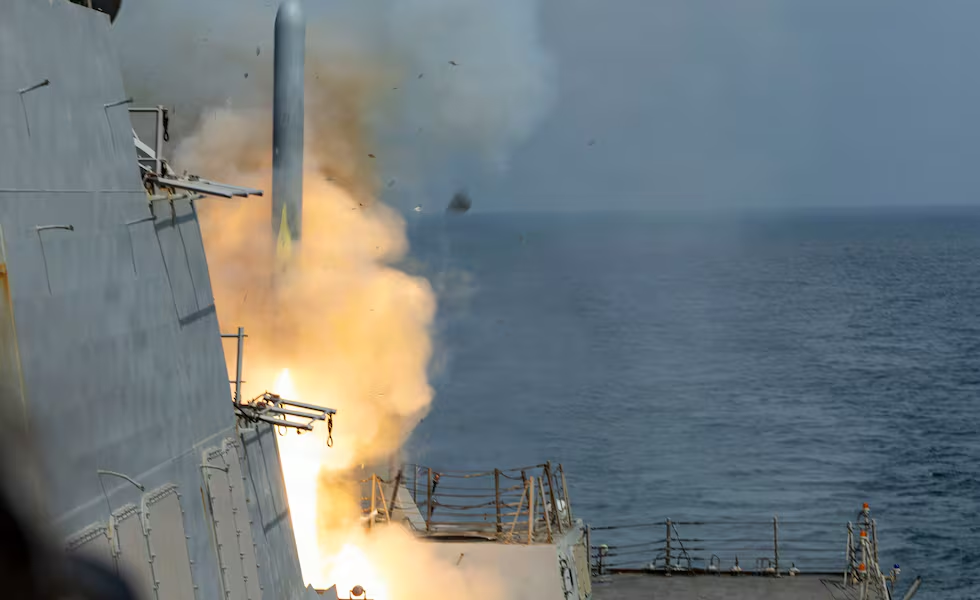
It’s unclear if or when President Donald Trump will order resumption of major military actions against Iran.
But it’s likely that the pitched discussion surrounding the United States’ munitions supply following heavy use of the high-tech, costly weaponry during the Iran war will continue.
Last summer on CBS News’ “Face the Nation,” Defense Secretary Pete Hegseth labeled claims of a munitions stockpile shortage a “manufactured story” — adding that supplies “are only getting stronger.”
But Sen. Mark Kelly, D-Ariz., challenged Hegseth, saying, “It’s widely understood that when you attack 10,000 targets from the air with cruise missiles and ballistic missiles and bombs from airplanes, you are using a lot of munitions, and we do not have an endless supply of these things.”
It’s now late November, but the question remains: Does the United States possess sufficient munitions to renew the Iran fight?
Yes, according to an analysis released this month by the Center for Strategic and International Studies (CSIS).
But the report also explores a broader and perhaps more significant query: Does the United States have sufficient munitions if it found itself at war with an enemy far more formidable than Iran?
“Against China, there is great concern,” according to the CSIS. “Rebuilding inventories will require a multiyear commitment extending beyond the current crisis.”
Heavy use of costly missile interceptors against Iran
Assessing America’s munitions stockpile demands nuance, acknowledged the CSIS report. Some inventories are in “good shape, others are not.” And a few are critically short.
What's the price tag — in dollars and missile interceptor stockpiles — of the Iran War?
Of high concern is the supply status of costly ballistic missile defense systems such as the Patriot and THAAD, which were used heavily in the opening stages of the Iran war.
Ballistic missile defense interceptors “are in critical short supply,” the CSIS noted. Even before the Iran war, such weaponry was already considered inadequate for a war against China.
That’s significant because there are no battlefield substitutes for such armaments once their supplies are diminished.
“Only highly specialized munitions can intercept theater ballistic missiles that reach a velocity of 5,000-plus mph in their terminal phase,” the report noted. “Aircraft and cruise missiles fly at about 800 mph and drones at 150-250 mph.”
An estimated two-thirds of the country’s prewar Patriot interceptor inventory have reportedly been expended defending against Iranian ballistic missiles.
In response, Lockheed Martin has a goal to produce 2,000 Patriot interceptors each year — up from around 600.
Meanwhile, about half of the prewar Terminal High Altitude Area Defense (THAAD) inventory is estimated to have been expended in the Iran war, according to the CSIS analysis. The THAAD complements the Patriot by intercepting threats at a higher altitude and over a wider area.
The so-called “Standard Missiles” — a surface-to-air weapon that can intercept ballistic missiles — have not been used as widely as the Patriot and THAAD, partly because they are launched from naval vessels and U.S. ships have been stationed outside the Persian Gulf during the Iran conflict.
Other categories of munitions have various degrees of “warfighting status,” according to the CSIS report.
For example, a large supply of air-to-air missiles that are launched from fighter jets to intercept enemy aircraft remain in U.S. inventory. While an estimated third of the nation’s Tomahawks — a long-range ground attack munition — have been fired during the Iran war.
Meanwhile, anti-ship munitions of all ranges have played little role in the Iran war “because the Iranian navy was quickly and easily destroyed.”
U.S. munitions stockpiles: Looking backward — and ahead
The CSIS analysis asserted that the nation’s munitions industrial base has not been neglected in the past. “The munitions situation today is the result of conscious and rational decisions in national security strategy and acquisition policy.”
Citing previous reports, the CSIS identified several reasons for the low inventory issues facing the military:
- The post–Cold War strategy required fewer munitions. Instead of an extended global war, the United States planned for short, regional conflicts.
- The industrial base was designed for efficient peacetime production, not surge. Wars were assumed to be short, and surge capability was regarded as wasteful.
- Munitions competed poorly in the Pentagon’s budget process. The military services preferred to buy platforms like tanks, aircraft or ships that were visible and thus could have a more direct deterrent effect on adversaries.
- The war against Iran and other recent operations have used some munitions extensively. “That usage is not necessarily bad; munitions exist to be used,” noted the analysis.
- Transfers to Ukraine were the major reason for depletion of ground munitions. However, of the 102 line items transferred, only Patriot has been used extensively in the Iran war.
But while the current munitions shortage may be the result of past “rational choices,” today’s fast-evolving battlefield environment demands new approaches, according to the report.
Boosting inventories actually began several years ago when the war in Ukraine “showed how quickly inventories of weapons, munitions and supplies would be exhausted in an intense conflict.”
The Trump administration, noted the report, has accelerated that effort, including the production of Patriot missiles.
But simply augmenting supplies of expensive, highly advanced munitions is not enough, according to the CSIS report.
“Some situations require exquisite capabilities, but many do not. Munitions with a range of capabilities and costs need to be developed and then ushered into production.”
And finally, the report concluded, the nation needs a long-term commitment to producing munitions by funding them now and far beyond.
“Multiyear commitments convince industry to invest its own money. Industry’s nightmare is that the DOD makes deep cuts in munitions procurement when the current crises ease, leaving industry with unused capacity.”