America at the Center of the World
We’re at a moment of political impossibilities. The sixth party system lays dying, the seventh struggles to be born. The old settlements have been abandoned. Now is the time for the bold to abandon the old certainties.
The world has changed. Long gone is the world divided between two nuclear superpowers offering radically different models of society. Gone, too, is the brief era of American unilateral hegemony. Gone is the agricultural world of the 19th century that needed to be urbanized, electrified, given plumbing and the other basic necessities of the 20th century. Gone is the print era and the broadcast era. Gone are countries who can rely on having a large enough prime working age population by default. Middle powers can hold their own against great powers in war, and no one great power is so overwhelming in either its military or its economic might that it can expect the rest of the world to march to the beat of its drum.
What America needs is not just a new immigration or trade or education policy, but a whole new vision of who we are as a country and what our place in this new world ought to be.
The “greatness” offered by Donald Trump and his personality cult will not cut it. A shrinking racialized dictatorship that hungers for raw resources and territory is not greatness. It is pathetic. It must be condemned not just for its moral transgressions but for its smallness of vision. It cannot face the challenges of our era. It is a phantasmagorical nostalgia that could not have even given us the greatness we did achieve in the 20th century.
America has fundamental advantages that leave it in the best position to make the most of the new realities facing every country in the world—if only we could find the political will to do so. If only we could stop tearing at our own foundations long enough to rebuild.
We are a continent-spanning, polyglot, multi-ethnic, multi-racial liberal democracy. We are already rich and powerful beyond imagining. We are capable, in a way no other country remotely in our league in terms of size and wealth is, of absorbing a great deal of immigration and becoming better as a result, rather than simply divided. We are one of the largest countries in the world already, by any measure, and we are capable of growing much larger still.
China in particular does not have this potential. Its current population is what allows a middle-income country to control an economy that is, in total, the largest in the world. But as things stand it is on a trajectory to lose half that population over the course of the 21st century. Worse, it is not a country with a history of successfully attracting, welcoming, and integrating large immigrant populations. Indeed, it has been engaging in a Trump-like campaign of ethnic cleansing and homogenization for far longer, at far greater scale, and from a far more homogenous starting point than America’s.
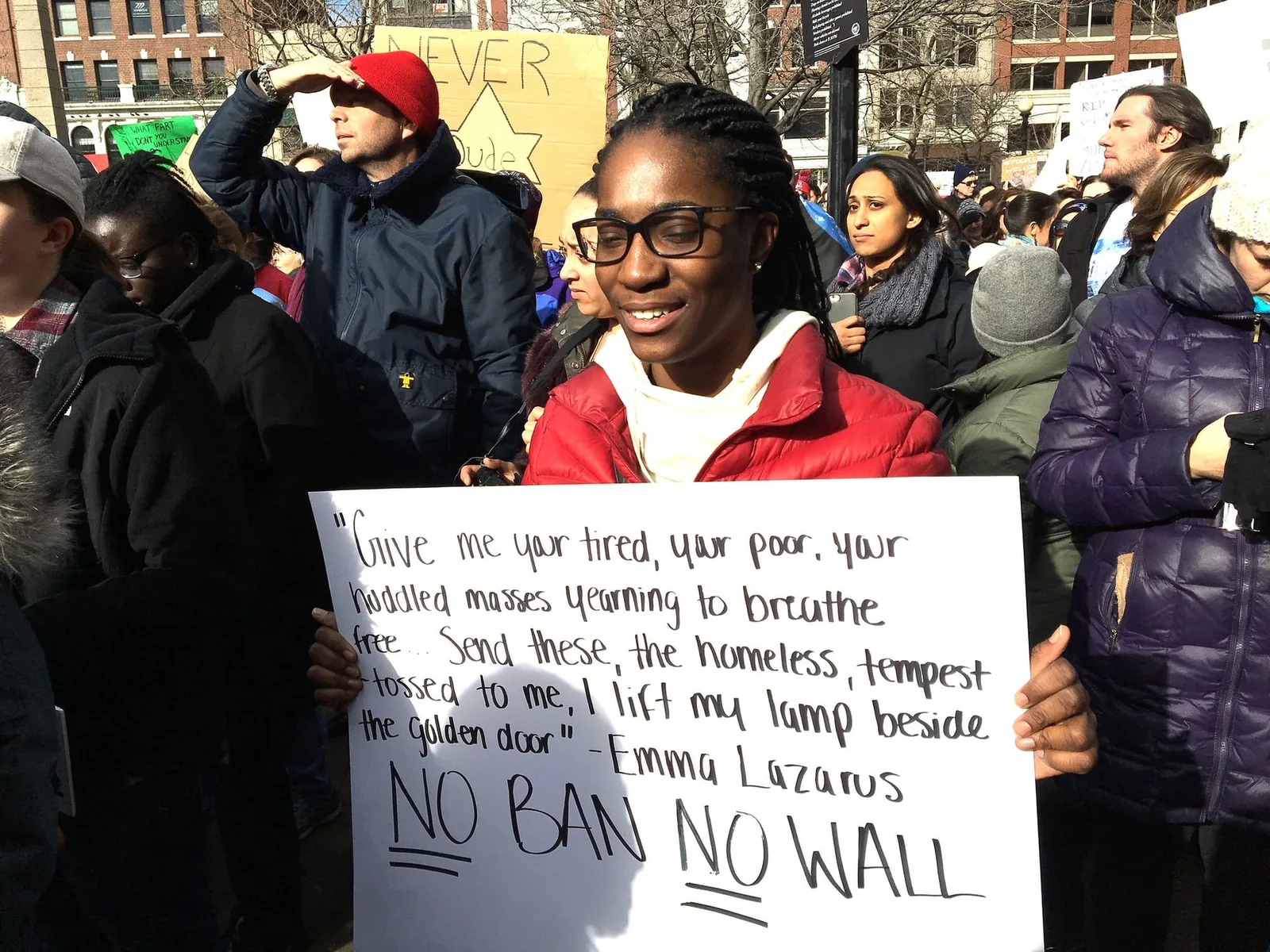
The economic and moral case for reopening the Golden Door should suffice, but there are also compelling geopolitical reasons to do so.
The budgetary implications of a tax base that is aging and shrinking are stark. In Italy, where nearly a quarter of the population is over the age of 65, pension payments have ballooned even as the tax base shrinks.
Immigration is not a global solution to the demographic transition. But it can buy America decades, during which we can fund a highly capable liberal state, and at the end of which we will be larger than we are now, and essentially every other country smaller than they are now.
Moreover, the era of the Golden Door was not just characterized by high levels of immigrants coming to America and permanently settling here. It was easier to both come and to leave, given that leaving needn’t permanently cut off future options. Ran Abramitzky, Leah Platt Boustan, and Katherine Eriksson provide a window into this: Official statistics between 1908 and 1923 indicate that 35 percent of people who immigrated in that time eventually returned home. Another estimate that uses a different method than the official statistics estimates that the return rate could actually have been as high as 70 percent. The main difficulty in estimating this number is that many people came, left, returned, and left again during this period.
Much as the world’s top talent was already coming to American universities in droves before the Trump administration ruined the arrangement, so too can a more open America become a place to gain experience of all kinds, to develop your skills and grow your wealth and, if you wish, to then return home, or go somewhere else entirely.
That is what it should mean to be at the center of the world. Greatness is not the ability to intimidate other countries, to wield like a cudgel the world’s biggest economy or the world’s most terrifying military. Rather, greatness is to be the country where everyone goes to seek advancement of all kinds. A country where you can be welcomed, granted equality under the law, and given a viable path to citizenship if you want it. A country where you have the greatest opportunities to better yourself and then spread the gains from that elsewhere, if you so choose.
An open and cosmopolitan society is the one we should want as liberals. But it is also the best option in terms of cold-blooded geopolitical realism. The demographic transition is a hard problem that no one has yet figured out. Neither innovations in public finance nor generous incentives to have more children have had an appreciable impact on the birthrate or the unforgiving fiscal math wherever they have been tried. So let that be someone else’s problem to figure out. There are zero-sum gains to be had as the country that educates the world and draws the most talent of all kinds—think about the function of English in an international context. Let’s continue to keep those benefits for ourselves. Let’s get more of them, in fact.
I am often told that we need to moderate our tone on immigration, given how furious Americans were about it in 2024 and how intractable the issue has been for the whole 21st century. People need to wake up. The anti-immigration party just absorbed the biggest defeat that any party has absorbed since Reagan’s crushing victory in 1984. That 1984 victory permanently broke the New Deal settlement. We have been limping along in the aftermath ever since. The 2026 midterms have signaled that a similar reconfiguration of our politics is within our grasp, if we have the skill, the luck, and the determination to seize the moment.
We have a choice: to oversee a painful decline or to do what it takes to reimagine American global leadership for the world we actually live in. Let’s reopen the Golden Door. Let’s reconstruct our system of basic research and higher education. Let’s turn America into a whole new kind of world-beating power. We have all the ingredients we need, including at last a favorable political environment.
We have it in our power to begin the world over again.
Featured Image is Oke Metitin of Boston, by Dan Kennedy
The poem is "The New Colossus," by Emma Lazarus, which adorns the Statue of Liberty.
Not like the brazen giant of Greek fame,With conquering limbs astride from land to land;
Here at our sea-washed, sunset gates shall stand
A mighty woman with a torch, whose flame
Is the imprisoned lightning, and her name
Mother of Exiles. From her beacon-hand
Glows world-wide welcome; her mild eyes command
The air-bridged harbor that twin cities frame.
“Keep, ancient lands, your storied pomp!” cries she
With silent lips. “Give me your tired, your poor,
Your huddled masses yearning to breathe free,
The wretched refuse of your teeming shore.
Send these, the homeless, tempest-tost to me,
I lift my lamp beside the golden door!”