Opinion: Men didn’t kill dating, but what did?
On Oct. 10, 2026, Salt Lake City businessman Chris Hatch took to X to share some dating advice for young men. He began his post with, “Attention Young Men: I am surrounded by 20-year old girls in my life that are smart, capable, hard-working and cute. Nobody is dating them. Not sure what the deal is, but I don’t get it.”
He then posted 10 steps for a successful date which included forgoing video games, showering, meeting a girl at yoga class, asking for the girl’s number, calling them to initiate and bringing flowers. Other than the yoga, everything he laid out is pretty sound, timeless advice. Why, then, did this post rack up over 23 million views and become one of the most trending topics on social media over the weekend?
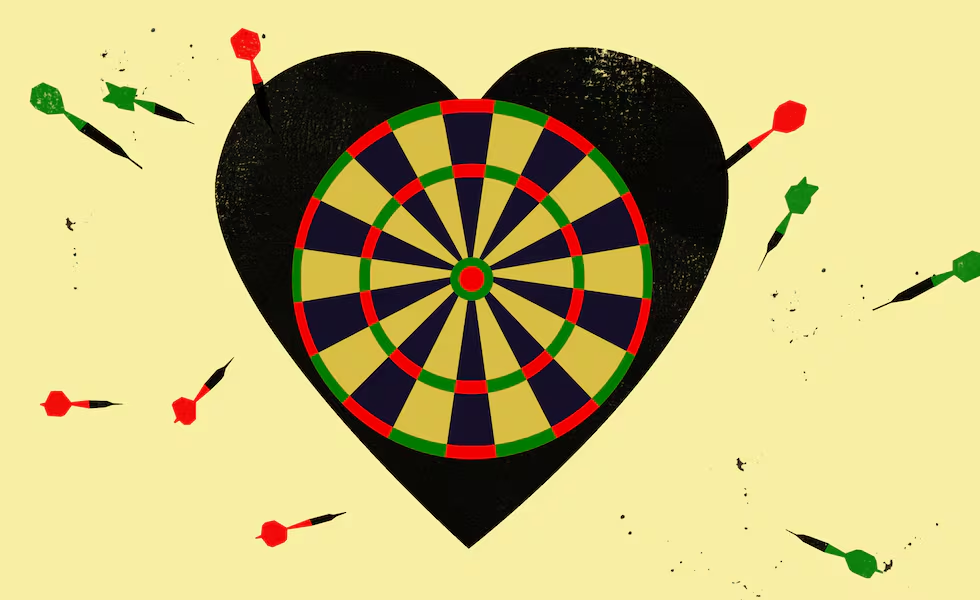
Because — despite Chris likely not intending to come across this way — many saw it as another example of men being given all the blame for the state of dating. A firestorm of finger-pointing discourse ensued.
America has 30 million single young men. Even Utah is feeling it
The Recession Equation
Unfortunately, as the Institute for Family Studies pointed out in a comprehensive report this year, there is a real dating recession in full force around America. And because men have traditionally carried the responsibility to take initiative in romantic relationships, society’s knee-jerk reaction is to blame them for this recession. One very popular narrative says that if men would only stop being lazy, quit video games and pornography, take a shower, and go approach women, the problem would be solved.
There’s some truth to this one-sided narrative, but it’s ultimately an incomplete story and ignores other important factors contributing to America’s dating crisis. Just as variables on each side of a mathematical equation must be dealt with to reach a coherent answer, there are factors affecting both men and women that contribute to the overall problem. Some of the factors lie on the women’s side of the equation, illustrating the complexity and nuance of the issue and why people are reacting so negatively to the one-sided narrative against men.
Some of these factors are backed by data, such as the fact that more women are opting out of the dating market than men, leading to a numerical shortage of women available to partner with. Some recent studies indicate young women’s life goals have become less family oriented than young men’s are, and they are also more likely to reject male suitors based on their politics. I would be remiss to not include the very genuine concerns about how the concept creep of sexual nonconsent in the post #metoo era has, as journalist Christina Buttons recently explained, imposed a new and difficult standard on men.
Another major concern is that social media may be creating unrealistic expectations, causing women to overlook men they might otherwise pair well with. Studies on dating apps frequently reveal how a majority of women only compete for a small minority of men and reject the rest. Even in real-life dating, men experience far more rejection in courtship.
The Real Culprits
So men and women both face challenges, and it’s unfair to blame men for the entirety of the problem. But are we overlooking other factors that go beyond simply men’s faults and women’s faults? Yes. In fact, these omitted variables may actually be the biggest culprits of the dating recession.
Do you live in a ‘marriage desert’ or a ‘marriage garden’?
Jason Carroll, of BYU’s Wheatley Institute, has identified several social trends contributing to falling marriage rates. Among these, he names the decline in religiosity, the cultural move toward individualism, and the increasing prioritization of wealth and work over family as key culprits. Each emerged and became dominant gradually — over the course of decades — so they don’t draw as much attention as viral posts. Yet, they may be much better at explaining the dating recession. Here are two examples:
First is the recent development where marriage is seen by many as a “capstone event,” rather than a “cornerstone event.” New generations see marriage as something to be achieved only after educational and career success is obtained and when other aspects of life are in order, rather than as something to pursue early as part of building one’s life foundation. This leads to delayed commitment, mismatched priorities and lower efficiency in dating markets.
Second is what scholar Mark Regnarus describes as the “cheapening” of sex, or the decrease in the social and real costs historically associated with romantic pairing brought on by things like pornography, hookup culture, abortion and the decoupling of sex from marriage. Among other negative effects, this cheapening of sex removes a key incentive for men to become “marriageable” and pursue stable relationships and is likely contributing to the shortage of eligible men that women complain about.
Ultimately, both young men and young women have valid gripes about each other’s behavior in today’s dating landscape. But perhaps all the finger-pointing is distracting us from identifying the bigger forces fueling the dating recession, particularly the widespread cultural and technological changes ushered in gradually over the decades.
Can literacy save modern dating?
At the very least, we should acknowledge that the narratives being told are incomplete. It’s oversimplistic to single out men as the primary culprit, and doing so is not likely to help young adults revive romance. We need to address the whole equation, not just one side of it.