Who are the NBA’s most marketable stars? AJ Dybantsa is already making his case
Being one of the NBA’s top players doesn’t automatically translate to being one of sport’s most marketable athletes.
In today’s sports business landscape, brands are looking for more than points, championships and highlight-reel performances. They want personalities, cultural influence, international audiences and athletes who can connect with fans in ways that extend beyond the game.
Five NBA players are making that case particularly well, each in their own way.
The Greek superstar Giannis Antetokounmpo has built a global brand around his personality and international appeal. The Frenchman Victor Wembanyama offers a rare combination of basketball talent and cultural intrigue. Rookie sensation AJ Dybantsa represents the next generation, while defending champions Jalen Brunson and Karl-Anthony Towns have carved out their own identities in New York.
All five landed among the top NBA players in SportsPro’s 2026 list of the world’s 50 most marketable athletes.
The rankings, powered by NorthStar Solutions Group, score athletes out of 100 based on brand equity (45%), momentum (40%) and commercial trajectory (15%).
The methodology goes beyond basic social media follower counts, taking into account things like audience engagement, reputation, performance, brand partnerships and future growth potential.
The five NBA stars offer different examples of how that marketability can be developed — from established global superstars to a rookie whose professional career is just getting started.
Giannis is playing a bigger game off the court
Entering at the top of the 2026 list is Antetokounmpo at No. 3 overall.
His appeal begins with his decorated résumé over his 14-year career: an NBA championship, Finals MVP, two-time regular-season MVP, Defensive Player of the Year and nine All-NBA selections.
His commercial portfolio, though, has grown well beyond traditional endorsement deals.
The Greek star has established relationships with major brands, including Nike, Google, Swiss watchmaker Breitling and Sony. More recently, he has become increasingly involved in business partnerships that give him a stake in the companies he represents.
In February, Antetokounmpo became a shareholder and partner of delivery company Gopuff. The partnership includes opportunities to collaborate on product development, content creation and fan experiences.
However, not every business move comes without risk.
Antetokounmpo, during the offseason most notably, became a shareholder in prediction-market company Kalshi, joining its marketing efforts and appearing in a commercial with his brothers. His investment sparked criticism because the platform had been offering markets on his own NBA future shortly before he became a shareholder.
Utah files criminal charges against popular prediction market platform
All these deals really highlight how much weight an athlete with global reach carries. Antetokounmpo’s worldwide fanbase, engaging personality and superstar track record give brands a solid way to connect with people everywhere, not just in the U.S.
Plus, his move toward taking equity shows how players are shifting from just promoting products to getting a real piece of the pie.
Being different has its advantages for Wembanyama
There aren’t many athletes who can walk into a room and immediately stand out quite like Wembanyama.
At 7-foot-4, the San Antonio Spurs star has a physical profile unlike almost anyone else in the league. His combination of size, skill and personality has helped make him one of the league’s most recognizable young players, appearing at No. 7 on the list behind Antetokounmpo.
His commercial relationships reflect that uniqueness.
Wembanyama has partnerships with Nike, Louis Vuitton and Fanatics, along with appearances in advertising campaigns for San Antonio-based grocery chain H-E-B. He also serves as the cover athlete for the NBA’s basketball video game series “NBA 2K27.”
The Alien, as he’s known, has been selective about the brands and causes he aligns himself with, giving his growing commercial profile a more intentional feel.
In a recent interview with CBS’ “60 Minutes,” Wembanyama mentioned players in the league today can use their platforms in different ways, whether as influencers, philanthropists or promoters of products the NBA sponsors, such as alcohol and gambling. But he noted that he wants to use his platform in a different way than the rest.
“I think my choice isn’t final because I’m still growing as a person,” Wembanyama said. “But I want to promote healthy things. ... I don’t mean just the food, but healthy habits, things that make people’s lives better, and things that in the future … make society better, hopefully.”
That perspective is part of what makes Wembanyama an interesting figure for brands. He’s developing a public identity around the things he believes in, while leaving room for that identity to evolve as he does.
Opinion: A sports hero worthy of the title
And that thoughtful approach off the court doesn’t mean he’s interested in being universally liked on it. Wembanyama’s competitive edge is a defining part of his personality. He’s not afraid to show frustration, embrace rivalries or make it clear that he’s not particularly fond of the opposition. That gives him a personality that stands out in a league full of stars.
The next generation of NBA marketability
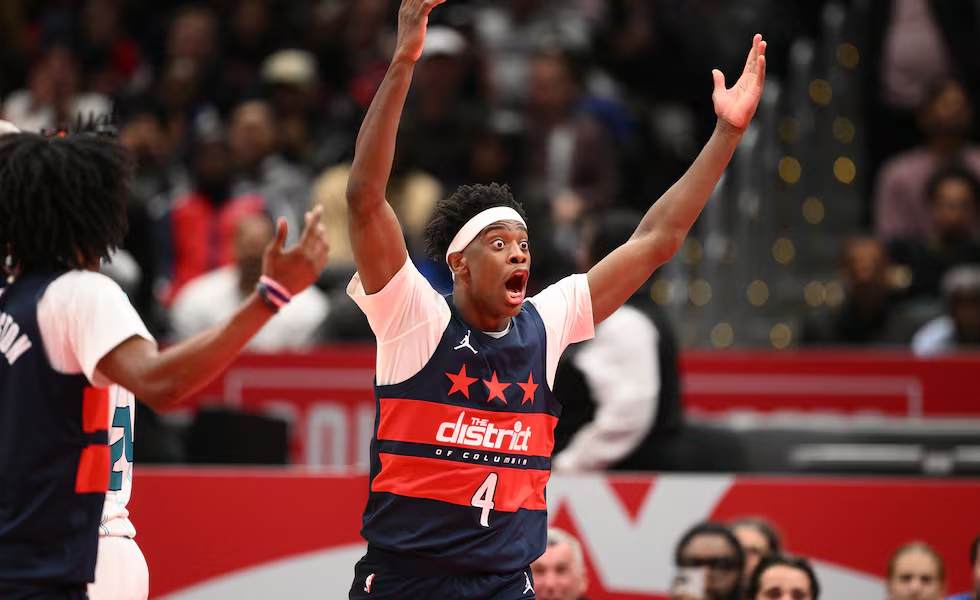
Dybantsa’s inclusion among the five highest-ranked NBA players is particularly notable because his professional career is only beginning.
The Washington Wizards selected Dybantsa with the No. 1 overall pick in this year’s NBA draft after his lone season with the BYU Cougars. He led the nation with 25.5 points per game, helping establish himself as one of basketball’s best young prospects.
But his commercial appeal didn’t begin with the NBA.
The BYU superstar signed a name, image and likeness agreement with Nike at 16. After entering the league, he re-signed with the company and worked with Nike on the development of his personal signature Starboy logo.
‘AJ brings hope’: Wizards fans are dreaming big with AJ Dybantsa in D.C.
He also has partnerships with Fanatics and Red Bull, giving him connections to sports apparel, collectibles, memorabilia and lifestyle marketing.
His relationship with Fanatics is particularly interesting because it offers opportunities to capitalize on the excitement surrounding his professional career through trading cards and memorabilia.
Dybantsa’s business operation is also different from the traditional athlete representation model. His father, Ace Dybantsa, oversees a team of advisers and professionals who help manage his business interests and public image.
That structure has helped Dybantsa build a recognizable identity before entering the league. Now, his NBA arrival creates another opportunity for that brand to grow.
Dybantsa made his NBA debut against the Cleveland Cavaliers on Oct. 28, scoring 19 points after missing Washington’s first four games with an ankle injury. He’s already jumping off the screen for basketball experts who hail his two-way ability.
His next challenge is turning the attention surrounding a highly anticipated rookie into the kind of sustained commercial value that established NBA stars have built over years.
His No. 10 ranking on SportsPro’s list suggests that brands and audiences are already paying attention.
Being a Knick comes with benefits
Brunson and Towns have found different ways to turn their success with the Knicks into opportunities beyond basketball.
Brunson has become the face of basketball in New York, helping lead the franchise to its first championship in 53 years last season. His performances have made him a fan favorite, but his personality and connection with the city have helped build his profile outside the arena.
He’s become a familiar face in national ad campaigns for Nike and AT&T. The Knicks “Captain” also made his hosting debut on the season premiere of NBC’s “Saturday Night Live” in September and took home the ESPY for best athlete in men’s sports in July, further cementing his status as one of the biggest names in American sports. Not to mention, he’s been on WWE programing on his off days.
Jalen Brunson's monologue! pic.twitter.com/FnPKYkGcu7
— Saturday Night Live (@nbcsnl) September 27, 2026
That crossover appeal is continuing to grow. Brunson and the Knicks are set to be featured in an upcoming HBO-A24 documentary series from actor and longtime Knicks fan Ben Stiller, exploring the franchise’s history and its return to the top of the NBA. Brunson is also adding another television credit to his résumé with a guest appearance on NBC’s “Law & Order: SVU” Thursday night.
Towns, meanwhile, might be the most surprising name among the five players on SportsPro’s list, rounding out the group at No. 16 overall. He’s an established NBA star and one of the league’s best big men, but he doesn’t necessarily carry the same national or global profile as Antetokounmpo or Wembanyama.
Still, Towns has never been shy about showing his personality away from the court. His sense of humor and willingness to participate in advertising campaigns have helped him develop relationships with companies across several industries such as Nike, Gatorade, Fanatics and Panini.
Like Brunson, Towns also benefits from being part of the Knicks. He’s increasingly taken advantage of new opportunities that come with being in the New York market, including a cameo as himself in “The Devil Wears Prada 2,” appearing alongside stars such as Meryl Streep and Anne Hathaway. He’s made appearances on late night shows such as “The Tonight Show Starring Jimmy Fallon” and “Late Night with Seth Meyers.”
His profile extends into celebrity culture through his relationship with Jordyn Woods, the model and entrepreneur he married in August. Woods has built her own following and connections in fashion and entertainment, adding another layer to Towns’ visibility outside basketball.
Their paths are different, but both players illustrate the value of playing in a market like New York. Brunson has become closely connected to the city’s basketball identity, while Towns has found additional opportunities through entertainment and celeb culture.
There’s more than one way to build an NBA brand
The five players have different personalities, backgrounds and commercial portfolios. But their rankings point toward a common theme: an athlete’s value to a brand increasingly depends on what happens outside the arena.
For companies, an endorsement can provide access to an athlete’s audience. A deeper partnership can offer something more — an opportunity to develop products, tell stories, build businesses and connect with consumers through someone they already recognize and trust.
The distinction between established stars and rising athletes is important, too.
Antetokounmpo has built an international brand over years of NBA success. Wembanyama has quickly developed a distinct identity that reaches beyond basketball. Brunson and Towns have connected their on-court success with personalities and business interests that give companies different ways to work with them.
Dybantsa represents the next stage of that process.
NBA power rankings: Where do the Jazz stand in the early going?
His professional career has only just begun, but his commercial identity was already taking shape before he entered the NBA. Now, with the added exposure that comes with being a No. 1 overall pick, he has an opportunity to turn that early momentum into a lasting brand.
The rankings aren’t simply a measure of who is the most famous or who has the biggest social media following. They offer a look at how athletes are building value, reaching audiences and creating opportunities beyond basketball.
And increasingly, that business is becoming just as important to an athlete’s overall profile as what he does on the court.