President Luiz Inácio ‘Lula’ da Silva wins surprise reelection in Brazil
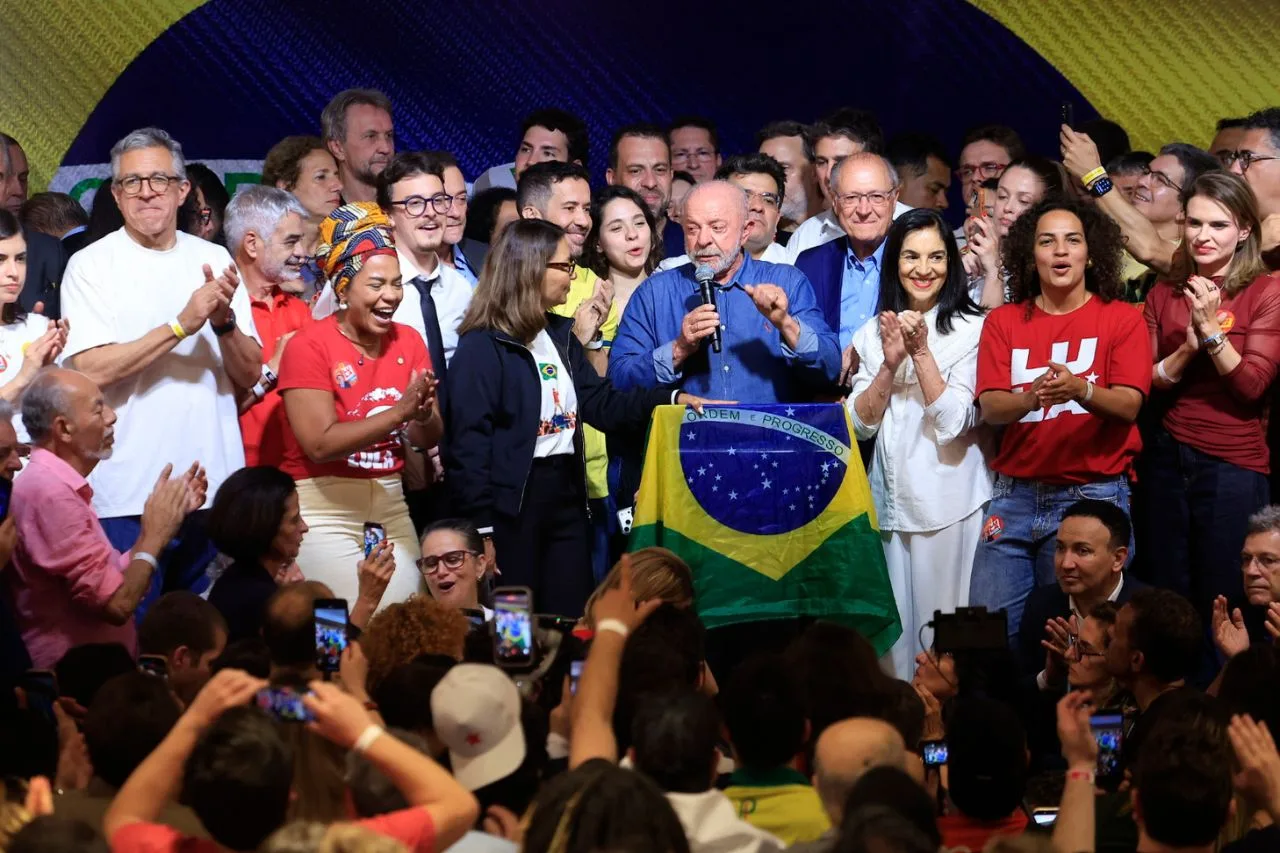
Brazilian President Luiz Inácio “Lula” da Silva won reelection with 51.8% of the vote and will govern the country for a fourth time from 2027 to 2030, Brazil’s electoral authorities confirmed.
The leader of the Workers’ Party (PT, by its Portuguese initials) finished 3.5 percentage points ahead of far-right senator Flávio Bolsonaro, of the Liberal Party (PL) — the winner in the first round — who received 48.2% of the vote. There was a difference of 4.3 million votes between them.
The result came as a surprise, as Da Silva had ended as the runner-up in the general election, with 45% against Bolsonaro’s 47%. This is the first time a presidential candidate that ended in second place in the general election has won the runoff in Brazil.
He will also become the first person in Brazilian history to serve as president in four terms — the first two from 2003 to 2011, and now 2023-2030. Lula, 80, will begin his new term in January 2027.
“I want to thank the people for the generosity they’ve had towards me for so long,” Da Silva said, speaking at the PT headquarters on Sunday night. “And in this runoff, I want to thank the generosity of the Brazilian youth who defended democracy.”
He also stressed the importance of each voter, saying that his party managed to “convince them that their vote was very important to ensure the country’s democracy.”
“In this election, we had to beat external intromission via digital platforms. We will have to regulate those platforms,” Lula said, referring to a controversial decision by Meta — the firm that runs Facebook, Instagram and WhatsApp — to temporarily block his campaign’s ads. “This country will not accept being anyone’s backyard,” he added, speaking of Brazil’s relationship with other countries.
“Now that we’ve won the election, we no longer have rivals. Now, I have to govern for the 215 million Brazilians,” he said.
Reelected vice president Geraldo Alckmin expressed his “gratitude” to all their voters, especially younger ones. “The future begins today, and it’s called youth,” he said.
Alckmin also expressed his “utmost respect” for Lula. “He saved Brazilian democracy for the second time,” he said, referring to how he beat ex-President Jair Bolsonaro in 2022.
While the vote count initially showed Bolsonaro slightly ahead of Da Silva, the favorable scenario for the incumbent president became clear after 50% of the votes had been counted, leading to a clear difference between them at 9:10 p.m. local time, when the process was almost complete.
Lula’s victory marks a shift in the right and far-right wave that has marked a regional tendency in recent years, with candidates from those sectors winning almost all presidential elections in the South Cone.
Thousands of Lula supporters flooded the streets in Brazil’s main cities on Sunday night after the result was confirmed.
Brazil 2026 elections
Voting was scheduled to end at 5 p.m. on Sunday, but the Brazilian Federal Supreme Court extended it until 7 p.m. in response to a request from the PT due to issues with public transport in several states —including heavily populated São Paulo — which the party claimed did not allow people to cast their votes normally. The PL also requested the extension due to heavy rainfall and flooding in the northeast of the country.
However, several polling stations that had already closed could not be reopened after 5 p.m.. The electoral court had begun disclosing preliminary results but halted the counting process after the Supreme Court’s decision.
The incumbent leader has governed Brazil since 2023. He previously served two consecutive terms between 2003 and 2011.
He was unable to run in the 2018 presidential election because of charges related to the Lava Jato investigation, Brazil’s largest corruption probe. He was jailed over those charges in 2019, but the conviction was later annulled by the Supreme Court.
His opponent in the runoff was the eldest son of former Brazilian President Jair Bolsonaro (2019-2022), who is currently serving a 27-year sentence under house arrest for plotting a coup and Da Silva’s murder following the 2022 presidential election.
Campaign proposals
Da Silva’s proposals include continuing several programs introduced during his administration to combat poverty, child malnutrition and unemployment.
He has also sought to appeal to more centrist and conservative voters by addressing concerns about security and public safety, key pillars of Bolsonaro’s campaign.
Lula recently said he intends to create a Ministry of Public Safety to improve coordination between the federal government, states and municipalities in the fight against organized crime and militias.
During the campaign, he strongly criticized Bolsonaro’s friendship with Argentine President Javier Milei and their ideological similarities.
Analysts told the Herald that Lula will face major difficulties advancing his legislative agenda and could even encounter a situation of ungovernability, as the PT will hold a minority of seats in Congress, while the PL will have a large legislative presence, as well as several key state governorships.
Lula and Milei
Da Silva has a very poor relationship with Milei, who campaigned heavily in favor of his rival.
Political analysts warn the relationship could deteriorate further during this new presidential term.
The two have traded criticism, with Milei going so far as to insult and attack the Brazilian president.
In August, the Brazilian government downgraded diplomatic relations with Argentina to the level of chargé d’affaires — meaning the countries no longer have ambassadors accredited to each other — after Milei called Lula a “thief,” a “former convict” and a “totalitarian” while speaking at the launch of Flávio Bolsonaro’s candidacy in São Paulo.
Although Milei had previously used those terms to describe Lula, it was the first time the Argentine leader insulted him on Brazilian soil, triggering a diplomatic crisis and a harsh response from Brasília.
Brazil is Argentina’s main trading partner. The two countries have maintained diplomatic relations for two centuries and have highly integrated economies, particularly in the automotive and industrial sectors.
La entrada President Luiz Inácio ‘Lula’ da Silva wins surprise reelection in Brazil se publicó primero en Buenos Aires Herald.