Halloween and daylight saving are coming back to back this year. Here’s what you need to know
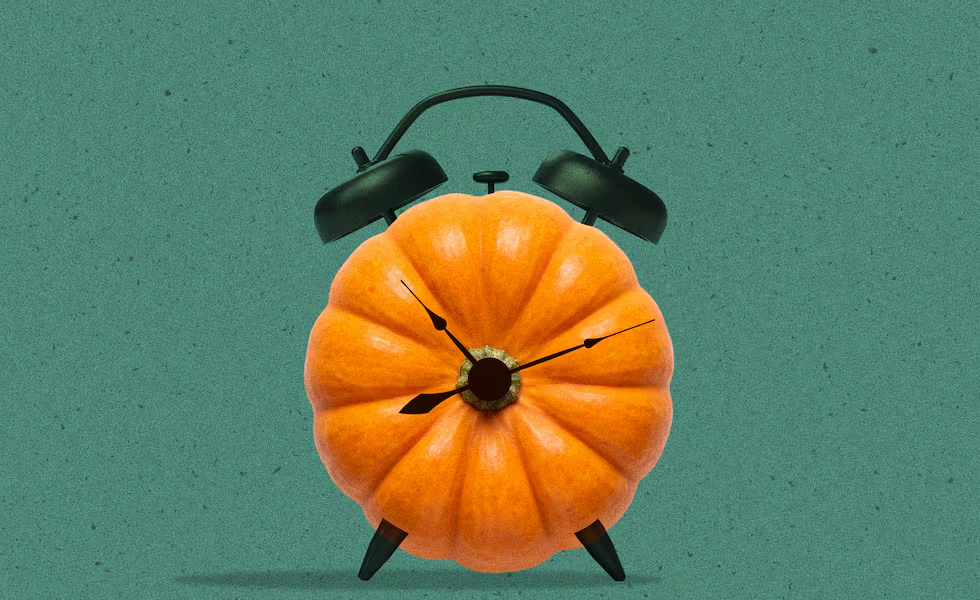
There’s some good news for anyone who wants to celebrate Halloween to the fullest this year: You will get an extra hour of sleep that night thanks to the end of daylight saving time.
It is uncommon for daylight saving time and Halloween to meet, and after this year, it won’t happen again until 2037. That year will also be the next time that Halloween is on a Saturday.
After Halloween on Oct. 31, daylight saving time will end on Sunday, Nov. 1, at 2 a.m. The time change will move America back to standard time and put more daylight hours into the morning.
Opinion: Does anybody really know what time it is?
We will move back to daylight saving time on Sunday, March 14, 2027, when the clocks go forward an hour.
Under current law, daylight saving time begins on the second Sunday in March and ends on the first Sunday of November.
Lawmakers still trying to end the time change
This year, Congress has been trying to pass the Sunshine Protection Act, which would get rid of the twice-yearly clock changes and make daylight saving time permanent. The bill passed the House in July with a vote of 301-117, per USA Today.
The legislation then stalled in the Senate, and lawmakers left Washington for recess before dealing with the measure. This means the current daylight saving system is intact.
This issue is something that has been debated for years. President Donald Trump has repeatedly asked Congress to end the time change, but the bill has to pass the Senate before it reaches his desk.
In a Truth Social post on Oct. 2, Trump wrote: “Republicans in the Senate have to get moving on what I call the ‘No More Changing of Clocks Act,’ officially known as The Sunshine Protection Act.”
He called the current system “ridiculous.”
“People don’t want to go around changing their Clocks anymore and, besides, far and away, most people like having an hour of extra sunlight in the evening, rather than in the morning,” he added.
Trump wants brighter evenings. Cotton says not so fast
Do all states observe daylight saving time?
No, not all U.S. states observe the daylight saving time change as-is.
Here’s a look at which states and U.S. territories stay on standard time year-round, per USA Today:
- Hawaii
- Most of Arizona (except the Navajo Nation)
- American Samoa
- Guam
- Northern Mariana Islands
- Puerto Rico
- U.S. Virgin Islands
When did the daylight saving time change start?
Daylight saving time first became popular in Europe — specifically in Germany — before it made its way to the U.S.
It was first observed in the U.S. as an energy conservation effort after World War I in 1918, according to AL.com. In the wake of World War II, it was revived, but across the country, its rules and the way it was observed were inconsistent. This caused confusion for broadcasting and transportation.
It was the Uniform Time Act of 1966 that made the rules consistent across the U.S. The rules have been tweaked over the years.
The current dates for the time changes were set by the Energy Policy Act of 2005. The legislation extended the time frame for daylight saving time.
The impact of the time change on our sleep schedules
Many people are impacted by the twice-yearly time change and the way it impacts their sleep schedule.
According to Time magazine, Alex Dimitri, a psychiatrist and sleep medicine physician, said the practice of changing the time is similar to “an hour of jet lag.” He added that it can be a big adjustment for some people.
Daylight saving time has representatives debating around the clock — literally
The good news for this weekend is the move to standard time means people will gain an extra hour of sleep.
Andrea Matsumura, a sleep medicine physician and spokesperson for the American Academy of Sleep Medicine, said that “typically, moving to Standard Time is actually in sync with our circadian rhythm.”
“Most people have a fairly easy transition into Standard Time; it’s the Daylight Saving Time that you have to do a lot more work to adjust (to) losing an hour of sleep,” she added, according to Time magazine.