EA Sports College Football’s future faces questions as NIL costs rise
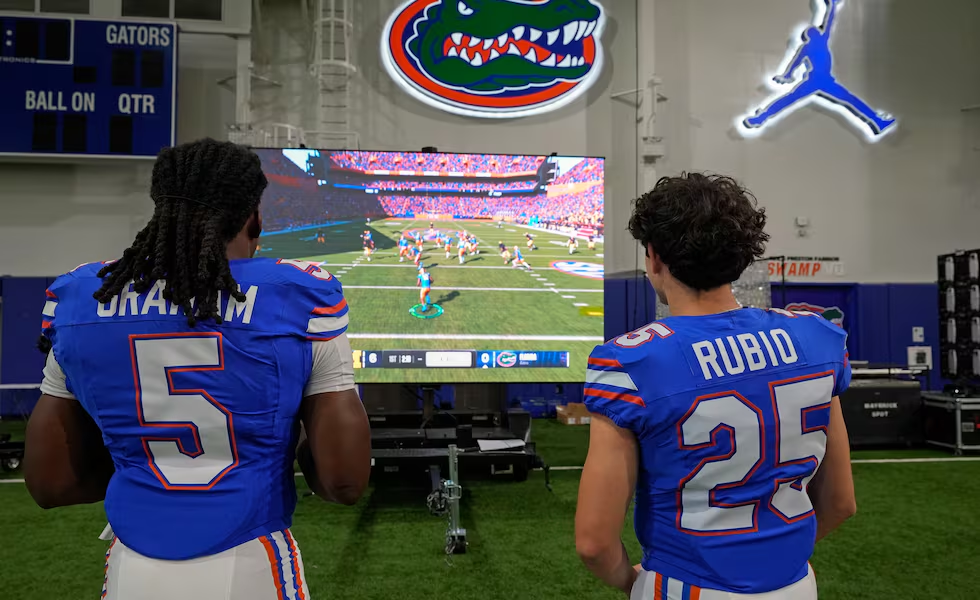
EA Sports College Football has been one of the biggest success stories in sports video games over the past two years.
But as the cost of compensating college athletes continues to rise, the franchise’s long-term future could be less certain than its popularity suggests.
According to a Tuesday report from Insider Gaming, sources familiar with the game’s development are concerned the series could be discontinued “by the end of the decade” as production costs increase and Electronic Arts looks for new ways to generate revenue.
That does not mean the franchise is in immediate danger. Matt Brown of Extra Points has said on X that the series is contractually obligated to receive at least one more release.
Still, the concerns raise questions about the economics of a franchise that returned in 2024 to enormous demand after an 11-year absence.
From a blockbuster return to rising costs
When College Football 25 launched in July 2024, it was more than another annual sports game. It marked the return of a franchise that had been gone since 2013, following legal disputes surrounding the use of college athletes’ names, images and likenesses.
The response was immediate.
More than 2.2 million unique players tried College Football 25 during its early-access period, with another 600,000 participating through an EA Play trial. The game eventually went on to become the bestselling sports video game in U.S. history.
The game’s huge success proved just how hungry fans were for its return, giving EA a massive new hit for its sports lineup that already included Madden NFL, the NHL and FIFA video game series, Battlefield and the forever popular Sims series.
The follow-up game, College Football 26, remained a strong seller in 2025, finishing as the seventh-bestselling game of the year in North America.
But the latest installment, College Football 27, has had a more modest sales-chart performance. It debuted at No. 2 on the U.S. sales charts in July 2026 before falling out of the top 10 in August. A bundle featuring College Football 27 and Madden NFL 27 ranked fourth that month.
Lower rankings don’t mean the series is in trouble, though. Annual sports titles always sell best right at launch, and rankings don’t tell the whole story about revenue or profits. That said, it does make you wonder if EA can keep up the initial hype as costs keep climbing.
NIL payments are becoming a bigger expense
One of the biggest costs separating the new college football games from traditional sports titles is compensating the athletes who appear in them.
For CFB 25, players who opted into the game received $600 and a copy of the title. With more than 11,000 athletes participating, total compensation amounted to roughly $7 million to $7.5 million, per Insider Gaming.
By CFB 27, payments had increased to $1,500 per player, pushing EA’s total NIL bill close to $20 million with thousands of athletes involved.
Those payments are only one piece of the development budget. EA must also account for university, conference and stadium licensing, employee salaries, marketing and the other costs associated with releasing the games.
BYU-Notre Dame ranks among college football’s most expensive tickets this weekend
Insider Gaming reported that some sources believe annual NIL expenses could eventually reach $30 million to $40 million if payments continue increasing.
EA has opportunities to generate cash beyond game sales, including digital purchases and its much-maligned Ultimate Team mode. But it was reported that Ultimate Team has generated less revenue than expected as fans of the game criticized it for relying on microtransactions, card packs and limited-time content that push people to spend real money to build a competitive roster for online modes. That increases the pressure to find additional income streams for the company.
That creates a difficult balancing act. EA needs to make the franchise financially sustainable without alienating the players who helped make its return such a success.
Additional microtransactions introduced in CFB 27 in single-player modes such as Dynasty and Road to Glory also drew heat from players who objected to paying extra for certain features and progression options. EA, though, smartly removed those purchases with developers saying they “missed the mark” on that idea.
If I wasn’t clear enough yesterday, I will never work with @EASPORTSCollege again if they don’t reverse these decisions.
— Bordeaux (@bordeauxyt) July 8, 2026
EA’s playbook will be to wait out the backlash. That’s why this conversation can’t stop. And trust me… we’re not the only ones who feel this way.… pic.twitter.com/s7G5Rjk97M
The episode illustrates the challenge facing the popular franchise: New revenue opportunities could help offset rising expenses, but pushing too aggressively could frustrate the audience EA spent years rebuilding.
New ownership adds another layer
The uncertainty of the series comes as EA enters a new chapter under private ownership.
Back in August, EA announced it had completed its acquisition by an investor consortium comprising Saudi Arabia’s Public Investment Fund, private equity firm Silver Lake and Affinity Partners, the investment firm founded by Jared Kushner.
Under the transaction, EA shareholders received $210 per share, and the company became privately held.
The ownership change does not mean College Football is at risk. The new owners have presented the deal as an opportunity to invest in EA’s future and expand its gaming business.
Saudi Arabia's PIF acquiring EA is part of its broader trend in gaming
— Aviral Bhatnagar (@aviralbhat) October 5, 2025
PIF is a big investor in the makers of Pokemon, Street Fighter, GTA, Dragon Ball Z, Final Fantasy
With its push into sports, $12B invested in gaming is cementing its entertainment dominance
Culture shaper
However, the acquisition adds context to questions about which franchises can consistently justify their costs and deliver the returns EA expects.
Insider Gaming reported that some people involved with the College Football series fear EA could eventually narrow its focus if development expenses continue rising. Other sources pushed back on the possibility of canceling the series, arguing that the franchise’s value should not be underestimated.
For now, there is no announced plan to discontinue the video game series, and the reported contractual obligation for at least one more release provides some type of reassurance to fans.
But the longer-term question is whether EA can balance rising NIL payments, development expenses and player expectations while keeping the franchise profitable.
CFB 25 proved there was an enormous audience waiting for the game’s return. Maintaining that success year after year, though, may be the tougher challenge going forward.