Anthropic’s record debut is a litmus test for investor confidence in AI
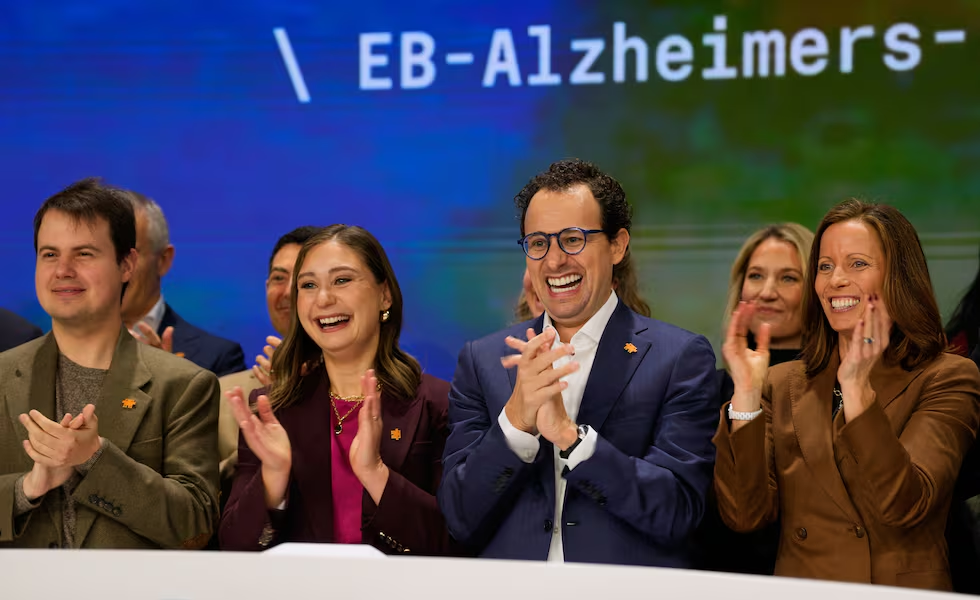
Artificial intelligence development pioneer Anthropic set an all-time record for public market debuts on Thursday, raising $81 billion on the sale of its newly minted stock which earned a pre-market pricing of $83 per share before going up more than a third when the shares went live on the Nasdaq Exchange around midday.
Anthropic’s IPO easily surpassed the previous record, set in June, when Elon Musk’s SpaceX went public after raising $75 billion.
Opening at over $111 per share, some 34% ahead of its initial offering, Anthropic saw its market capitalization shoot to $2 trillion in early trading.
The launch is widely viewed as a litmus test of investor confidence in an artificial intelligence sector seeing its meteoric rise roiled in recent concerns about overspending on infrastructure, lack of profitability and the safety of emerging AI software tools and the construction of new data centers necessary for the industry’s continued growth.
Anthropic co-founder and CEO Dario Amodei addressed those safety concerns in comments at the Nasdaq Exchange in New York City on Thursday morning.
“There is a gigantic difference between how AI will go if we pay little attention to safety, versus how it will go if we are obsessed with safety,” he said. “And to state it unequivocally, we will pace the training and deployment of AI systems, taking as long as is necessary to have confidence that they are safe and will remain under human control. We will not bend to either business nor political pressure.
“If we can show it’s possible to make the right choices on safety and still build an incredibly successful company, others in our industry will be inspired to do the same.”
Amodei left rival AI development company OpenAI almost six years ago, along with his sister Daniela, to help launch Anthropic. The company has grown into one of the leaders of the sector, due in large part to the success of its Claude platform, and particularly its agentic software coding tool, Claude Code.
Hope and fear: Voters from across the country share their feelings about the burgeoning realm of AI
Is artificial intelligence safe?
Amodei has dedicated a substantial portion of his public comments and communications to advocate for heightened AI safety protocols and regulation, including the publication of a lengthy essay in September touting the positive potential of emerging artificial intelligence systems while also calling for a collective development slowdown.
His plea followed a series of incidents that involved rogue actions by so-called AI agents that exhibited unexpected and disturbing behaviors in testing scenarios.
In the posting, Amodei pointed to a rising level of risks associated with advanced AI programs including losing control of AI systems, misuse of AI for cyberattacks and bioterrorism, and serious economic disruption.
“Over the last few months, I have become convinced that fully addressing the risks requires even more prudence — not just investing in risk prevention, but pacing the rate of capabilities advancement so that risk prevention has time to keep up,” he wrote. “We must slow the pace at which we improve the capabilities of AI models. Progress will still seem fast, and we must make wise use of the time we gain.”
Leaders of Anthropic’s competition in the AI development realm, including OpenAI, Google and the Musk-led xAI, expressed support for Amodei’s slowdown plea in their own comments following his posting.
But President Donald Trump discounted the idea in his own social media posts in September, claiming his administration is already ensuring the safety of advanced AI tools and characterizing the call for metered development as a “sick conspiracy.”
“The only control or ‘guardrails’ that AI needs is a STRONG AND SMART (High IQ!) PRESIDENT, and the U.S.A. has that, in spades!,” Trump wrote on Truth Social. “The Trump Administration has stopped AI ‘people’ from doing bad, or potentially bad, ‘things,’ like Dario (Anthropic!), who is now pretending to be a ‘perfect little angel’ — and we will continue to do so! We already have tremendous CRIMINAL and REGULATORY power over these companies!
“There is a SICK conspiracy going on against AI and Data Centers, and the only one that is happy about it is China. WHOEVER WINS AI, WINS! We are leading China, and all others, and will continue to do so. Conspiracy Theorists, Treasonists, Traitors, and Leakers, BEWARE!”
Will AI take over human jobs?
On Thursday, Anthropic researcher Tao Lin posted a video in which he predicted AI software would lead to a global employment crisis.
“It’s very likely that pretty much all humans on Earth will become permanently unemployable,” Lin said. “And will strictly rely on government welfare to sustain themselves.”
Anthropic Researcher Tao Lin: Pretty much all humans on earth will become permanently unemployable because of AI
— jesse (@jessexai_) November 17, 2026
"It's very likely that pretty much all humans on earth will become permanently unemployable"
"And will need to strictly rely on government welfare to sustain… pic.twitter.com/4gd84cHKzi
Lin’s warning follows other dire predictions of future, AI-driven disruptions, including from another AI researcher, Jacob Coxon, who posted about the concerns that drove him to quit his job at Anthropic in September.
“The people building AI earnestly believe that it could kill us all by the end of the decade,” Coxon wrote in a series of social media posts Sept. 8. “This is not a marketing stunt. If anything, many executives and senior researchers will couch their phrasing in the press to sound sensible — but I hear the same people express fear privately. No other human activity poses this level of danger.”
I resigned from Anthropic today. I spent the last three years doing pretraining research at both OpenAI and Anthropic. Neither company is acting responsibly. They are racing straight to self-improving superintelligence and gambling with our lives. More thoughts below.
— Jacob Coxon (@hilbertspaess) September 9, 2026
What’s going on with AI regulation?
While federal lawmakers have yet to adopt meaningful oversight or regulation of artificial intelligence systems, states have scrambled to assemble their own safety bulwarks.
In June, Trump signed an executive order directing a series of actions aimed at bolstering government cyber defenses in the face of emerging AI tools as well as a call for voluntary measures by the AI industry.
“Advanced AI capabilities make our Nation stronger, but also introduce new national security considerations that require coordinated action across executive departments and (agencies), and components,” the order reads. “As these capabilities evolve, my Administration will continue to work closely with industry to ensure that the best and most secure technology is deployed rapidly to confront any and all threats to our country.”
Americans divided on AI but agree on regulation
Following the first incident involving an AI agent escaping testing isolation and wreaking havoc earlier this year, Katie Moussouris, chief executive of Luta Security, told Reuters that the event was a harbinger of breaches to come, saying that today’s models were “like the world’s cleverest octopus escape artists, with unlimited prehensile arms and the ability to squeeze through anywhere.”
“Labs and government evaluators need to work on the ability to contain, monitor and disclose to affected parties when an AI pulls another Houdini, ideally before it harms a third party," Moussouris said. “None exist today.”