Nvidia CEO’s ouster leaves AI world reeling
The News
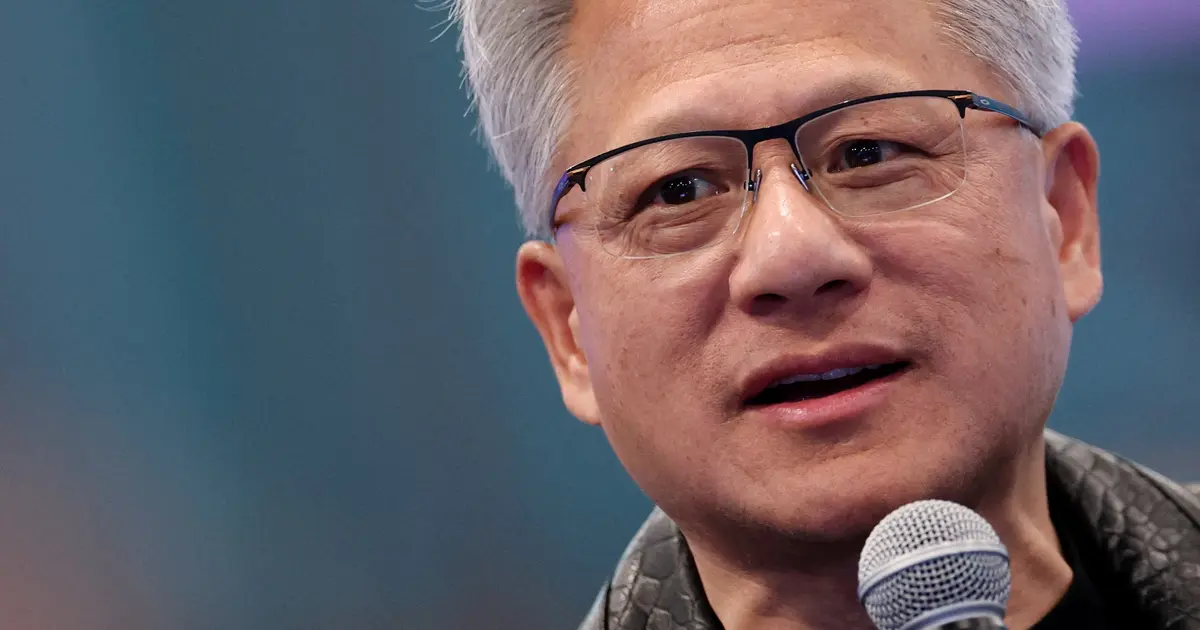
Jensen Huang was ousted as Nvidia’s CEO Thursday, a stunning fall for one of the world’s most powerful figures. His downfall sparked fears of what his departure means for one of America’s chip champions and the unwind of the AI money machine he assembled.
Nvidia’s CFO, Colette Kress, will serve as interim CEO while the board conducts a search for Huang’s replacement. Huang will also leave the board, which he chaired, and will be replaced by Harvey Jones, a board member since Nvidia’s founding in 1993 who ran chip design company Synopsys in the 1980s and 1990s. Semafor had earlier reported that Kress was in the lead to run the company on a temporary basis.
The company said it will look at both internal and external permanent successors to Huang, whose departure leaves the giant chipmaker without a tested leader. Huang had nearly single-handedly turned Nvidia from a niche maker of graphics chips for video games into the centerpiece of the world’s AI boom, and the company has never had another leader. It has no succession plan and few apparent internal successors.
One external candidate under consideration is Apple hardware chief Johny Srouji, who was among the executives considered for Intel CEO in 2019, Semafor reported Wednesday. Other names that have been floated are AMD’s Lisa Su, Huang’s first cousin once removed, as well as an offbeat suggestion by US President Trump on Thursday to tap former Apple CEO Tim Cook for the job.
Huang’s ouster came four days after he admitted to an affair with a suspected Chinese spy and followed a New York Times report that he had another affair with a subordinate. He is now wrapped up in a series of investigations by the board, Congressional leaders, and by the Department of Justice, Semafor reported on Thursday.
The ongoing saga has also shaved hundreds of billions of dollars off of what was once the world’s most valuable companies — one crucial to the US remaining at the forefront of AI development around the world.
Shares fell as much as 7% Thursday, adding to Nvidia’s losses since the first reports of Huang’s relationship with the suspected Beijing spy, who ran a Singaporean company that was a major buyer of Nvidia’s advanced chips. Shares of neoclouds Nebius and CoreWeave, which rely on Nvidia to help AI startups rent space in their data centers, fell as much as 19% and 9%, respectively. Shares in Alphabet, whose TPU chips compete with Nvidia’s GPUs, rose slightly.
Key-man risk
Huang’s ouster raises questions around Nvidia’s ability to remain the de-facto central bank of the AI boom — and the fate of billions of dollars of chip financing from a slew of Wall Street firms that are tangled up with the company. Nvidia has provided tens of billions of dollars in financing to its customers, invested more than $50 billion in AI startups, and guaranteed huge data-center leases for firms including OpenAI.
Much of that spending rested on Huang’s singular credibility and power in the tech world, as well as his close ties to US President Donald Trump. His successor will likely have far less leeway from the chipmaker’s board, which is facing its own mountain of litigation, government investigations, and public scrutiny.
Still, Huang will remain one of Nvidia’s largest shareholders, with a 3.6% stake in the company worth about $160 billion at today’s price. While he doesn’t have the same sort of control afforded to other former tech founders through super-voting stock, such as Alphabet’s Larry Page and Sergey Brin, he’ll maintain a meaningful seat at the table. It’s unclear what his exit package looks like and whether the board will claw back any additional share-based compensation from previous years.
Washington fallout
Rep. Brian Mast, R-Fla., chair of the House Foreign Affairs Committee who’s been pushing for stricter export control laws, said Thursday that Huang agreed to come in for a closed-door briefing before lawmakers break again for Thanksgiving on Nov. 20. Other Congress members have sent letters asking Huang to come and testify in Washington.
Meanwhile, Commerce Secretary Howard Lutnick is under increasing pressure from members of Congress over how his office allowed Nvidia to to sell its advanced chips to what reports allege to be a front for banned Chinese buyers. The Trump administration is made more vulnerable by Huang’s close relationship with Trump and its deference to the Nvidia CEO on chip policy matters.
“This incident raises significant concerns about the federal government’s ability to effectively enforce our export controls and protect our national security,” Sens. Chris Coons, D-Del., and Elizabeth Warren, D-Mass., wrote in a letter to Commerce Secretary Howard Lutnick, Secretary of State Marco Rubio, and White House chief of staff Stephen Miller on Thursday, asking them to preserve documents related to Nvidia.
Reports suggest government officials “were aware of concerns about Nvidia, its relationship with Megaspeed, and the suspected Chinese intelligence operation, yet did not move to block the continued flow of advanced AI chips,” the senators said.
So far, Trump is standing by Lutnick. The president “maintains complete confidence in the secretary and his ability to carry out the position,” a White House official told Semafor.
Winners and losers
Jensen’s exit could scramble the AI chip market, elevate rivals that have been relegated to operating in Nvidia’s shadow, and ensure more chips stay in the US rather than in China, which could explain hyperscalers’ share rises Thursday. While long chip design cycles mean it could take years for a competitor to eat into Nvidia’s lead, a few companies stand out as beneficiaries.
AMD, whose stock is surging, competes most directly with Nvidia on data-center products. Broadcom and other custom silicon makers could gain as tech giants look to design more of their own chips, rather than relying on Nvidia’s. Google may also get more momentum on its TPUs, which it began selling directly to outside sales this year. And Qualcomm offers a competing line of chips for robots.
China’s chipmakers are also poised to benefit: Any tightening of US chip export controls could push more resources toward building out China’s domestic chip sector, a long-term priority of Beijing’s. And China hawks in Washington are newly empowered to push for more restrictions on American chipmakers’ overseas dealings.