Opinion: I research World War II for a living. How had I never heard of these women?
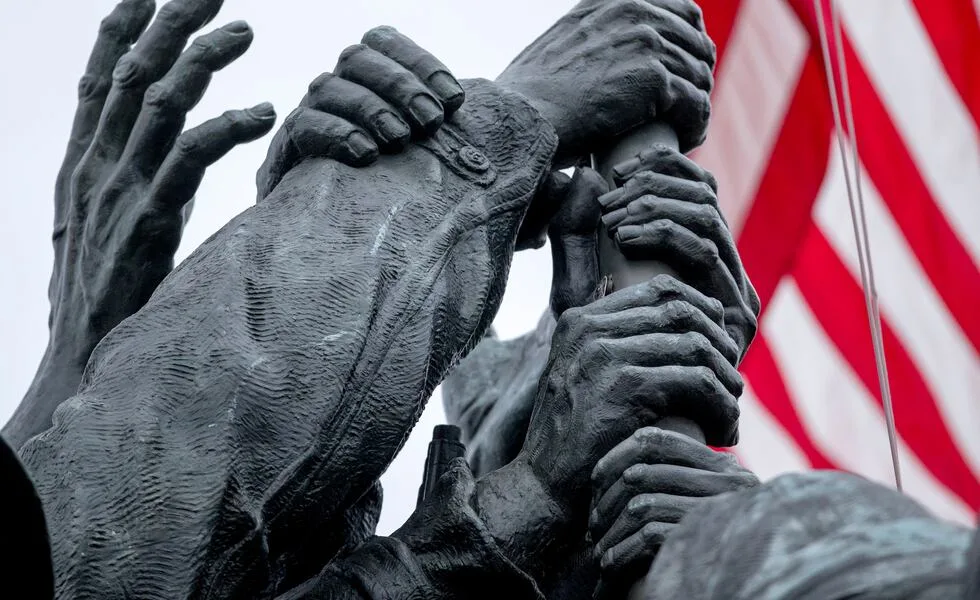
When I first heard that there were American female Navy nurses at the Battle of Iwo Jima, I could not quite believe it. Iwo Jima is one of the most famous and best-documented battles in the history of World War II, and indeed in all of American history. I had never seen any nurses in the movies or documentaries I had watched about Iwo Jima, and I felt sure I would have read about this story before now, especially because I write history books about the Second World War.
But there were indeed American Navy nurses there, a dozen of them, who landed on contested airfields, triaged the wounded and evacuated them back to comparative safety in Guam. These nurses were resourceful, tough and incredibly brave: one of them even sneaked off to touch the famous flag on Mount Suribachi when it was still subject to Japanese sniper fire.
What happens when we zoom in on history is that the well-known picture begins to dissolve into thousands of smaller stories. History gets more interesting as it gets more precise.
On Nov. 11, we observe Veterans Day. As we rightly celebrate the valiant contribution of sailors, corpsmen and Marines to the American story, we also need to zoom in on surprising parts of this history that have been obscure until very recently.
Iwo Jima is one of the most familiar battles of the Pacific Theater
Iwo Jima was a small volcanic island roughly halfway between the Marianas and the Japanese home islands. The American invasion began on Feb. 19, 1945, and the fighting continued for more than a month. The Japanese had transformed Iwo Jima into a fortress of tunnels, bunkers and concealed artillery positions, and more than 26,000 Americans were killed or wounded in the struggle to secure it. The Marines fought for ground measured in yards, while corpsmen, Seabees, pilots, doctors and logistics personnel sustained an enormous support operation.
For Americans, Iwo Jima is one of the most familiar battles of the Pacific Theater. And yet that familiarity can be deceptive. We know the photograph of Marines raising the flag on Mount Suribachi; we know the phrase “uncommon valor”; we know the island as a symbol of sacrifice.
But the closer we look, the more complex and extraordinary the story becomes. There were African American Seabees serving in segregated construction units on Iwo Jima, including the 23rd Special Naval Construction Battalion, which suffered extremely heavy casualties while building and repairing the island’s airfields.
Opinion: One of America’s first diverse votes happened far from a polling booth
At the dedication of a temporary Marine cemetery, Rabbi Roland Gittelsohn delivered a powerful eulogy, speaking as a Jewish chaplain, over men of different races and faiths. And the famous flag itself (the second flag on Mount Suribachi) was raised by men whose religious and ethnic backgrounds were complicated, to say the least.
And then there were the Navy nurses.
The Navy nurses at Iwo Jima
On March 6, Ensign Jane Kendeigh, only 22 years old, stepped from a Douglas R4D aircraft onto South Field on Iwo Jima. She was the first Navy flight nurse to arrive on an active Pacific battlefield. Later she said that even with all her training, “she couldn’t get over how badly the men were wounded.”
Jane and the other Navy nurses had to make life-and-death decisions when the sanitized hospital environments in which they had been trained were replaced by a volcanic airstrip still coming under enemy fire. Between March 6 and March 21, Kendeigh and the other flight nurses helped to evacuate 2,393 Marines and sailors from Iwo Jima.
The closer we look, the less history resembles an American monument and the more it resembles American life.
Jane Kendeigh was very charismatic, and she became briefly famous in 1945 when her image was used to help sell war bonds. But then her story and the history of the flight nurses became absorbed into the larger narrative of an epic conflict that spanned the globe and consumed millions of lives.
The nurses would not have wanted it any other way. When I interviewed their sons and daughters for my book, “The Flight Nurses’ War,” all of them told me that their moms did not consider themselves heroes. In fact, they considered it a great privilege to serve their country in this titanic struggle. But of course, they were magnificent examples of calm, compassionate heroism under fire.
Opinion: Remember the sacrifices that made us free
What happens when we zoom in on history is that the well-known picture begins to dissolve into thousands of smaller stories. History gets more interesting as it gets more precise. The tighter lens gives us people: Pima Indian Marine Ira Hayes helping raise the flag on Mount Suribachi, Black Seabees in a segregated unit on the volcanic beaches, a Jewish chaplain speaking over the dead, and young female naval officers triaging wounded men on a desolate airstrip before transporting them back on rickety planes bound for Guam.
The closer we look, the less history resembles an American monument and the more it resembles American life.