Opinion: Civil discourse means disagreeing without contempt
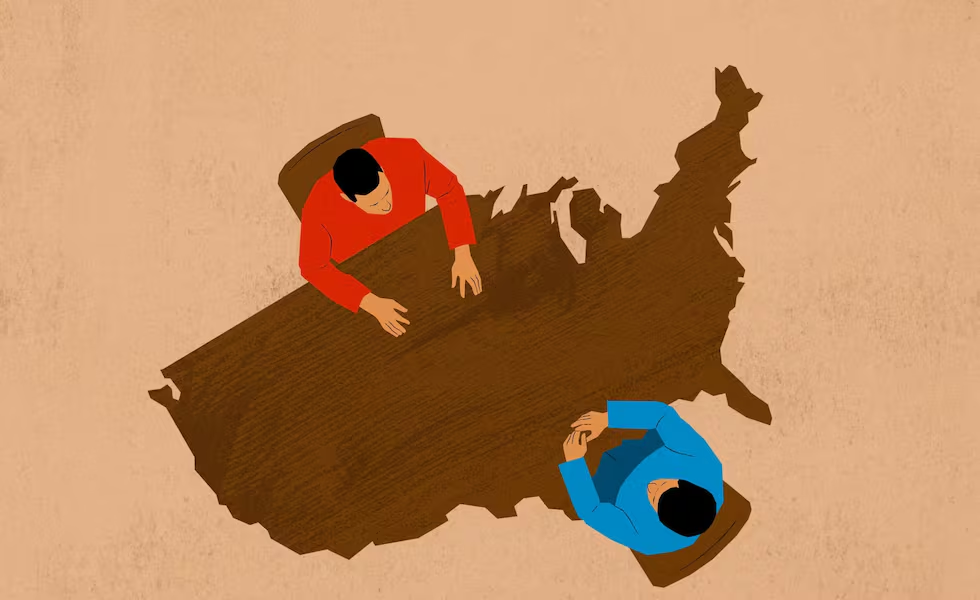
Election disputes are not new. Long before social media, candidates challenged results, questioned procedures, and argued over the validity of votes. Working on the Oxford-based Quill Project and studying civil discourse has shown me that disagreements can be intense, but not every argument ends in a duel.
On Dec. 8, 1847, William S. Hamilton, son of Alexander Hamilton, advised John O’Connor of his intention to contest O’Connor’s seat in the 1847 Wisconsin constitutional convention. Hamilton outlined several reasons for the challenge: election notices had allegedly not been posted as required by law, illegal votes may have been cast and there appeared to be errors in the vote count from one precinct.
We would do well to remember that disagreement need not dehumanize.
A classic example of civil discourse in practice, Hamilton — son and brother of men who died from political violence — was not writing about personalities. He was not questioning whether O’Connor was a good person. Instead, he centered his argument on election procedures, the legality of votes cast and what he believed were irregularities in the election’s conduct. While the dispute was serious, it concerned a public question rather than a personal grievance.
State constitutions dealt with civil discourse
Civil discourse is something far more than simple politeness. The word civic comes from the Latin civis, meaning “citizen.” Civil discourse, at its core, is not about avoiding conflict or disagreement; it is about how citizens engage one another when disagreements inevitably arise.
My two years at the Quill Project have taught me much about civil discourse. It is a digital- humanities initiative based at Pembroke College, Oxford, and conducted in partnership with UVU’s Center for Constitutional Studies. The effort considers state constitutions and other negotiated texts, using digital tools to reconstruct and visualize the debates, revisions and decisions that shape these historical documents.
Opinion: Bipartisanship isn’t dead in Washington — you just need to know where to look
In studying state-level constitutional records from across the United States, I encounter delegates arguing passionately about voting rights, education, taxes, local governance and the structure of government itself. At times, those heated disagreements spill over into memorable confrontations. History records times when political disputes became so personal that someone was caned or challenged to a duel.
Those dramatic moments are exceptions that capture our attention. Yet, spending enough time with the records themselves brings a different picture into focus.
Our differences do not weaken us; they challenge us to think, listen, and participate in the difficult but worthwhile work of civil discourse.
Most state constitutions were not achieved through shouting matches or personal attacks. They were shaped through discussion, disagreement, compromise and revision. Delegates proposed amendments, committees reviewed recommendations and motions were debated, voted on, reconsidered, debated again and sometimes discarded altogether. Individuals who strongly disagreed with one another still had to work together long enough to build something that would outlast them.
Exploring such documents reminds us that civil discourse has never meant the absence of disagreement. In fact, many of the important documents that make up our government today were created by passionate people who disagreed but came together. These arguments focused on issues, processes and principles rather than personal animosity.
Civil discourse does not lack conflict
Civil discourse is not the absence of conflict; it is the ability to channel conflict into discussions about ideas, laws, procedures, principles and shared outcomes.
Part of what makes our country remarkable is that people care deeply about what they believe. What makes these documents universally remarkable, while scattered in archives across the country, is they show people willing to engage with one another through discussion, evidence and argument.
Opinion: Americans trust each other less. But you don’t have to do the same
Perhaps that is one lesson these documents still offer today. Hamilton challenged O’Connor’s election, but the surviving letter focused on evidence, procedure and public concerns rather than personal attacks. Nearly two centuries later, we would do well to remember that disagreement need not dehumanize. And trusting the processes — as we can do as we wait for our elections to be certified — is essential.
Not every disagreement requires a metaphorical caning at the end of a social-media post. With practice, we can disagree without contempt for one another. Our differences do not weaken us; they challenge us to think, listen, and participate in the difficult but worthwhile work of civil discourse. The historical record suggests that while conflict may capture our attention, it is dialogue that leaves a legacy worth preserving.