What it will take to reduce geothermal energy prices
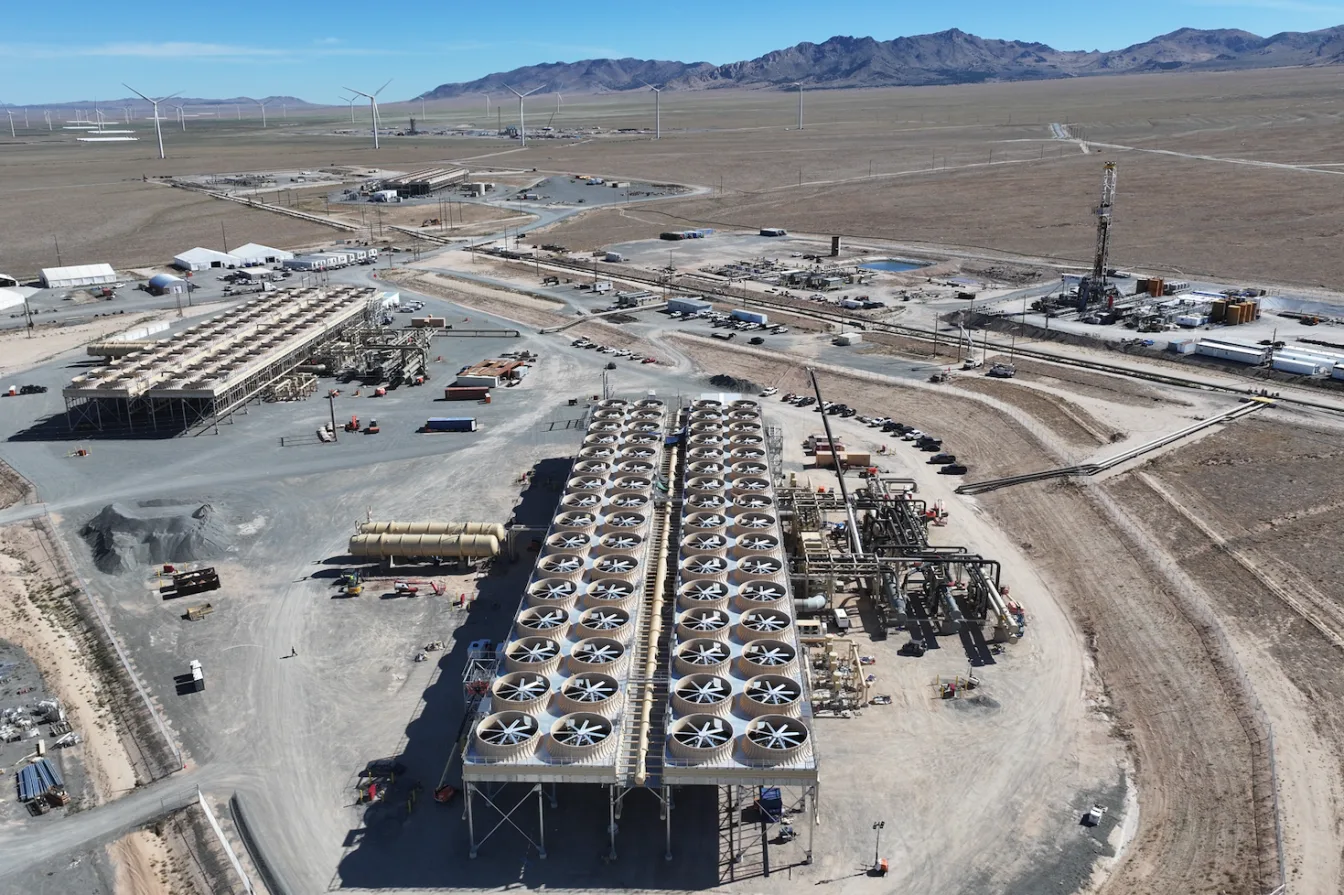
The advanced U.S. geothermal industry is heating up for many reasons: skyrocketing electricity demand, looming 2030 renewable energy targets, technical advances and a country abundant with promising geology.
But geothermal energy is still an expensive proposition — an average of $100 per megawatt-hour — for corporations mulling how to reduce emissions from purchased electricity (Scope 2). As one audience member at Trellis Impact 26 observed: “We hold four [virtual power purchase agreements] – two wind, two solar-plus-storage – and frankly $100/MWh is way too high. Our second pair of deals priced 25 percent to 50 percent below the first two years later. If I wait four to five years, will geothermal prices decline the same way?”
I put this question to Mike O’Connor, director at the Mountain West Geothermal Consortium (MWGC). “The binding constraint isn’t technology or even capital for scaling, it’s appraisal risk, the one risk no other generation industry carries,” O’Connor said. “Geothermal developers must develop the fuel as well as the large power infrastructure at the same time.”
The cost of exploration
Appraisal risk refers to the cost of digging to find viable geothermal resources, which can be located several kilometers below the subsurface.
Permitting, exploration and test-well drilling represent 10 percent to 15 percent of a geothermal project’s investment costs (roughly $27 million to $41 million), and a developer must spend this money before knowing if the site’s economics make sense. Only risk-tolerant investors are willing to get involved, so a geothermal developer’s cost of capital can be very high. Reducing those costs can, in turn, help lower the power purchase agreement (PPA) price.
One way to absorb some appraisal risk is to bring in public-private partnerships. For example, MWGC is working with its member states — currently Colorado, Utah, New Mexico and Arizona — on policies that would support revolving funds for appraisal drilling that are similar to the proposed federal Appraisal Risk Program laid out in May by nonprofits Clean Economy Project and C3 Solutions, and planning firm Waypoint Strategy Group.
The program suggested in their proposal would support appraisal drilling for enhanced geothermal projects across a range of U.S. regions. Participating developers would be required to share their subsurface data publicly, so the whole industry benefits. The Department of Energy (DOE) ran a similar program from 1982 to 2012, which led to development of many conventional geothermal projects in the U.S. Germany, Japan and Turkey have also used public programs to share early drilling risk with developers.
The proposed state and federal programs would build on the $99 million allocated by the DOE Office of Geothermal in September to fund 21 projects across eight states. Five of those initiatives will conduct enhanced geothermal tests; the other 16 will focus on exploration drilling to gather subsurface data needed to identify promising next-generation and conventional hydrothermal geothermal resources.
Other signals to watch
Corporations interested in adding geothermal resources to their renewable energy portfolios should also watch for these developments.
- Permitting reform: Supporters say the permitting reforms proposed in the Bipartisan American Affordability and Jobs Act of 2026 could shorten interconnection timelines that now exceed five years. But the changes would depend on Federal Energy Regulatory Commission rulemakings that could take years, and the bill’s geothermal provisions mainly speed up exploration permitting rather than grid connections.
- Drilling speeds: Faster, cheaper drilling is one of the clearest signs enhanced geothermal is maturing. Fervo, the most active U.S. developer, publishes its drilling results through Securities and Exchange Commission filings, press releases and technical papers. Conventional geothermal wells can take up to 272 days to drill. In contrast, Fervo now takes 21 days to reach depths of 15,000 to 19,000 feet.
- Delivery costs: Fervo frames its targets in dollars per kilowatt. The company estimates that phase two of its Cape Station project is on track to deliver at $5,500 per kilowatt, and it remains committed to cutting the expense to $3,000 per kilowatt. Mazama Energy, another developer, projects development costs of $4,500 to $4,950 per kilowatt initially, with a pathway to $3,200 per kilowatt at scale.
- Utility adoption: Some utilities offer green tariffs that let customers choose a specific resource. Companies should tell their utility account manager that they want clean firm power, specifically geothermal. Deals can be structured in the form of special agreements under which the utility contracts with a geothermal developer and passes the costs and environmental attributes to the corporate buyer.
- Operating performance from commercial plants and tests: Watch whether Fervo’s Cape Station hits its output targets and holds reservoir temperatures over its first years. There are other demonstration projects to watch. If they are successful in finding viable resources, it might be time to make an early agreement with a developer.
- Price trends across successive deals, with the caution that prices are disclosed inconsistently.
- The tax credit window: Projects that start construction by 2033 get tax credits worth up to 50 percent of upfront project costs. That’s because geothermal, nuclear, hydroelectricity and energy storage projects were spared the cuts that other renewable energy types endured under the One Big Beautiful Bill Act.
Corporate support in the form of demand for clean firm power, policy advocacy, offtake agreements and buyer coalitions will also be paramount to reducing geothermal prices. For example, if a coalition of buyers wanted to invest in an appraisal fund —a portfolio of five to 10 projects — that would provide a guaranteed output and lower the risk across the board, O’Connor said.
Corporate buyers are already helping advanced geothermal move from pilot to commercial scale. Google backed Fervo Energy in 2021, before its technology was proven. In September 2026, it signed what Fervo calls the largest enhanced geothermal PPA to date at 396 megawatts. Meta has signed agreements with Sage Geosystems and XGS Energy, giving the early-stage developers the corporate offtake visibility that can help secure financing. Both companies are using utility tariffs in which the buyer, not other customers, covers the cost of the new resource.