3 keys will unlock the next level in how the Universe began
In all the Universe, there’s no bigger question — and no greater mystery — than where all of this came from, and how all of this came to be. For countless generations, our cosmic origins were a question for poets, theologians, and philosophers, as our scientific knowledge had not yet advanced to the point where we could uncover an evidence-based answer to such questions. However, the 20th and 21st centuries changed all of that, allowing us to pin down the answers to such questions as:
- What rules govern our Universe?
- What is the Universe made of?
- How large and how old is it?
- How did it come to be the way it is today?
- And what are our ultimate cosmic origins?
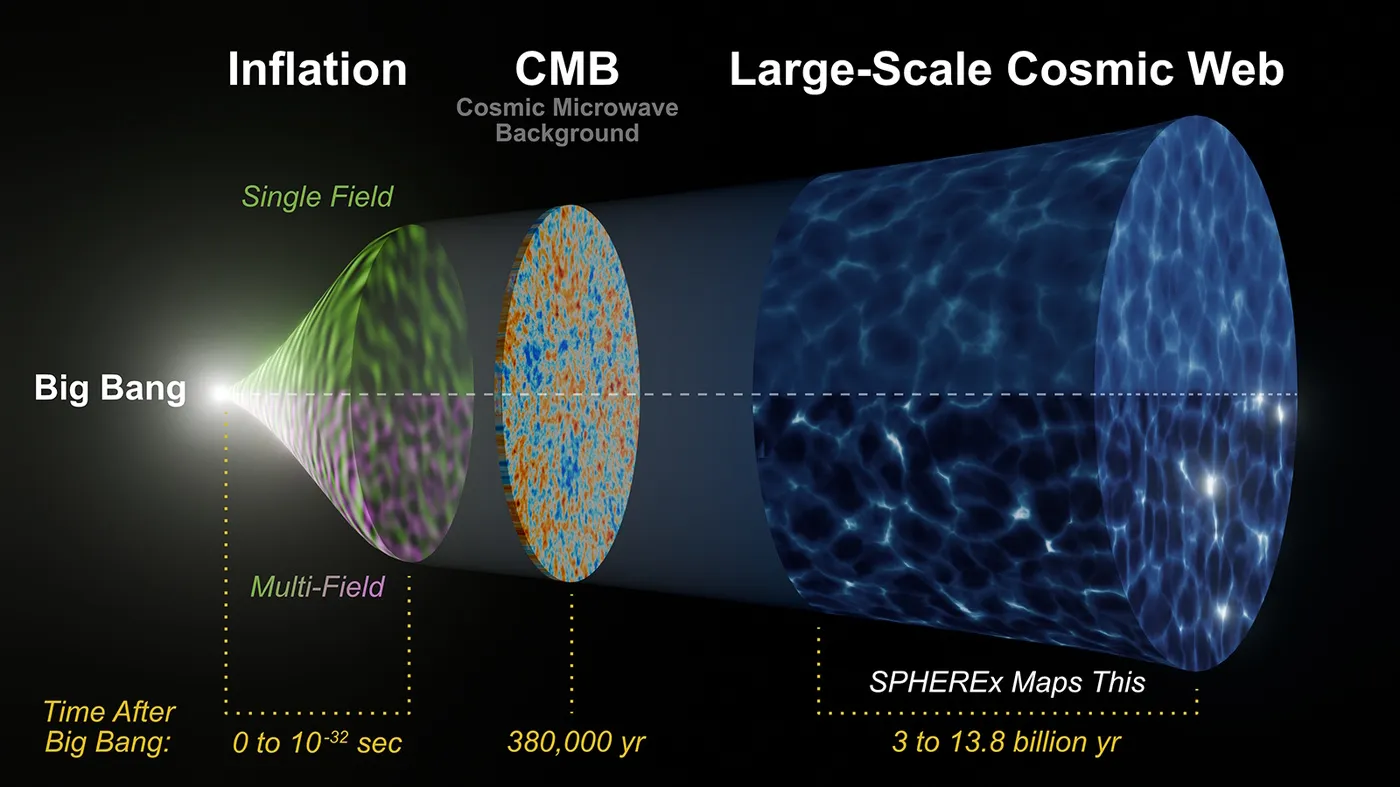
We often say, now, that our Universe began with the hot Big Bang, but that’s only the Universe as we know and experience it today: the observable Universe. We’ve since learned that the Big Bang itself was preceded and set up by an earlier phase in cosmic history: cosmic inflation, where space itself contained an enormous amount of inherent energy and expanded — or inflated — rapidly and relentlessly. When inflation ended, our hot Big Bang ensued, giving rise to the Universe as we know, observe, and exist within it.
But what, exactly, were inflation’s properties? What type of inflation occurred, and what relics, or imprints, of inflation remain within our observable Universe today? Although we’ve come remarkably far in our understanding of our cosmic origins, there are a few windows still left unexplored that can take our understanding to the next level. Here are the three big ones where new data will help guide the way.
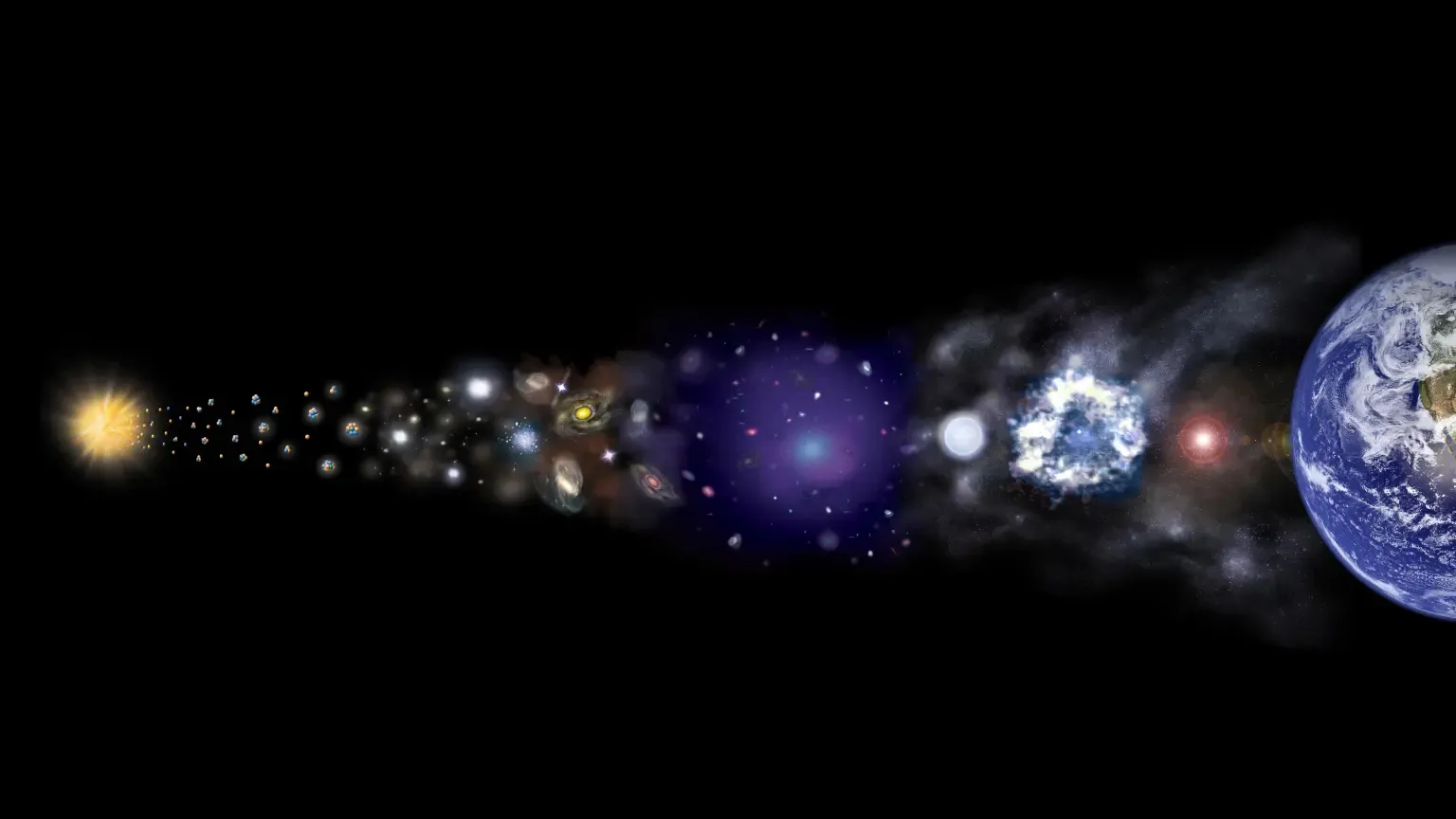 Our Universe, from the hot Big Bang until the present day, underwent a huge amount of growth and evolution, and continues to do so. Our entire observable Universe was approximately the size of a modest boulder some 13.8 billion years ago, but it has expanded to be ~46 billion light-years in radius today. The complex structure that has arisen must have grown from seed imperfections of at least ~0.003% of the average density early on, and has gone through phases where atomic nuclei, neutral atoms, and stars first formed, eventually giving rise to our Solar System, planet, life, and humans.
We truly went from not knowing what the Universe was, at all, to figuring out an enormous about about our cosmic origins in the span of less than 150 years. Our journey began in earnest in the late 19th century, when people began to notice breakdowns in Newtonian mechanics at speeds close to the speed of light, and hints of a breakdown in Newtonian gravity when it came to the orbit of the planet Mercury. Both of those puzzles were eventually resolved with Einstein and relativity: special relativity for Newtonian mechanics, and general relativity, incorporating gravity in a relativistic framework, to eventually resolve the precession of Mercury’s perihelion.
Within that new framework for gravity, several new exact solutions emerged. These included the:
- Minkowski solution, which reduces to flat, uncurved, matter-free space,
- Schwarzschild solution, for a non-rotating black hole,
- de Sitter solution, for a Universe dominated by a cosmological constant, and
- Friedmann solution, for a Universe that was both isotropic (the same in all directions) and homogeneous (the same in all locations) and filled evenly with at least one form of energy.
Friedmann’s solution, derived in 1922, was particularly interesting from a cosmic perspective, because it showed that static spacetimes that were uniformly filled with “stuff” were unstable; the Universe must expand or contract.
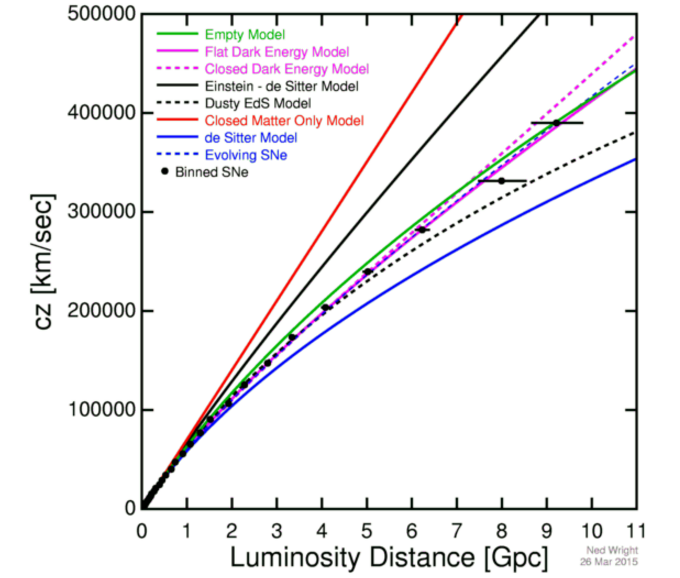 A plot of the apparent expansion rate (y-axis) vs. distance (x-axis) is consistent with a Universe that expanded faster in the past, but where distant galaxies are accelerating in their recession today. This is a modern version of, extending thousands of times farther than, Hubble’s original work. Note the fact that the points do not form a straight line, indicating the expansion rate’s change over time. The fact that the Universe follows the curve it does is indicative of the presence, and late-time dominance, of dark energy.
Contemporaneously, starting in 1923, we began identifying individual stars within the spiral and elliptical nebulae in the skies: determining that they were galaxies beyond the Milky Way. When we combined those distance measurements with redshift measurements, or how fast these galaxies appeared to recede from us, we found a relationship: the farther the galaxy, the faster the recession speed. When this relationship was placed into the context of Friedmann’s solution, we arrived at the expanding Universe: the first big step towards understanding our cosmic origins.
If the Universe is expanding today, then that means things are getting farther apart, becoming less dense, and — since the wavelength of radiation is stretching to become longer — cooling as well. If things are getting less dense and cooling today, that means that they were denser and hotter in the past. Since gravitation attracts objects and brings them together, the Universe should become more structure rich, i.e., clumpier, as time goes on as well. Therefore, this points towards an early state of the Universe that was hotter, denser, and more uniform than it is today.
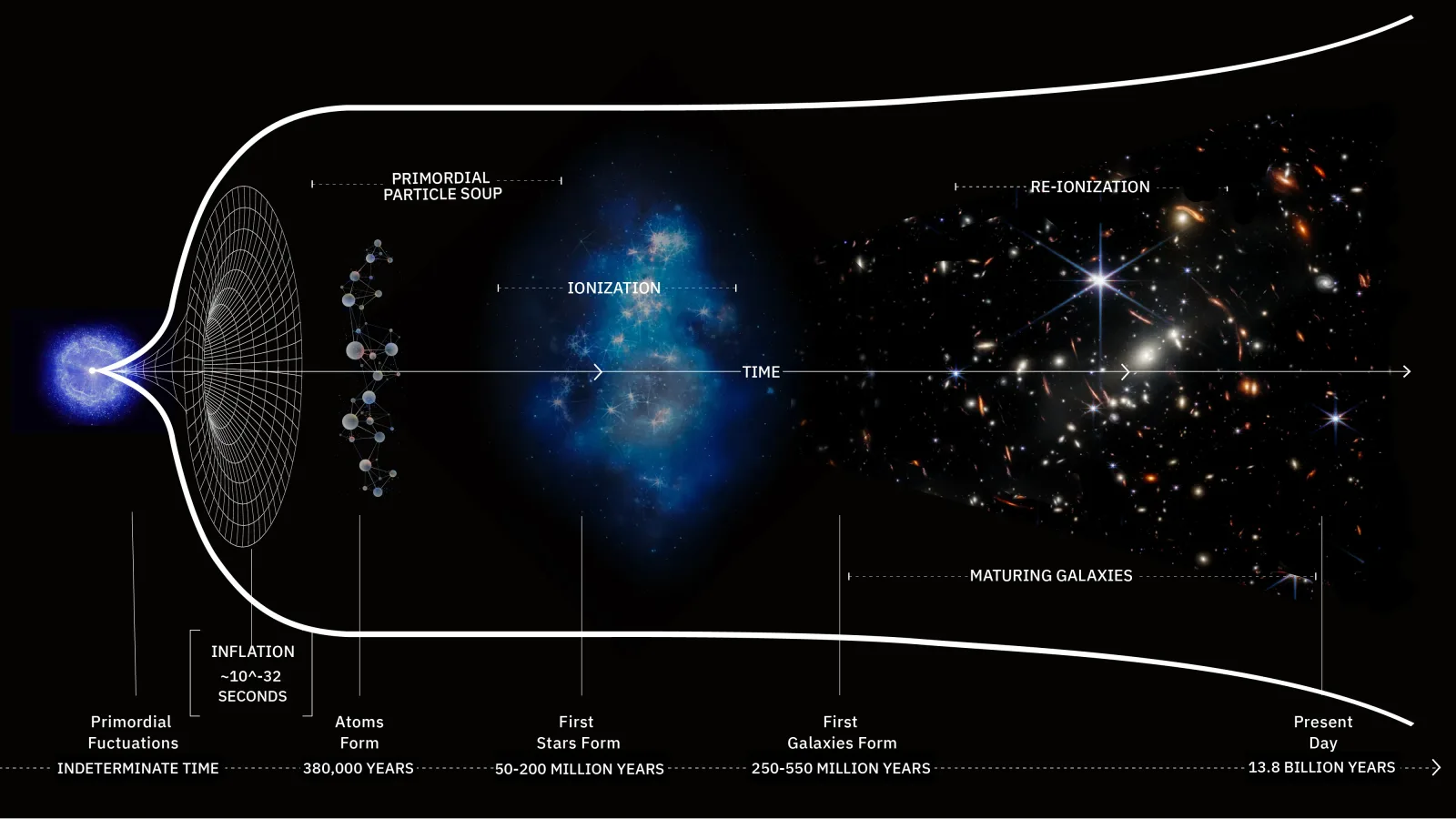 At the start of the hot Big Bang, the Universe was rapidly expanding and filled with high-energy, very densely packed, ultra-relativistic quanta. An early stage of radiation domination gave way to several later stages where radiation was sub-dominant, but never went away completely, while matter then clumped into gas clouds, stars, star clusters, galaxies, and even richer structures over time, all while the Universe continues expanding. The expansion rate evolves dependent on the sum total of all the forms of energy present within it, linking the observed expansion to the energy contents of our cosmos.
If you start off with a very hot, very dense, very uniform, and rapidly expanding Universe, then as time goes on, the following sets of things will occur.
- Particles will clump together, forming protons and neutrons, and then protons and neutrons will fuse together into atomic nuclei: creating an initial set of elements even before stars have formed.
- Atomic nuclei and electrons will combine together, and as the Universe cools sufficiently to make stable, neutral atoms, any photons (or radiation) that was present back then will simply stream outward in a straight line, stretching in wavelength and cooling as the Universe expands to create a persistent background of radiation: the CMB.
- Gravitation will pull matter together into clumps: creating stars, star clusters, small galaxies, larger galaxies, groups and clusters of galaxies, and even grander structures akin to a cosmic web. As time goes on, this web-like structure gets more well-defined and more pronounced.
- And the Universe keeps on expanding, with the expansion rate changing as the density of the Universe changes, resulting in a particular relationship between the expansion rate over time and the matter-and-energy contents of the Universe.
These are the four cornerstones of the hot Big Bang, and all four have been observationally confirmed.
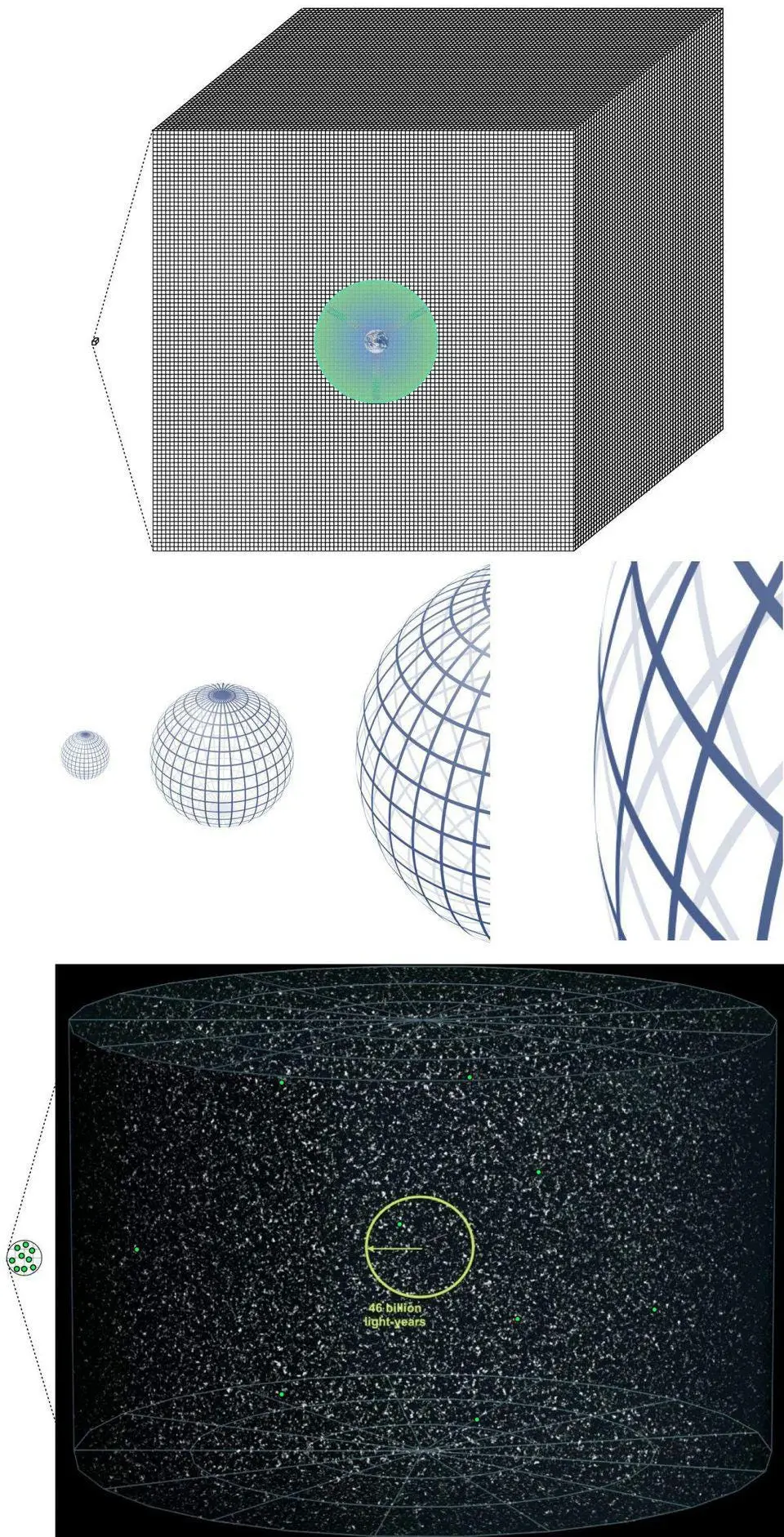 In the top panel, our modern Universe has the same properties (including temperature) everywhere because they originated from a region possessing the same properties. In the middle panel, the space that could have had any arbitrary curvature is inflated to the point where we cannot observe any curvature today, solving the flatness problem. And in the bottom panel, pre-existing high-energy relics are inflated away, providing a solution to the high-energy relic problem. This is how inflation solves the three great puzzles that the Big Bang cannot account for on its own.
However, at the same time, the Big Bang can’t be extrapolated all the way back to arbitrarily early times, high temperatures, and high densities. If we could, we’d see large differences in temperatures in different directions, which we don’t see. We’d see departures from cosmic flatness in different directions, which we don’t see. And we’d see leftover, high-energy relics from achieving super-high temperatures, which we don’t. Recognizing that we didn’t see these things served as the motivation for cosmic inflation, which posited a very different history for the early Universe.
Prior to being hot, dense, and filled with matter and radiation, the Universe was instead dominated by a large amount of inflationary — or field — energy that was inherent to space itself. This caused space to expand rapidly and relentlessly. This stretching of space gave it the same properties everywhere, made it indistinguishable from spatially flat, and inflated away any high-energy relics created in pre-inflationary times, solving all three of those cosmic puzzles.
In addition, several new predictions emerged from inflation that differed from the predictions of a non-inflationary hot Big Bang. They included:
- A maximum early temperature well below the Planck temperature.
- A spectrum of initial density fluctuations that was almost, but not quite perfectly, scale-invariant.
- A set of cosmic density fluctuations that existed on scales larger than the cosmic horizon, seeded by inflationary processes.
- And those fluctuations needed to be 100% adiabatic in nature, as opposed to isocurvature in nature.
In all of these cases, the data has come in, and favors inflation while disfavoring the Big Bang without inflation. Here in the 21st century, inflation has become the new standard for the origin of our cosmos.
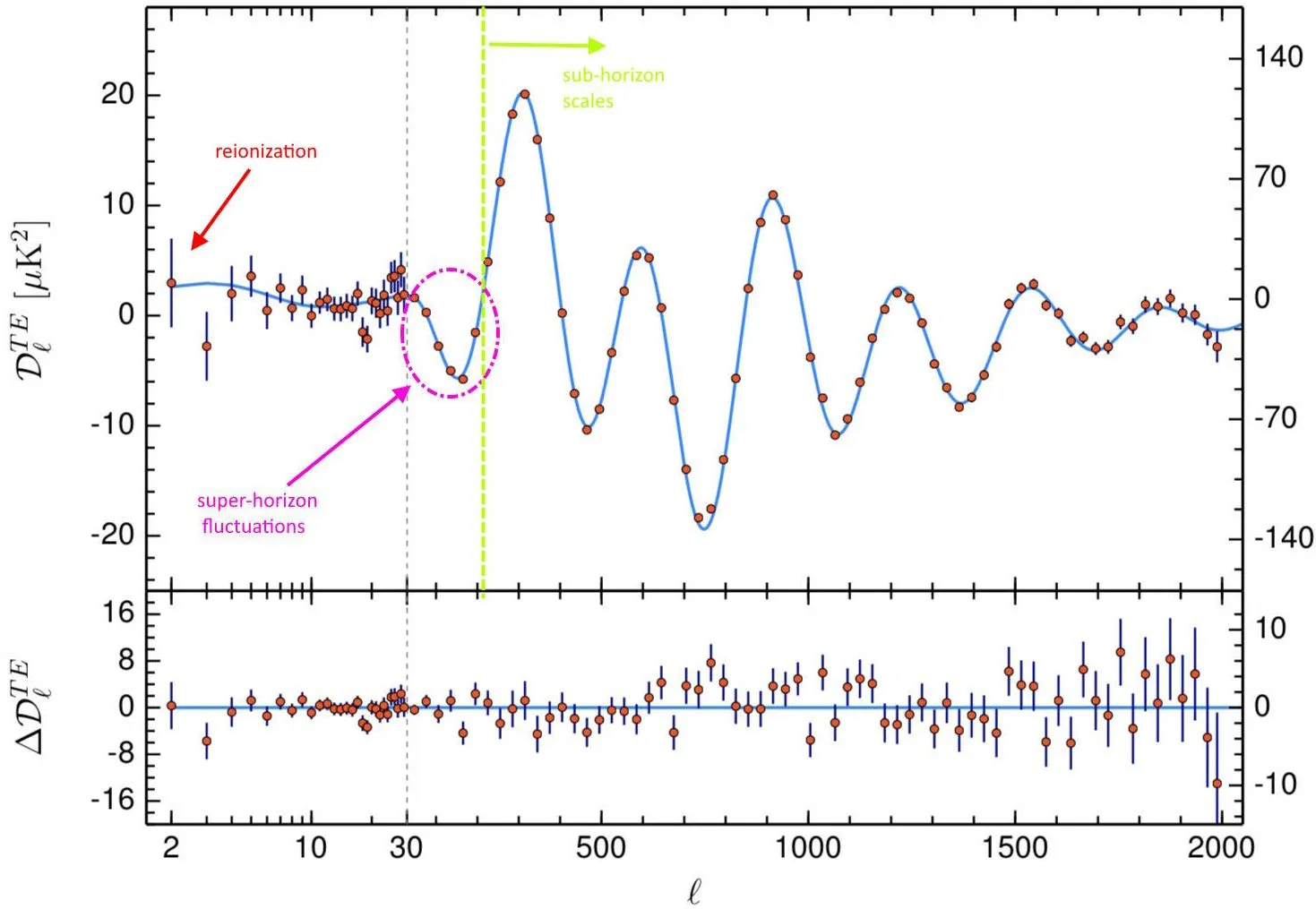 If one wants to investigate the signals within the observable Universe for unambiguous evidence of super-horizon fluctuations, one needs to look at super-horizon scales at the TE cross-correlation spectrum of the CMB. With the final (2018) Planck data now in hand, the evidence is overwhelmingly in favor of their existence, validating an extraordinary prediction of inflation and flying in the face of a prediction that, without inflation, such fluctuations shouldn’t exist.
However, there’s still a lot to learn about inflation. Open questions include:
- What flavor of inflation occurred?
- Which model for inflation is the most correct?
- What was the (at least approximate) shape of the inflationary potential during that early period?
- Were there gravitational wave fluctuations produced during inflation, and if so, what was their magnitude?
- Does the spectral index, which describes the seed density fluctuations as a function of scale, run, or change in a complex fashion?
- Are the density fluctuations perfectly Gaussian in nature — do they follow a bell curve — or are their non-Gaussianities?
- And is that density fluctuation spectrum smooth all the way down to the smallest scales of all, or are there surprises, like big giant “spikes” in the distribution, on the tiniest scales of all?
These might seem like unanswerable questions, since by its very nature, inflation takes signals and stretches them to enormous, often unobservable scales. But those last few “doublings” of the cosmic horizon before the end of inflation do indeed leave imprints that remain in our Universe at the start of the hot Big Bang, and on a variety of scales: cosmic, large, intermediate, small, and very small scales.
In particular, this leads to three types of observational tests that we not only can perform to start to answer these questions, but tests that we’re actually on the cusp of performing in the very near future.
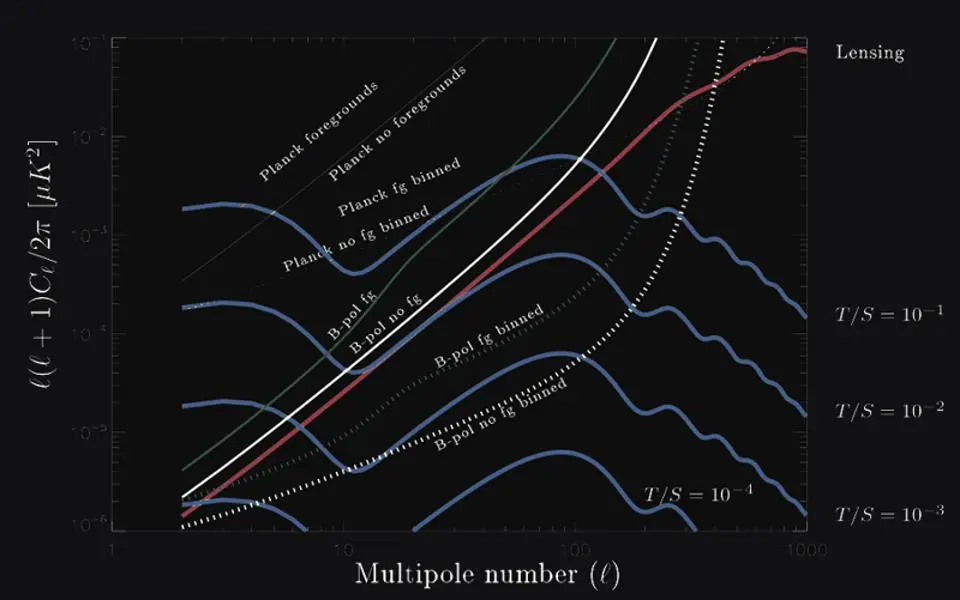 The contribution of gravitational waves left over from inflation to the B-mode polarization of the cosmic microwave background has a known shape, but its amplitude is dependent on the specific model of inflation and can only be constrained observationally. These B-modes from gravitational waves from inflation have not yet been observed, but detecting them would help us tremendously in pinning down precisely what type of inflation occurred. A false detection, from the BICEP2 team, famously occurred in the early 2010s, but was swiftly refuted. We now know that the r-ratio, represented on the y-axis, must be no greater than about ~0.01, with future experiments hoping to get down to the 0.001 or even the 0.0001 level.
1.) Can we see evidence for primordial gravitational waves left over from inflation?
In addition to the spectrum of density fluctuations that arises from inflation, or scalar fluctuations, there should also be a spectrum of gravitational waves that comes from inflation as well, from tensor fluctuations. Whereas the density fluctuations provide the seeds of cosmic structure and lead to E-mode signals (or “circular” and “radial” features) that show up in the cosmic microwave background, the gravitational wave fluctuations provide a background “hum” on all cosmic scales and lead to B-mode signals (or swirling “clockwise” and “counterclockwise”) features in the CMB.
This can be searched for in a variety of ways. Gravitational wave experiments that are sensitive to low-frequency (large-scale) gravitational waves can detect or constrain such a background, dependent on its amplitude. The B-mode polarization pattern can be searched for through a variety of small-scale CMB experiments, again dependent on the (model-dependent) amplitude of the gravitational wave background. What inflation “fixes” is the spectrum of these B-mode (or gravitational wave) fluctuations, but the amplitude depends on which model, or flavor, of inflation actually applies to our Universe. Whether we measure the signal or simply set a limit on how large the signal can be, we learn more about our cosmic origins.
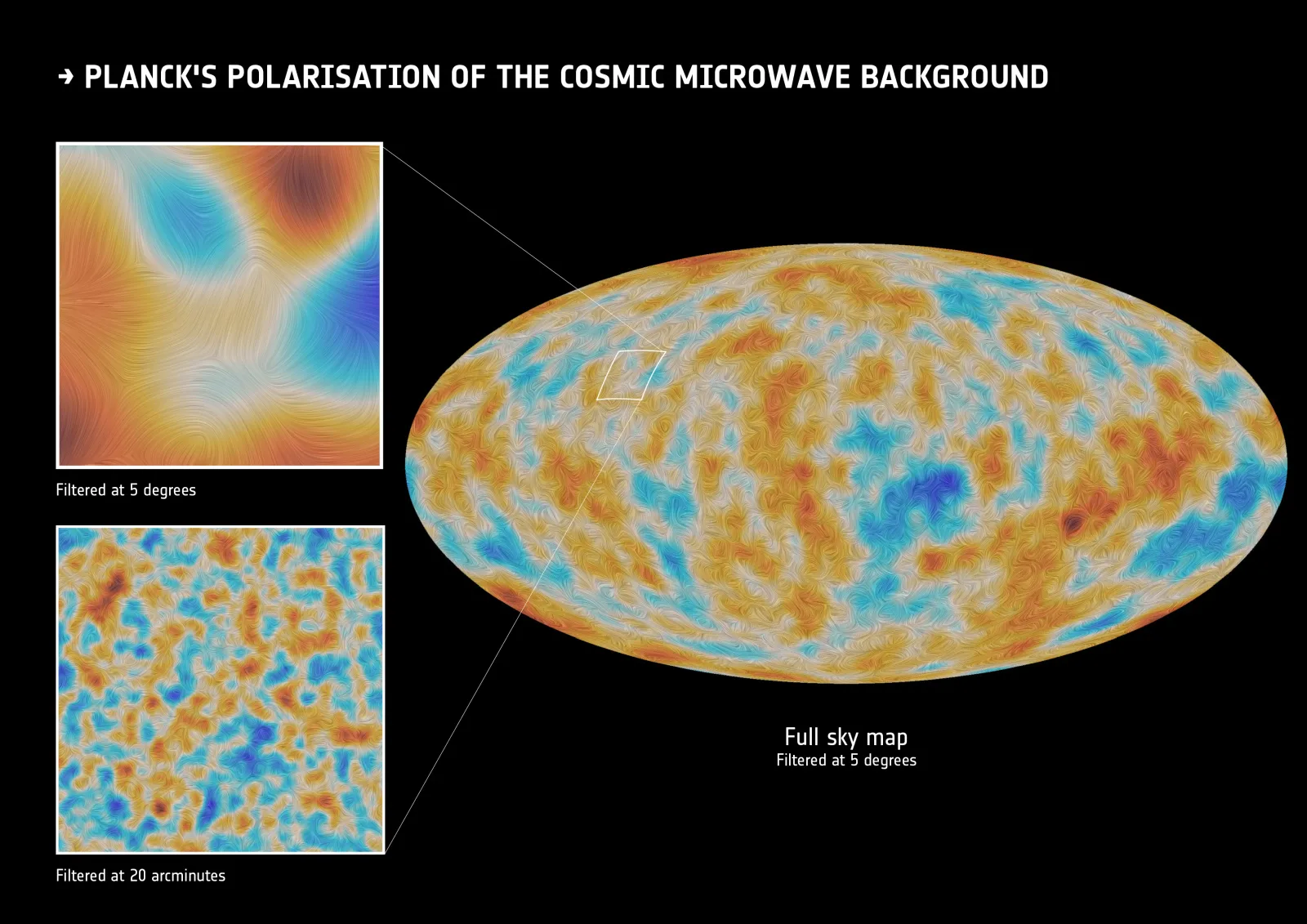 This map shows the CMB’s polarization signal, as measured by the Planck satellite in 2015. The top and bottom insets show the difference between filtering the data on particular angular scales of 5 degrees and 1/3 of a degree, respectively. While temperature data, alone, can demonstrate that the CMB is of cosmic nature, the polarization signal gives us key pieces of information relevant to the details of cosmic inflation, including which “flavors” of inflation are allowed and disallowed, and enables us to place an upper limit on the maximum temperature at the start of the hot Big Bang.
2.) Can we see evidence for particular models of inflation imprinted in the large-scale structure of the Universe?
Inflation produces an almost, but not quite, scale-invariant spectrum of density fluctuations in the Universe. On large cosmic scales, the magnitude of density fluctuations — i.e., how “overdense” or “underdense” each region is relative to the cosmic average — is slightly greater than it is on small scales, and this defines a quantity known as the spectra index, or the “tilt” of the spectrum. To a first approximation, these fluctuations are 100% Gaussian, or bell curve-like, in nature, and they fall off regularly, where the smaller the scale, the smaller the fluctuation, from large scales to small ones.
But there might be more to inflation than that simple first approximation. The density fluctuation spectrum doesn’t just tilt, it could also run. The fluctuations might not be perfectly Gaussian, but could display non-Gaussianity. Most models of inflation predict only a small amount, but with the right data, even a small amount could be detectable! We can probe this by creating large, deep, 3D surveys of the Universe to great precision and across cosmic time, and also by mapping out matter even where there’s no light: such as with 21-cm intensity mapping. These techniques will help us pin down the nature of inflation better than ever.
3.) Can the smallest cosmic scales reveal surprising features that only appear in certain models of or modifications to inflation?
And finally, on scales far, far smaller than large-scale structure endeavors can probe, inflation still creates those seed density fluctuations. Even though these scales are too small to be seen by CMB experiments, they persist in two places today:
- in the substructures of dark matter halos, a relic of all the small clumps of matter and proto-galaxies that fell into a larger-scale galaxy over time,
- and in the high-redshift Universe, by probing the seed supermassive black holes that gave rise to the large, modern-day behemoths we find at the centers of the largest galaxies of all.
For the substructures in dark matter halos, we can probe these through a variety of techniques, such as the tracing out of the intracluster starlight by stripped stars in massive galaxy clusters, via large collections of quadruply lensed objects via strong gravitational lensing, or by the discovery of stellar streams and the tracing out of the gravitational potential that causes breaks and tails in them.
For seed supermassive black holes, we’ve already learned that overmassive black holes exist in the very young Universe: black holes that are just as massive or even more massive than all the stars in those host galaxies combined. Did these black holes arise from the collapse of cold gas hundreds of millions of years after the Big Bang? Or were they seeded long before that, by the process of cosmic inflation? Answering this question can either validate or invalidate standard inflationary models, and can do the same for exotic alternatives as well.
Even in modern-day textbooks and popular science textbooks, there are still those who question whether inflation actually happened or not: a viewpoint that’s now several decades out of date. Instead, the frontier has shifted just as it’s shifted with dark matter where active researchers no longer ask whether it’s real or not, but are working to determine what it’s specific properties are with observation-driven science. This requires an enormous suite of novel, cutting-edge facilities that can acquire superior data to help answer these questions.
- For primordial gravitational waves, improved pulsar timing arrays, large-scale gravitational wave detectors, JAXA’s LiteBIRD mission, the Simons Observatory, and CMB S4 experiments can either find or place the greatest-ever constraints on their magnitude.
- From large-scale structure, enormous surveys such as DESI, SPHEREx, Euclid, Roman, and Rubin can all map galaxies and starlight across cosmic time, while intensity mapping of the 21-cm neutral hydrogen signal, such as with CHIME or with the Square Kilometer Array (SKA), can map matter even where starlight is absent.
- And to probe for small-scale structure, uncovering the origins of seed supermassive black holes, such as with JWST or even beyond its limits, as well as using stellar streams, the Lyman-α forest, and strong gravitational lenses of to probe dark matter substructure within galaxies can all test “regular” models of inflation against more exotic ones.
The acquisition of this data is the key to improving our understanding of how the Universe actually began. Here in the 21st century, asking for details about the “flavor” of inflation that occurred is the current frontier, and looking to the cosmic data itself will either enlighten us and tell us which type of inflation happened, place constraints on which types didn’t happen, or perhaps will even surprise us, and show us a Universe we never imagined was possible. Unless the day arrives where we cease to gather that necessary data and find out the answers, we guarantee that we’ll move forward in refining our understanding of how reality truly is.
This article 3 keys will unlock the next level in how the Universe began is featured on Big Think.