Supreme Court to decide if states can ban Catholic preschools from getting public funding
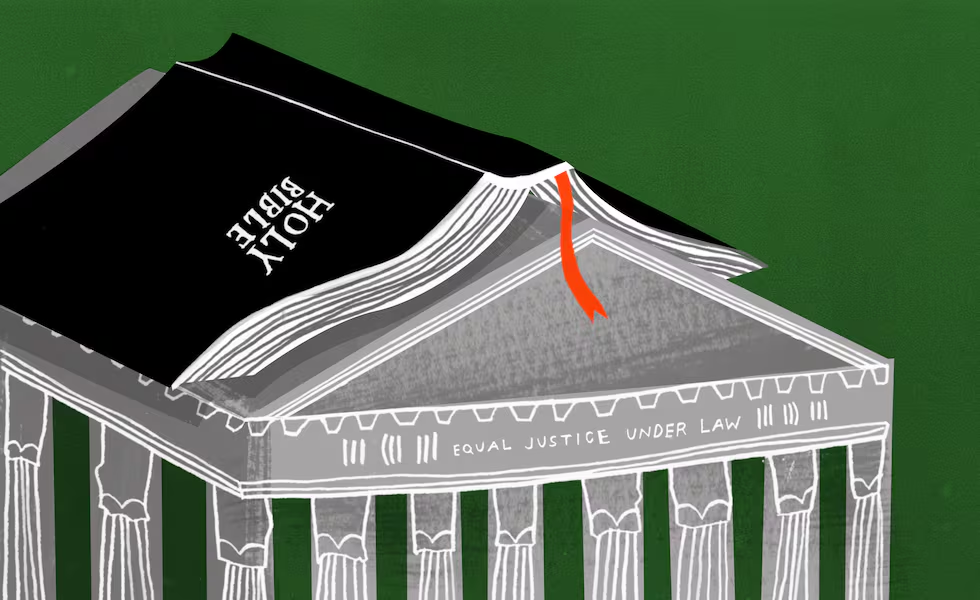
The Supreme Court on Tuesday will hear arguments in a case centered around religious liberty and whether Colorado can exempt Christian organizations from a statewide universal preschool program.
The justices in April agreed to hear arguments in the case after two Catholic parishes challenged the state’s decision to ban them from the universal preschool program, which includes 15 hours of free classroom instruction each week.
Colorado says the Catholic preschools can’t participate in the program because of the nondiscrimination clause in the policy that mandates participating schools can’t ban children of same-sex couples or children based on their sexual orientation or gender identity.
The case, St. Mary Catholic Parish v. Roy, will take place on Tuesday morning. It focuses on religious freedom and anti-discrimination rules for public funding.
It stems from a 2023 challenge when the Archdiocese of Denver, which oversees more than 30 preschools, said it was excluded from the statewide program and the funding that came along with it because it wouldn’t comply with the nondiscrimination clause.
The justices have already stated that they would not consider overturning Employment Division v. Smith, a 1990 precedent that said exemptions for religious organizations aren’t required when a law is applied in a neutral and broad way.
The Supreme Court, however, in agreeing to hear arguments in the case, could narrow the 1990 landmark decision, particularly since the court’s makeup has a 6-3 conservative majority and some have spoken about revisiting the case.
Background of St. Mary Catholic Parish v. Roy
In 2020, Colorado voters approved a statewide preschool program that used taxpayer dollars for parents to send their kids to their preferred preschool.
In 2023, the archdiocese told its educational institutions not to enroll in the program so they wouldn’t have to agree to the nondiscrimination requirement.
They later asked the state if they could be exempt from that clause and the requirements that came along with it and still receive funding for preschool.
Colorado said the exemption would not be granted and the requirements were final and set in law.
The U.S. District Court for the District of Colorado found that the nondiscrimination requirements were constitutional and upheld the requirements.
The archdiocese appealed, but the U.S. Court of Appeals for the 10th Circuit upheld the district court ruling, allowing the plaintiffs to bring the case to the Supreme Court if the justices agreed to hear it.
A Utah-based think tank, the Sutherland Institute, filed a friend-of-the-court brief to the Supreme Court, arguing that most private schools in Colorado are religious and align their curriculum with their faith.
In a statement to the Deseret News, Sutherland’s Constitutional Law and Religious Freedom fellow Bill Duncan said the Supreme Court “has made clear that the Constitution does not allow governments to exclude religious organizations or people of faith from public benefits available to everyone else.”
“What states can’t do directly, they can’t do by designing regulations that exclude religions based on their moral beliefs,” he said. “This case provides an important opportunity for the Court to make this clear to Colorado and the other states.”
The Becket Fund for Religious Liberty is also in support of the archdiocese and Catholic families that have to pay “thousands of dollars out of pocket” to send their children to parish preschools.
Nicholas Reaves, senior counsel at Becket, will be the lead attorney for the parents and preschools, arguing before the court next week.
The Trump administration also has filed a brief in support of the Catholic preschools.
Colorado might have a difficult time proving to the Supreme Court why these faith-based schools should be banned from the universal preschool program.
The court, in recent rulings, has consistently ruled religious groups don’t need to abandon their beliefs to participate in publicly funded programs.
The justices will hear arguments from each side on Tuesday, and a ruling could come any time from after oral arguments until the court’s end of term in late June.