Return to the dark ages
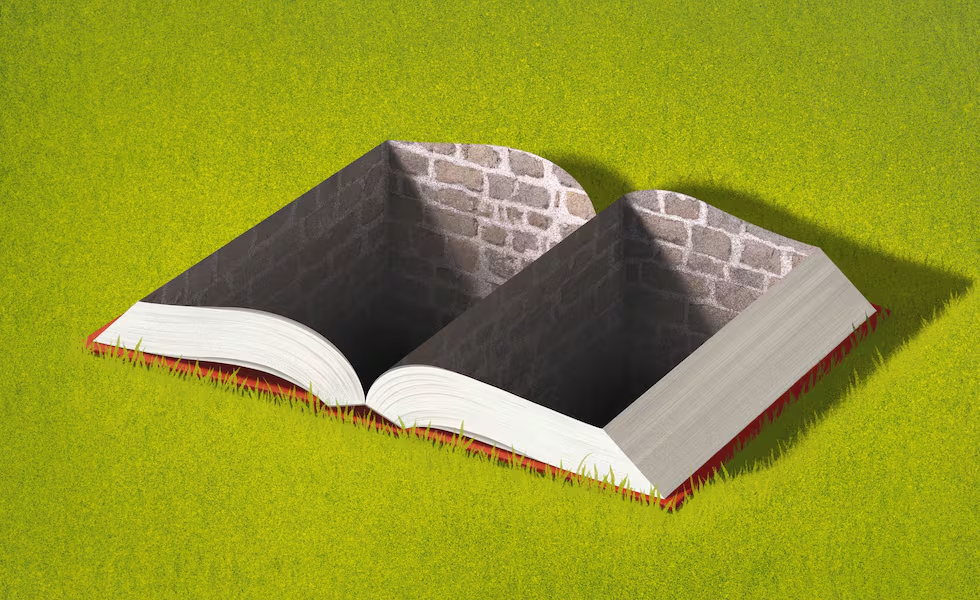
About 250 years ago, writers and journalists across Europe began to notice an astonishing — and, many thought, disturbing — change in human behavior. To some observers it looked like a “fever” or an “epidemic” or even a “madness.”
Pessimists warned that terrible moral corruption would surely follow in its wake. Although if it was an epidemic, it was not one that a lot of people nowadays would find especially worrying. What was happening was this: In the middle of the 18th century, it suddenly seemed that everyone, everywhere had started to read.
These new readers, one onlooker thought, seemed as “addicted” to their reading habit as any gambler, smoker or drunkard. Respectable ladies neglected their household duties because they were transfixed by “poems and periodicals.” It was said that people would fall asleep reading and then wake up the next morning and immediately start reading again. Men would read while they were eating dinner. Women would go out in the evening and, perplexingly, “wander alone with a novel in their hands.”
What was striking about this strange new vice was that it appeared to afflict nearly everyone. For most of history, reading had been restricted to a tiny elite section of society. No longer. “Conservatives were appalled, and progressives were delighted, that it was a habit that knew no social boundaries,” writes the historian Tim Blanning.
Suddenly you could see “common soldiers” hanging around lending libraries. A gentleman might visit his kitchen to make the astounding discovery that his cleaning maid was engrossed in a newspaper. Fashionable aristocrats, eager to get with the spirit of the times, were pulling down their ancient tapestries and lining their rooms with books instead, “so as not to appear uncultivated.” There was, it sometimes seemed, simply no escape from the reading craze. If you went to a tavern for a drink, you would just find yet more readers: peasants huddled up “reading their almanacs to each other.”
What these writers had noticed was the cultural transformation some historians now call the “reading revolution,” the explosion of books and reading that took place in the second half of the 18th century. The rise of reading mattered because it heralded a major change in how people understood their world. Books and newspapers spread access to new ideas and new information down through society, transforming what ordinary citizens could know about their history and their governments. And reading also changed how people thought.
What do plummeting reading rates mean for individual spirituality and faith?
The intellectual world of print is orderly, logical and rational. In books, knowledge is organized, comprehended and contextualized. Books make arguments, propose theses and develop ideas. “To engage (with) the written word,” the media theorist Neil Postman wrote, “means to follow a line of thought, which requires considerable powers of classifying, inference-making and reasoning.”
This development of print culture was associated with the growing prestige of reason, hostility to superstition and the development of science. Literate men and women began to interrogate received ideas about politics, about the natural world and even about the entire meaning of life. Where does power come from? How should we classify whales? How do we know the Bible is true?
We face the serious possibility that writers like Shakespeare, Milton and Austen are not going to reach the next generation of readers.
Historians have linked the spread of literacy to the Enlightenment, the Industrial Revolution, the birth of human rights, the rise of capitalism and the advent of modern democracy. The ascent of reading changed the world. Our vast, interconnected, tolerant and technologically advanced civilization is founded on the complex, rational kinds of thinking fostered by literacy.
But there is evidence that this remarkable story may be coming to an end.
‘Intimidated by anything over 10 pages’
The first rumors that something important was happening reached me via friends working in universities. I came close to going into academia myself (though I don’t think the world is a poorer place for the loss of my proposed Ph.D. on landscape imagery in postwar British poetry). And having a vague sense of a parallel unlived life, I am always keen to know about what is going on in universities. A few years ago, I began to hear that students were struggling to read the books their professors assigned to them. The idea was so persistent it seemed that this was more than the professional pessimism normally associated with lecturers in English literature.
I got in touch with some senior academics teaching in English departments to follow up on the issue for an article in The Times. A conversation I had with one of them still stands out.
“I used to expect students to easily read a novel in a week,” she told me. But recently she had begun to realize that “I just can’t expect that any more.”
The university undergraduates she taught were having trouble concentrating on long texts to the point that it was becoming impossible to assign some of the classic books she had been teaching for her entire career.
She had already given up trying to teach George Eliot’s “Middlemarch” and James Joyce’s “Ulysses,” which were regarded not long ago as two of the obligatory masterpieces on any English literature course. This professor was soldiering on as best she could, teaching Ralph Ellison’s classic of African American literature “Invisible Man.” But, she said, “I can guarantee not one of my students will have finished it.”
I didn’t realize it when I wrote my article, but I was contributing to an emerging genre. Warning beacons were being lit across the media and academia. Essays about the decline of reading were appearing everywhere.
In high-minded American magazines, long reads on the end of literacy would attain virtually the status of a well-loved monthly feature. Across the world, journalists were discovering the same thing I had: Universities were beginning to teach their first truly “postliterate” cohorts of students. And the education system, founded as it still is on the study of complex texts, was not prepared for them.
A frustrated reader visits America's oldest bookshop
Some professors reported that it was not that the young men and women in their classes were unwilling to read but that they seemed almost unable to. One reported that they were “intimidated by anything over 10 pages.”
Rather than sophisticated literary analysis of the kind once associated with an English literature degree, “considerable class time is taken up simply establishing what happened in a story or the basic steps of an argument.” Another believed that many of his students struggled to “attend to small details while keeping track of the overall plot.”
Tyranny of the black screen
The decline of reading has been accompanied by the advent of generative artificial intelligence, which is capable of producing reams of text on demand. According to a series of reports, the use of AI to write essays is virtually ubiquitous in universities. It is not absurd to imagine that you could graduate from university having scarcely read or written a word — perhaps someone has already done this.
The death of writing compounds the death of reading, further unmooring our culture from its foundations in the written word.
The ability to read long and complex texts was once a widespread skill. It now risks becoming a rare, even esoteric accomplishment. It is true, of course, that there have always been university professors who have found their students lazier, shallower and less intellectually scintillating than they might have hoped. But these new anxieties about reading are more than just reactionary griping.
People really used to read more.
In 1940, when George Orwell reviewed a newly published study of children’s reading habits, he found that, alongside the inevitable comic books and detective stories, children were voluntarily reading works by Charles Dickens, Daniel Defoe, Robert Louis Stevenson, G.K. Chesterton and William Shakespeare. By contrast, a recent study of English literature students at American universities found that many struggled to understand the first paragraphs of Charles Dickens’ novel “Bleak House.”
We face the serious possibility that writers like Shakespeare, John Milton and Jane Austen, whose works have been handed on for centuries, are not going to reach the next generation of readers. The transmission of knowledge — the most ancient function of the university — is breaking down in front of our eyes.
The decline of student reading is only the most visible symptom of a wider crisis. In America, reading for pleasure declined by 40% in the first two decades of the 21st century. And in the U.K., more than a third of adults say they have given up the habit.
The National Literacy Trust reports “shocking and dispiriting” falls in children’s reading and reading enjoyment, which is now at its lowest level on record. A report published by the OECD (Organisation for Economic Co-operation and Development) found adult literacy skills “have largely declined or stagnated over the past decade in most (developed) countries.”
Can literacy save modern dating?
What is going on? Though some still argue over the significance of factors like inequality or changes to the education system, it seems increasingly obvious that the major culprit is the smartphone, which became widespread among the populations of developed countries in the early 2010s. I don’t think any other factor can explain declines in reading that hold across countries with different education systems and different economic trajectories. These years will be remembered as a watershed in human culture.
There has simply never been a technology like the smartphone. Where previous entertainment technologies like radio or cinema or television were intended to capture their audience’s attention for a period of time, the smartphone demands your entire life, using a sophisticated array of content-recommendation algorithms, notifications and endlessly scrolling feeds of distracting content to keep your attention fixed almost permanently to the screen.
Across the world, journalists were discovering the same thing I had: Universities were beginning to teach their first truly “postliterate” cohorts of students.
Screen addiction is the logical end point of Silicon Valley’s ad-based business model. The longer you spend looking at your phone, the more advertisements you see and the more effectively technology companies are able to track your behavior in order to serve you better advertisements.
In the battle between you and your smartphone, you are not supposed to win. As the Google whistleblower Tristan Harris has eerily remarked, “You can try having self-control, but there are a thousand engineers on the other side of the screen working against you.”
Screens are changing human behavior far more rapidly than the printed book ever did. More than 90% of American adults own a smartphone, and among young adults the figure is close to 100%. Nearly 50% of teenagers report using the internet “almost constantly.”
As an executive at TikTok admitted, “I think we need to be cognizant of what (the TikTok algorithm) might mean for other opportunities. And when I say other opportunities, I literally mean sleep, and eating, and moving around the room, and looking at someone in the eyes.”
Between two worlds
To me, the decline of reading is a personal as well as a cultural tragedy. My dad was an English teacher possessed of more than ordinary zeal for his subject. I was brought up to view literature as a central feature of life in a way that was not exactly common in the north of England in the early 2000s. Literature was our religion, the way we explained and interpreted our lives. As a child, I quickly learned that every possible event, from a major bereavement to a minor playground controversy, could be cross-referenced against a poem by Thomas Hardy or a short story by Katherine Mansfield.
I was dragged to Shakespeare plays at what now strikes me as an ambitiously young age (“If you’re not enjoying it,” I remember my dad telling me, “you can just read your book instead”). My dad celebrated Shakespeare’s birthday with a homemade cake, and like superstitious peasants our house was strewn with devotional items: Shakespeare mugs, Shakespeare socks, Shakespeare tea towels. I was once presented with a Shakespeare bear, wearing a T-shirt featuring a quotation from “Hamlet.”
A more independent-minded child would have probably rebelled against all this and gone to work in the tech industry. But I never lost the faith. Books have been the major theme of my life. My enthusiasm for books was not an act of impressive originality or — as it was for some of my friends — glamorous rebellion against a philistine upbringing. I just soaked it all up the way other kids soaked up the Disney Channel or Cartoon Network.
If my perspective has anything to recommend, it is perhaps that I grew up between two worlds. For all the literary eccentricity of my childhood, I am also a full participant in the digital age. I can’t really remember a time before the internet. I spent hours online in my teens, holding endless inane conversations with my school friends on a primitive messaging service. I played video games. I had a Facebook account and felt an unmatchable glow of social success when people uploaded pictures of me at parties.
Today my work as a journalist requires me to live closer to the front line of the digital bombardment than most people. I am, if anything, overfamiliar with the internet and its endless, hectic, dazzling rush of the new, the remarkable and the mad. I am by no means automatically opposed to technology. But I have seen both sides, and it seems to me that the print world — in all its richness and complexity — is not one that we want to lose.
What do plummeting reading rates mean for faith?
The decline of reading represents more than the loss of a pleasant hobby or an old-fashioned and inefficient means of absorbing information. Literacy is one of the substructures of modernity. Its erosion threatens to usher in a world very different to the one we have known. When the historians of a distant future look back on our time, they will remark that we bore witness to a cultural revolution just as significant as the one that took place in the middle of the 18th century.
In understanding what the decline of reading means for us, we are lucky to be able to draw on the work of a number of brilliant thinkers, mostly from the mid- to late-20th century, who were inspired by the rise of radio, cinema and television to reflect on the ways new communications technologies reshape societies. The theme that unites their work is the idea that writing is not merely a technology that helps us to communicate more effectively but one that has shaped our minds and our entire civilization.
The most famous and pessimistic version of this argument was made by Neil Postman in his great 1985 polemic against television, “Amusing Ourselves to Death.” He believed that the rise of TV — with its bias toward triviality and charismatic personalities — was beginning to undermine the kinds of reasoned and productive public discourse on which a civilized democracy depends. He was dismissed by some of his critics as a crank and a Luddite. The passing of time has revealed that he was a prophet.
The rise of reading mattered because it heralded a major change in how people understood their world. Reading changed how people thought.
But a great deal has changed in the last 40 years. The experiences of recent decades have only sharpened our appreciation of what we owe to print. Its decline threatens not only reasoned discourse but the whole edifice of enlightened modernity. As reading fades, I believe that we may find ourselves facing a postliterate future that resembles the preliterate past: mystical, tribal and autocratic.
Mystical, tribal and autocratic
I am very far from being unlimitedly optimistic about reading. Books and newspapers tend to make a society more reasoned, more critical and more democratic, but they are not in themselves a recipe for a better world.
A profitable newspaper industry and flourishing bookshops will not preserve reason and democracy in a society shaken by a war or economic collapse (as happened in Nazi Germany). Indeed, it is undeniably true that books have on occasion been used to spread some of the worst ideas our species has ever conceived.
The printed book is a flawed but useful technology, one that is crucial to the way our society functions now and one that I strongly believe we would very much prefer not to lose. Literacy matters profoundly to our civilization. I believe much of the disorder and unreason of the 21st century is a direct consequence of the fading of the written word and the colonization of our culture by addictive screens. As reading declines, the result, evident all around us, is the intellectual hollowing out of our society. Without reading, the world is going to become less rational and more disordered.
In the fragmented, trivialized and angry new world that is being shaped by the smartphone, conspiracy theories and mad ideas spread with terrifying fertility. Political discourse that was once conducted in print — with its remarkable capacity for sustaining logical thought and extended argument — now takes place amid the moronic inferno of social media. If our politicians seem lightweights, our public discourse trivial to the point of dysfunction, and our culture stale and repetitive, it is in large part because books and newspapers have been replaced by ubiquitous screens.
I believe that we haven’t yet fully grasped the consequences of this transformation. As the age of print gives way to the age of the screen, the world we once knew is vanishing.
From “The New Dark Ages: The Death of Reading and the Dawn of the Post-Literate Society” by James Marriott. Reprinted by permission of Doubleday, an imprint of the Knopf Doubleday Publishing Group, a division of Penguin Random House LLC. Copyright © 2026 by James Marriott.
This story appears in the November 2026 issue of Deseret Magazine under the headline “Return to the dark ages.” Learn more about how to subscribe.