Rare protective gene variant offers clues to Alzheimer’s disease
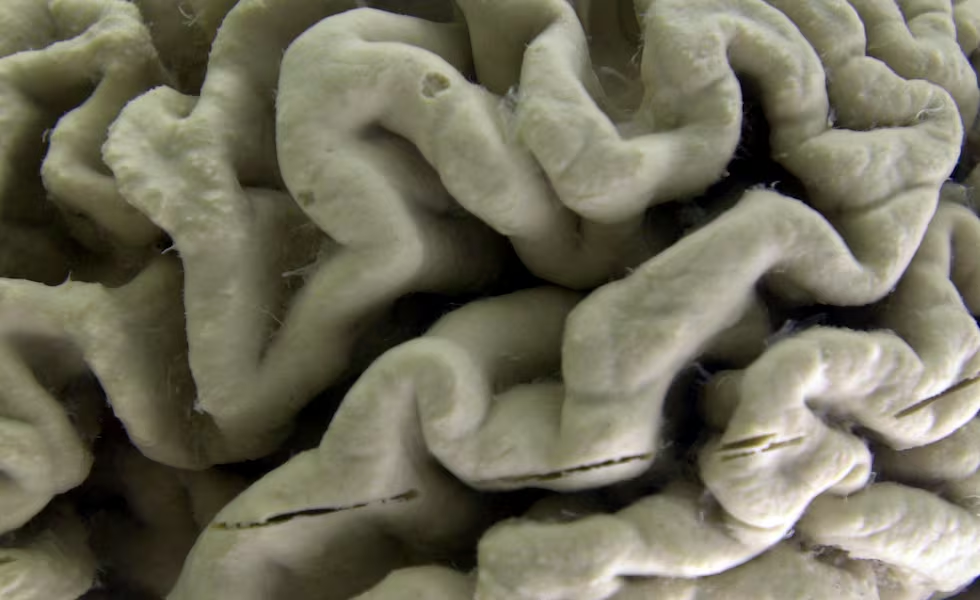
A particular gene variant called APOE ε4 is considered a high-risk factor for developing Alzheimer’s disease — so strong that a 2024 study in Nature Medicine suggests having two copies of the variant might be a cause, not simply a risk. Yet some people carrying the variant do not develop dementia.
Researchers at Columbia University believe they have discovered how the brain-sparing mechanism, which they describe as a rare genetic mutation that protects the brain’s blood vessels from damage, actually functions.
Earlier research identified a rare variant in the fibronectin (FN1) gene associated with lower Alzheimer’s risk among people carrying APOE ε4. The latest study helps explain why limiting excess fibronectin may be protective. In a news release, the scientists explained fibronectin as a protein that helps support tissue structure. But folks with the APOE ε4 gene variant have an excessive accumulation of FN1 around the brain’s blood vessels, “potentially compromising a critical protective system known as the brain-blood barrier.”
Excess fibronectin disrupts signaling between astrocytes and blood-vessel cells, interfering with growth factors that help maintain the barrier. The rare FN1 mutation appears to counter the potential for damage by limiting the buildup, substantially reducing that risk.
That suggests the possibility of developing new ways to treat Alzheimer’s disease, if a treatment can be developed that “recreates the protection provided by this rare mutation.”
The Columbia team’s latest research, published in the journal Nature Aging, identifies how the excess fibronectin damages the brain-blood barrier and suggests how that process might be short-circuited.
“This new study takes us from a genetic clue to a disease mechanism,” says Caghan Kizil, the study’s corresponding author and professor of neurological sciences at Columbia University Vagelos College of Physicians and Surgeons. “We knew that changes in fibronectin could protect against Alzheimer’s, but we didn’t know why excess fibronectin was harmful in the first place. This study gives us that detailed mechanism — and with it, ideas for how to reproduce that natural protection.”
At the brain-blood barrier
The brain-blood barrier, made up of tightly connected cells around the brain’s blood vessels, carefully regulates which substances can enter brain tissue. The barrier is also important to maintain conditions needed for removing waste from the brain. When it becomes damaged or “excessively permeable,” substances that are potentially harmful can get into the brain more easily. And that, in turn, can contribute to inflammation and other neurological disease processes.
The investigation used a lot of different tools and techniques. To figure out what fibronectin does, the researchers looked at brain tissue and cerebrospinal fluid using genetic and epigenetic analysis. They also examined the activity of individual cells and deployed spatial imaging to examine where biological changes occur in tissues. And they experimented with human stem cell models, 3D cultures of blood vessels and zebrafish and mice studies.
All those paths led to the same conclusion: “APOE ε4 promotes the production and accumulation of fibronectin around the brain’s blood vessels.”
They studied mice engineered to express human APOE ε4 and found twice as much fibronectin as was present in those with a different variant, human APOE ε3. They also discovered that the brain-blood barrier was leaky in those with high levels of fibronectin.
Is too much fibronectin harmful?
The researchers raised human fibronectin levels in specialized support cells that help maintain the barrier and keep the brain functioning properly. That increase “was enough to disrupt the barrier, allowing it to become permeable.” Reducing fibronectin levels improved the barrier function.
“These results provided experimental evidence that excess fibronectin can directly contribute to blood-brain barrier damage rather than merely appearing alongside it,” they said.
“The animal experiments allowed us to move beyond association,” said co-first author Prabesh Bhattarai, an associate research scientist in the Kizil lab, quoted in the release.
7 Alzheimer's disease findings in 2025
Sleep disruptions in your 30s, 40s could hurt memory a decade later
In further analysis the team found that too much fibronectin interferes with how cells communicate, including how astrocytes and blood vessel cells work together to maintain blood-brain barrier health. And the patterns held in both experimental models and Alzheimer’s tissue, a fact they deemed “compelling.”
“Importantly, the researchers found signs of similar biological disturbances in human samples, suggesting that the process identified in laboratory experiments may also contribute to Alzheimer’s disease in people carrying APOE ε4,” per the release. Through different types of tests and analysis, they said they found “multiple lines of evidence linking excess fibronectin to the vascular damage associated with APOE ε4.
What could the findings mean for treatment?
The research team believes its findings open the door to several treatment/prevention approaches, from finding ways to limit how much fibronectin accumulates around blood vessels to blocking the abnormal cellular signals, among others.
Work to explore options is already underway, the researchers said in the release.
But they issued a warning, noting that turning findings into a treatment “will require considerable care. Fibronectin performs essential functions throughout the body, including supporting tissue structure and helping damaged tissues heal. Any future therapy would therefore need to target its harmful accumulation or effects without disrupting these beneficial activities,” they wrote.