Will there be a(nother) shutdown?
This article was first published in the On the Hill newsletter. Sign up to receive the newsletter in your inbox on Friday mornings here.
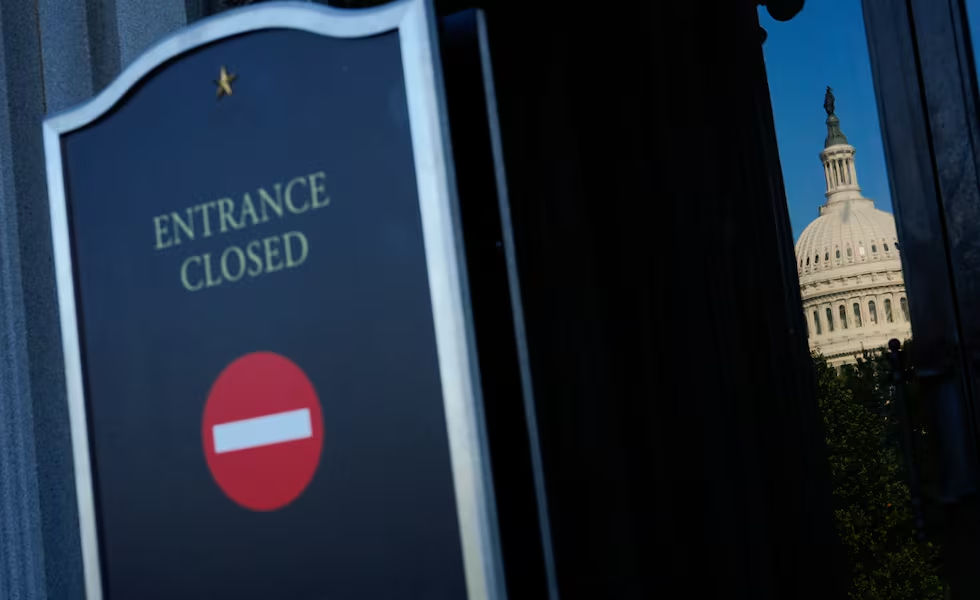
It’s that time of year when the temperatures get colder, the work gets slower and everyone starts talking about whether the government will shut down.
That’s been the vibe up here on Capitol Hill, and the unspoken question of: Will they or won’t they?
We’re already getting the political posturing that is normal ahead of a shutdown deadline. Both sides will make their demands and accuse the other of being unreasonable while the appropriators quietly put their heads together to actually concoct a deal of some sort.
Neither side really wants a shutdown. It would look terrible for both parties if they were to let a funding lapse happen, especially in December of all months heading into the holiday season.
Few reminders: The funding deadline is Dec. 11. That’s the date lawmakers agreed to before the election when both parties thought it would be best to leave those decisions until after the election.
The government funding process is comprised of 12 appropriations bills, with each covering a different area of the federal government. As of this week, the House has only passed three of those and the Senate has not passed any.
The Senate did finally release the final batch of its appropriations bills this week, so negotiations can get underway. But appropriators are realistic enough to admit they’ll need another short-term funding extension, likely into the new year, to avoid a shutdown.
“We’re going to have to pass a (continuing resolution) because, obviously, we won’t have it done by the 11th,” Rep. Mike Simpson, R-Idaho, told me this week. “The debate now is about how long will the CR go to. Some people want to go till just the end of December to put pressure on us to negotiate the bills. Some people want to go to the end of March, and other people want to do a full-year CR — so that’s something we’ll have to deal with as soon as we get back from Thanksgiving.”
Still, even negotiating a CR could be tricky. Democrats have been adamant they don’t want to provide any defense funding for the Iran war. You’re not going to convince Republicans of that — but Democrats aren’t necessarily eager to shut the government down over it.
“I don’t know that anybody wants to see a shutdown. I certainly don’t,” Connecticut Rep. Rosa DeLauro, the top Democratic appropriator in the House, said this week. “A shutdown doesn’t stop the war.”
Even with talk of a CR, appropriators still want to do what they do best: write funding bills. House Appropriations Chairman Tom Cole, R-Okla., said in a statement this week that the committee should continue working on small packages to advance, even if they don’t get done in time.
To give up and simply look forward to another Congress, he said, is “the biggest disservice to the American people.”
It may look like a long road ahead now, but there’s a certain Congress magic that emerges around the shutdown deadline — and deals can come together in a blink of an eye.
Stories Driving the Week
- History — and herstory — made: House Democrats selected their new leadership team heading into the new Congress, electing a number of history-making candidates to guide their party as they take control of the lower chamber in January. Rep. Hakeem Jeffries, D-N.Y., is poised to be the first Black House speaker and Rep. Katherine Clark, D-Mass., will be the first female majority leader, among other milestones.
- Nominee watch: Utah Sen. John Curtis is raising concerns about President Donald Trump’s new pick to lead the Government Accountability Office, positing the nomination may be too partisan for a position that is meant to be politically neutral.
- Looking into Lutnick: Curtis also is demanding answers from Commerce Secretary Howard Lutnick after reports the top Trump administration official repeatedly delayed implementation of chip export restrictions on Nvidia, which is at the center of an alleged Chinese spying scandal.
Things heat up between Democrats and the White House
As you know by now, Democrats have big plans for when they take over Congress next year. And part of that agenda is launching investigations into the Trump administration and the president’s family to probe potential misconduct and corruption.
Rep. Robert Garcia, D-Calif., who is poised to take the gavel on the House Oversight Committee, the main investigative panel in the House, sent a letter to over a dozen Trump allies this week to preserve their records and prepare for investigations he’ll open next year.
The inquiries Garcia will pursue will have to do with “Trump family corruption, corporate corruption, DHS misconduct, and the White House Epstein cover-up,” he wrote in the letters.
Among those who received letters are Donald Trump Jr., Eric Trump, Jared Kushner, White House chief of staff Stephen Miller, Vice President JD Vance and more.
The White House, expectedly, is already pushing back. While they are “ready to engage with Congress on investigations that serve a legitimate legislative purpose,” an administration official noted Democrats in the minority “do not have the authority to conduct oversight and demand the Administration turn over records.”
Of course, that will change when Democrats take the majority. But you’re likely to see some more push and pull when we get there.
Last week I reported that the White House issued a separate warning to House Democrats, claiming that some of their desired investigations may cross into criminal territory.
“Beyond being inconsistent with the clear, well-recognized constitutional limitations on your investigative functions, threats to executive branch officials designed to deter them from public service, or process designed merely to abuse or instill fear in the recipient may cross the line into blatant criminality,” White House counsel William Scharf wrote. “And issuing unlawful subpoenas with the intention of depriving citizens of their constitutional rights and privileges may warrant further investigation.”
Things will be interesting — and once Garcia does control the House Oversight Committee, he’ll have subpoena power to compel testimony and document preservation. So, we’ll see.
Quick Hits
From the Hill: How a Mississippi senator-elect’s X post turned into a national Nike offer. … Democrat Mary Peltola overcomes allegations of voter confusion to take Alaska’s Senate seat. … The hidden dangers of Roblox take center stage in Congress.
From the White House: ‘No indication of a cyberattack’: How officials are answering a week of outages and rumors. … DHS secretary defends personal travel amid scrutiny of FAA’s nationwide ground stop. … Rubio’s faith-centered remarks come as speculation about a 2028 presidential bid grows.
From the courts: Utah sues another online gambling site. … Prosecutors refile rape charge against former BYU football star.