Opinion: Defensive and offensive missiles now vital in war
Missiles have established a central role in warfare, a trend which began in World War II and has expanded since, though not steadily. Iran and Ukraine use them in part to help even the odds against more powerful opponents, Russia and the United States.
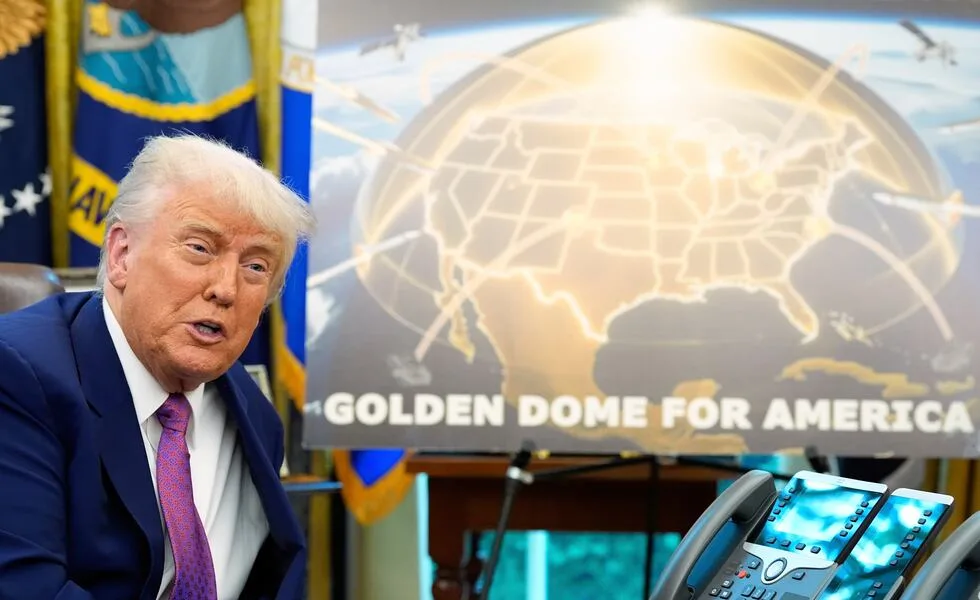
In May 2025, President Donald Trump announced details of a new missile defense system, dubbed “Golden Dome,” as a national security priority. “Iron Dome” is the name of the effective missile defenses protecting Israel.
Missile defense is well-established United States policy. North Korea threats led the Obama administration to deploy Lockheed Martin’s THAAD (Terminal High Altitude Air Defense) anti-missile system in South Korea, Hawaii and the island of Guam.
Opinion: Utah is investing in the future of defense
The George W. Bush administration announced deployment of ballistic missile defenses in Poland and the Czech Republic. Initially, the Obama administration planned to limit such weapons to sea-based forces, but Russia’s 2014 annexation of Crimea and Ukraine incursion led to land-based deployment. Thereafter, a NATO summit meeting emphasized missile defense with new troop deployments in Europe.
Debate over balancing defense and offense is as old as warfare. Technology complicates, but does not remove, this fundamental challenge.
“Hitting a bullet with a bullet’’ is the way even proponents of anti-missile systems describe the extraordinary technical challenges.
During the Eisenhower administration, defense spending absorbed more than half the entire federal budget, and a larger share of gross domestic product than today. President Dwight Eisenhower maintained control over the military in part by putting an overall ceiling on the Pentagon budget, effectively setting the Air Force, Army and Navy against one another.
One byproduct was considerable duplication of effort. For example, each service developed a separate strategic missile program, jealously guarding research and development information from the others.
In the Kennedy administration, Defense Secretary Robert McNamara was immediately offended by this approach and imposed organization-chart order. The Air Force was given land-based strategic missiles, the Navy sea-based submarine systems, and the Army was removed from any program.
Trump’s ‘Golden Dome’ missile defense system: What is it?
McNamara rejected arguments for anti-ballistic missiles (ABMs) because any conceivable defensive systems could be overwhelmed at lower cost by increasing attack vehicles. Using strategic theory of that time, leaving populations vulnerable was considered stabilizing and termed “Mutual Assured Destruction.” Defending missile sites was acceptable since that move signaled we were not planning to attack the Soviets first.
McNamara quickly unified the services against him. The Army eventually achieved an anti-ballistic missile role. President Lyndon Johnson, trapped in the Vietnam War quagmire, removed McNamara, generously named him president of the World Bank, but also forced him to endorse the ABM.
In the 1980s, President Ronald Reagan promoted space-based missile interceptors, termed the Strategic Defense Initiative. The Air Force became the lead service but the entire Joint Chiefs of Staff endorsed the effort. Trump during his first term created a new “Space Force.”
The militarization of outer space provides further powerful incentives to develop effective missile defense weapons. The success in development of such defensive technologies is encouraging over the long term.
Dangers from nuclear-armed governments or terrorist groups argue for actively developing defenses. Influential if eccentric nuclear war strategist Herman Kahn used exactly this argument in print to help the humiliated McNamara when the earlier ABM system was announced.
Iran plus North Korea today represent the sort of threat farsighted Kahn had in mind.
Current wars involving Iran and Russia, Ukraine and U.S., reinforce the importance of ballistic and guided missiles, offensive and defensive.