Opinion: Three cheers for strong government
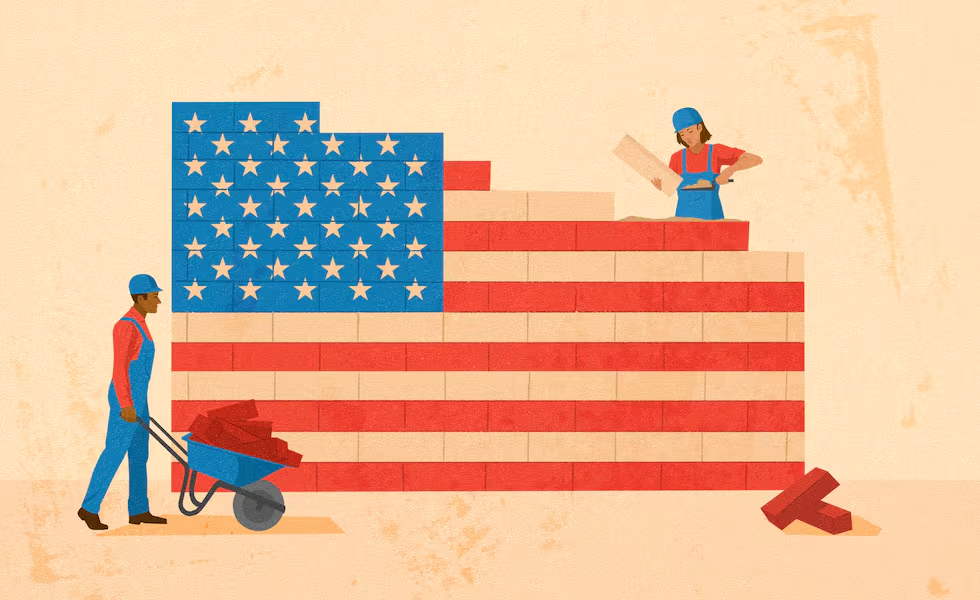
On the 249th anniversary of the adoption of the Articles of Confederation, let’s give three cheers for strong and energetic government!
I realize that is not a popular sentiment, but hear me out. Let’s acknowledge we have the United States Constitution because the Articles taught us this painful lesson: A weak and ineffective government can be as dangerous for your rights as a big and tyrannical one.
As you may remember from history class, the Articles of Confederation were our first form of government — America 1.0. Written primarily by gentleman and hero John Dickinson, the Articles created a loose league of 13 states with a single-chamber legislature in which each state got one vote.
What the Constitution requires of us, according to President Oaks at the National Cathedral
The power issue with the Articles of Confederation
Under the Articles, big decisions required a supermajority (9/13) and any amendments required a unanimous vote. Seeing as Congress often fails to achieve a quorum, getting things done was not their strong suit — then or now. Neither, as it turned out, was paying soldiers, financing a war, regulating trade, paying debts or enforcing treaties with powerful European countries.
Frankly, it’s astonishing that the Articles managed to see us through the Revolutionary War, and I’m convinced most of that credit actually belongs to Washington, Franklin, Adams, the French, British arrogance and the dogged, rebellious spirit in America.
We do not want weak government; we want effective government.
Ultimately, the Articles failed on two fronts. First, the national government lacked the powers necessary to conduct the business of a sovereign nation.
The Treaty of Paris went largely unenforced. We couldn’t pay our debts because Congress couldn’t tax. The economy was in shambles, yet Congress lacked the power to regulate commerce. All of this was left to the states, the second problem, and they were no paradises, either. And no state proves this better than Rhode Island, which was the worst state in the 1780s but today is a very lovely state. I should know, I worked there for two years.
In 1786, a pro-paper-money party captured the Rhode Island legislature. They then followed through on their campaign promises by printing a bunch of banknotes and declaring it legal tender. To the surprise of no one who knows populist economics, the money almost immediately started to lose value. Merchants and creditors wouldn’t accept it. So the legislature passed a law that made refusing paper money a crime. Accused individuals faced a trial without a jury and financial penalties. Judges who refused to enforce this law were not reappointed by the state legislature.
In sum, Rhode Island inflated its currency, wrecked its economy, punished citizens who tried to stand up for themselves, and bullied judges. And the national government could do nothing about it! No wonder Rhode Islanders didn’t send any delegates to the Constitutional Convention; they were having too much fun destroying their own state. This story also helps explain why the U.S. Constitution forbids states from printing paper money.
Government wasn’t the enemy
We the People declared independence from tyrannical government in 1776 — and then we over-corrected. It took us about a decade — with plenty of bad behavior from the states thrown in for good measure — to learn that we needed a strong government.
As it turned out, government was not the enemy. It’s often the solution! The key, to paraphrase James Madison, is to do two things: 1) Create a government that is strong, energetic, and effective — a government capable of controlling its citizens and engaging with the rest of the world; and 2) Oblige that government to control itself as well.
Opinion: The constitutional story is unfinished — each generation writes its own chapter
This is the triumph of the U.S. Constitution, which deliberately created a more powerful government and then built in separation of powers, checks and balances, a two-chamber Congress, and federalism (a system that blends national, state, and local governance) to keep it honest.
And should the institutional checks fail to keep the government accountable, the virtue and power of the American people, personally and at the ballot box, would force them into line.
To all who love the U.S. Constitution, know what you love! You love a document that created a strong and energetic government — and then limited it. The American people are a constitutional people, not anarchists. We do not want weak government; we want effective government.
So happy 249th to the Articles of Confederation. Thanks for the hard lesson.