A year after Charlie Kirk was killed, nearly half of college students say violence can be used to stop speech
The term “cancel culture” may be disappearing from the national conversation, but a new survey suggests that support for censoring opposing views is widespread among American college students.
Nearly half of American college students say physical violence can be justified to stop what they consider to be hate speech: 54% of liberal students and 30% of conservative students who were asked agreed with the statement, according to the Buckley Institute’s 2026 National Undergraduate Student Survey.
Among students who believe violence can be justified, 72% also acknowledge that hate speech is protected by the First Amendment.
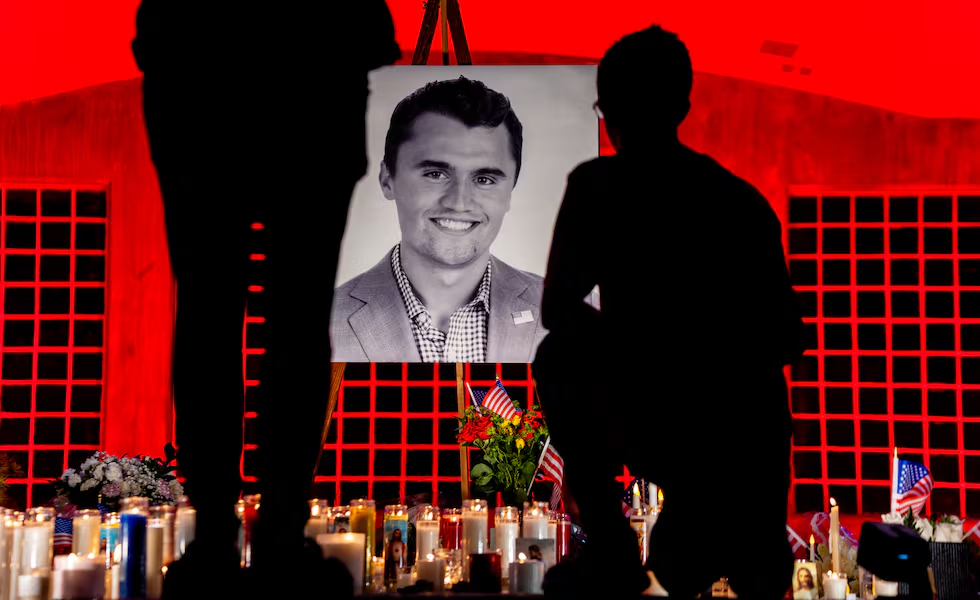
A little over a year after Charlie Kirk's assassination, 1 in 4 college students think “It should not be a surprise that his words had consequences.”
— Buckley Institute (@BuckleyInst) October 18, 2026
Our new survey found increasing undergrad comfort with violence and criminal prosecution for speech they don’t like. pic.twitter.com/mxeoZ4up8Z
The survey was conducted online from Sept. 5 to Sept. 14, around the one-year anniversary of the assassination of Charlie Kirk, by Inquire LLC, of 803 undergraduate students under the age of 25 attending a four-year program.
This is the twelfth year the Buckley Institute has conducted a study of undergraduate students.
Offensive, but protected
Despite students’ desire to stop some speech, offensive speech is allowed under the First Amendment to the Constitution.
Paul Cassell, a law professor at the University of Utah, said in an email, “The Supreme Court has long held that speech does not lose constitutional protection just because some might view the speech as ‘hate speech’ or as being deeply offensive.”
“The assassination of Charlie Kirk shows the ultimate threat to free speech. No one should have to live in fear that if they express controversial or even unpopular ideas that they might be harmed or even killed for speaking out,” he said.
How will 3 Utah universities respond to low grades on annual campus free speech survey?
Quiet classrooms, skeptical public
The survey revealed that 42% of students “believe that hearing opinions they disagree with can be harmful to their mental health.”
Buckley found that a majority of students feel “intimidated from disagreeing” with their professors and classmates.
Sean Stevens, chief researcher at the Foundation for Individual Rights and Expression, said, “People are most afraid of their peers. Students actually fear the repercussions from their peers more than anyone else.”
Americans’ perception of college is changing.
Gallup published a report Oct. 1 that revealed a decline in the percentage of people who believe college is important, calling it a “record low.”
Thirty-one percent of Americans said college was “very important,” while nearly 3 in 10 said college was “not too important.”
Stevens said several factors could contribute to declining confidence in higher education, including campus free speech, political perceptions of universities and the return on investment of a degree.
“The free-speech environment on these campuses matter,” Stevens said, adding that it is an issue shaped by multiple factors.
What it looks like on campus
Utah has been center stage of the free-speech conversation since Kirk was killed on Sept. 10, 2025, at Utah Valley University.
FIRE releases an annual college free-speech ranking. The 2027 College Free Speech Rankings ranked the University of Utah 131st out of 261 institutions, receiving a D-minus grade.
University of Utah College Republicans Vice President Rylie Barnes told the Deseret News, “The University of Utah is definitely a school where they claim that freedom of speech and ideas are welcomed, but students and faculty have proven that that is not true anymore.”
She said conservative students have had other students threaten them and professors kick them out of class for expressing their views. Barnes said this has made “conservative students a little bit more wary of trying to have a voice in school.”
On Oct. 27, an altercation occurred during a University of Utah College Republicans tabling event featuring a whiteboard claiming there are only two genders.
According to Barnes, a witness to the incident, a student approached the table and erased the whiteboard. One of the club members confronted the student.
Barnes said the student “lunged at him, attacked him, and ripped his shirt.”
When asked about the incident, the university said: “Police have identified the individual involved and issued two Class B misdemeanor citations for simple assault and property damage.”
But not all students share the same experience as Barnes.
Ian Jacobsen, external communications director for the College Democrats at the University of Utah, said, “I feel completely comfortable expressing my views.”
He said, “Free speech is an important part of democracy” and “violence is never an appropriate response when you disagree with somebody, and nobody should be intimidated into silence.”
He said the College Republicans “claim to want a respectful civil dialogue.” However, they “deliberately put up provocative messages in order to entice students into getting into arguments with them. They have posted things on social media that are deliberately inflammatory.”
Disagreeing without silencing
Stevens offered alternative, nonviolent ways to express disapproval toward speech. “You can protest. You can protest outside the event. You can silently protest in the event, even. You could hold up signs in the crowd. You could turn your back on the speaker,” he said. “There are a number of things you can do to express disapproval.”
In years past, the College Democrats and College Republicans at the University of Utah have held successful debates.
What’s got McAfee so fired up about the University of Utah?
Daylan Alzamora, president of the College Republicans at the University of Utah, spoke of last year’s event. “We didn’t touch the hot-button issues,” he said. “We were really just more policy-oriented instead of having just this clickbait-type approach to debate, which was pretty substantive, I would say.”
He said he tells the members of his group, “Just keep in mind that you’re here to open minds as much as they’re here to open yours.”
Buckley Institute Executive Director Lauren Noble said, “Each university should also collect and publicly release data on the free speech climate on campus.”
Both Stevens and Noble pointed to the University of Chicago’s Report of the Committee on Freedom of Expression, which encourages universities to protect open debate, even when people find the ideas offensive or disagreeable.
Universities “must stand by those free speech principles, even when it is challenging, as well as regularly educate students on the value of free speech,” Noble said.