Powerful image of a grieving elephant wins Wildlife Photographer of the Year
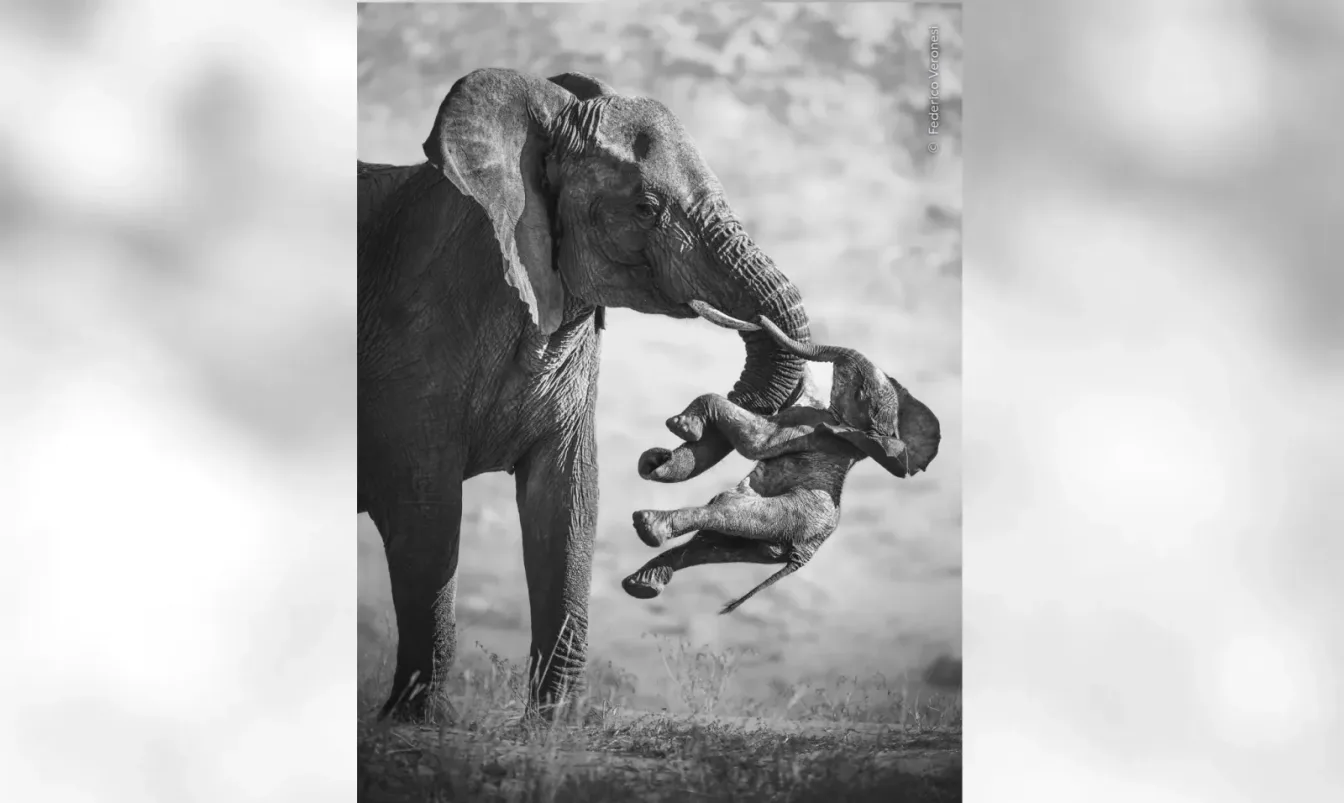
In the Huab River Valley of Namibia, a female elephant carries the body of a deceased calf. It’s a tragic scene that offers a rare glimpse at the complex social behaviors of animals. Photographer Federico Veronesi documented the moment and his striking image took top honors at 2026 Wildlife Photographer of the Year awards.
“This photograph works on so many levels. Emotionally it’s a gut punch, heartbreakingly poignant,” Kathy Moran, Chair of the Wildlife Photographer of the Year Jury, said. “Intellectually it’s proof that animals have cognition. This photograph says it all!”
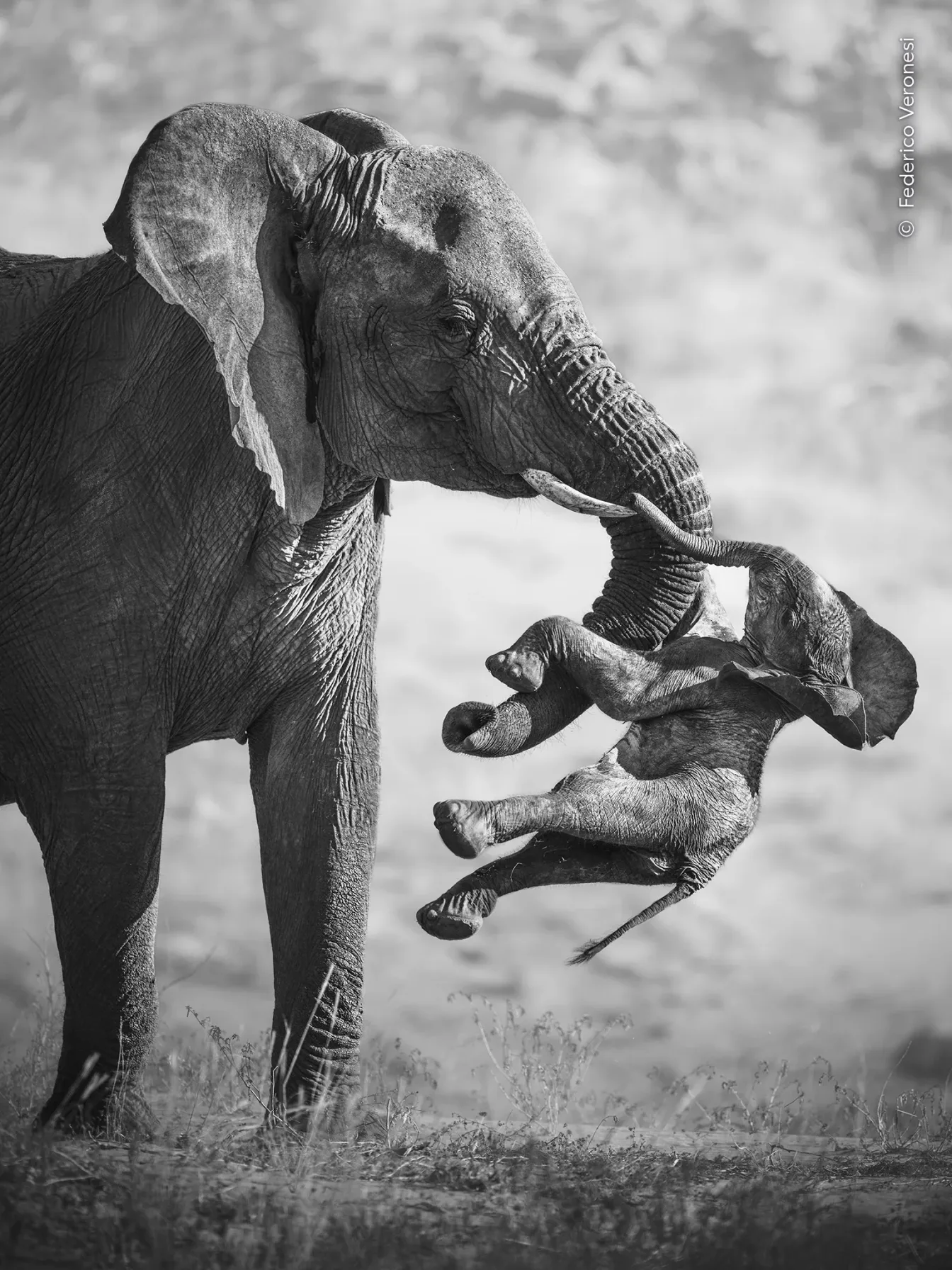
Wildlife Photographer of the Year 2026
Winner, Behaviour: Mammals
Federico was tracking elephants when he came across an unusual pattern of drag marks in the sand of a dry riverbed. The source became clear when he caught up with a family group. A female emerged with the calf, its leg wedged between her tusk and trunk.
Behaviours centring on death have been observed in both Asian and African elephants, including vocalisations, guarding the dead, inspecting and handling bones, and carrying the deceased. Some researchers suggest these behaviours could indicate an elephant’s journey to understanding death, while others interpret these actions as possible displays of grief.
Credit: Federico Veronesi / Wildlife Photographer of the Year 2026
Photographers from around the world submitted more than 65,000 photographs for consideration this year. Prizes were awarded across 20 categories, including honors for young photographers.
Winners across categories:
- 10 Years and Under: Amelie Davis (UK)
- 11 – 14 Years: Oscar Whitfield (UK/Zimbabwe)
- 15 – 17 Years: Konrad Gräeter (Germany)
- Animals in their Environment: James Lewin (UK)
- Animal Portraits: Aaron Sanders (UK)
- Behaviour: Birds – Isak Pretorius (South Africa)
- Behaviour: Mammals – Federico Veronesi (Italy)
- Behaviour: Amphibians and Reptiles – Anton Sorokin (USA)
- Behaviour: Invertebrates – Sitaram Raul (India)
- Oceans: The Bigger Picture – Alex Lindbloom (USA)
- Plants and Fungi: Agorastos Papatsanis (Greece)
- Natural Artistry: Michał Michalski (Poland)
- Underwater: Tony Wu (Japan/USA)
- Urban Wildlife: Seth Forestson (USA)
- Wetlands: The Bigger Picture – Alex Visbal (Colombia)
- Photojournalism: Francisco Negroni (Chile)
- Photojournalist Story Award: Loren Elliott (USA)
- Rising Star Award: Alexis Tinker-Tsavalas (Germany)
- Portfolio Award: Kutub Uddin (Bangladesh/UK)
- Wildlife Photographer of the Year: Federico Veronesi (Italy)
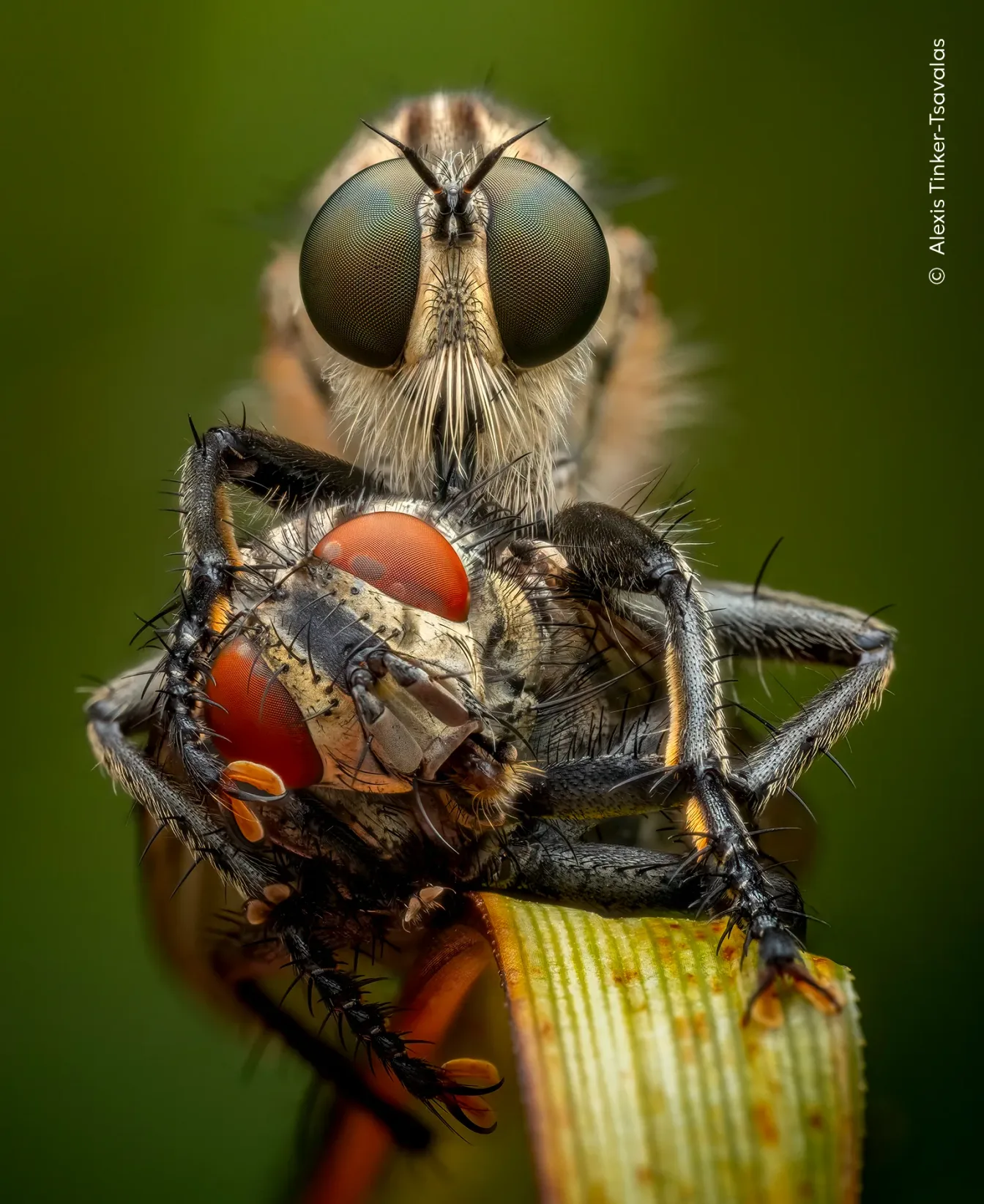
Winner, Rising Star Award
When Alexis spotted this robber fly, it had already impaled the flesh fly with its needlelike mouthparts. The bubbles forming in the victim’s eyes indicate that the robber fly has injected digestive enzymes that liquefy its internal tissues before they are sucked out.
Credit: Alexis Tinker-Tsavalas / Wildlife Photographer of the Year 2026
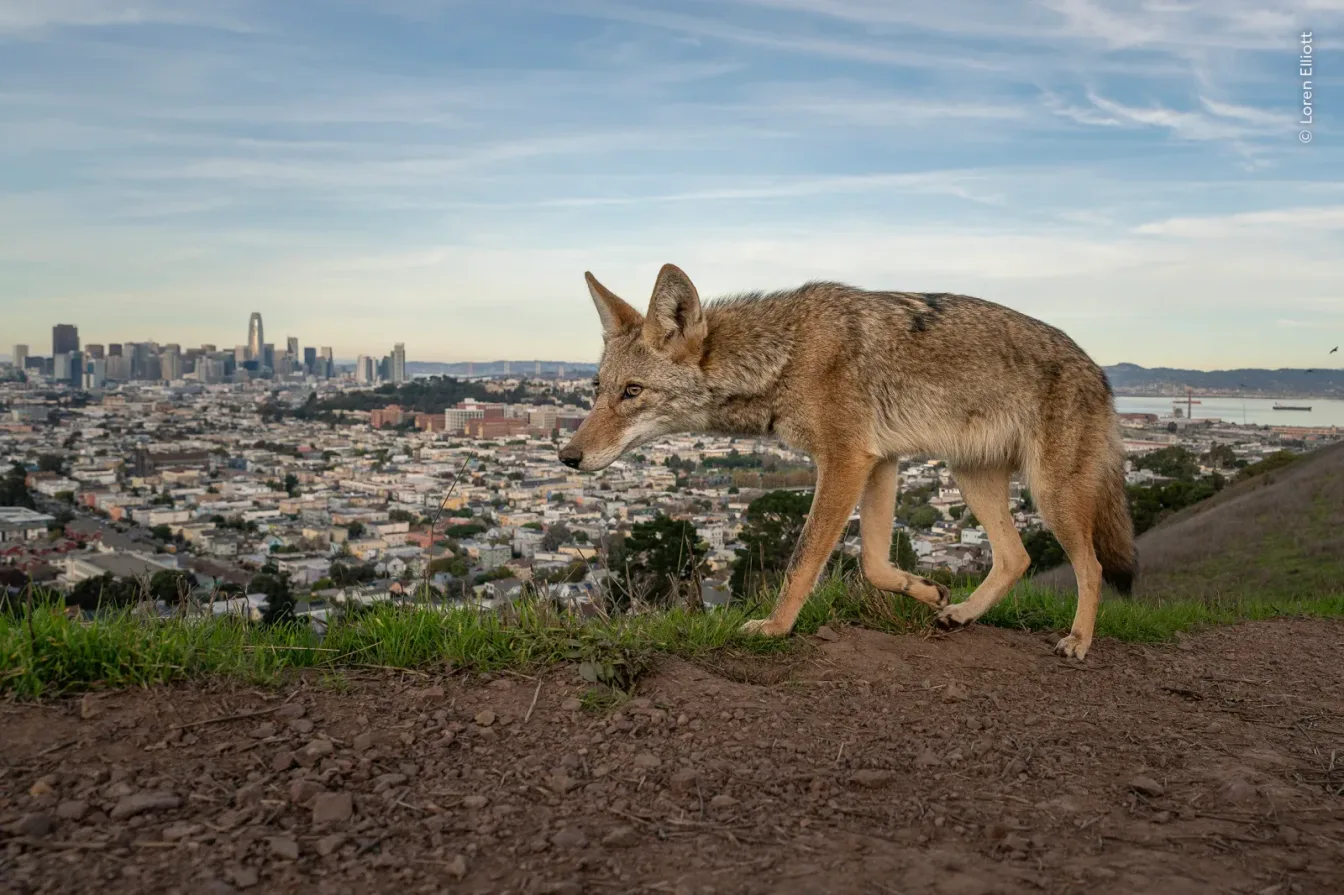
Winner, Photojournalist Story Award
A coyote pads along a trail in Bernal Heights Park, overlooking the city and bay of San Francisco. This individual is part of a resident pack that Loren observed hunting rodents in the park, which is also popular with people and dogs.
Credit: Loren Elliott / Wildlife Photographer of the Year 2026 LOREN ELLIOTT
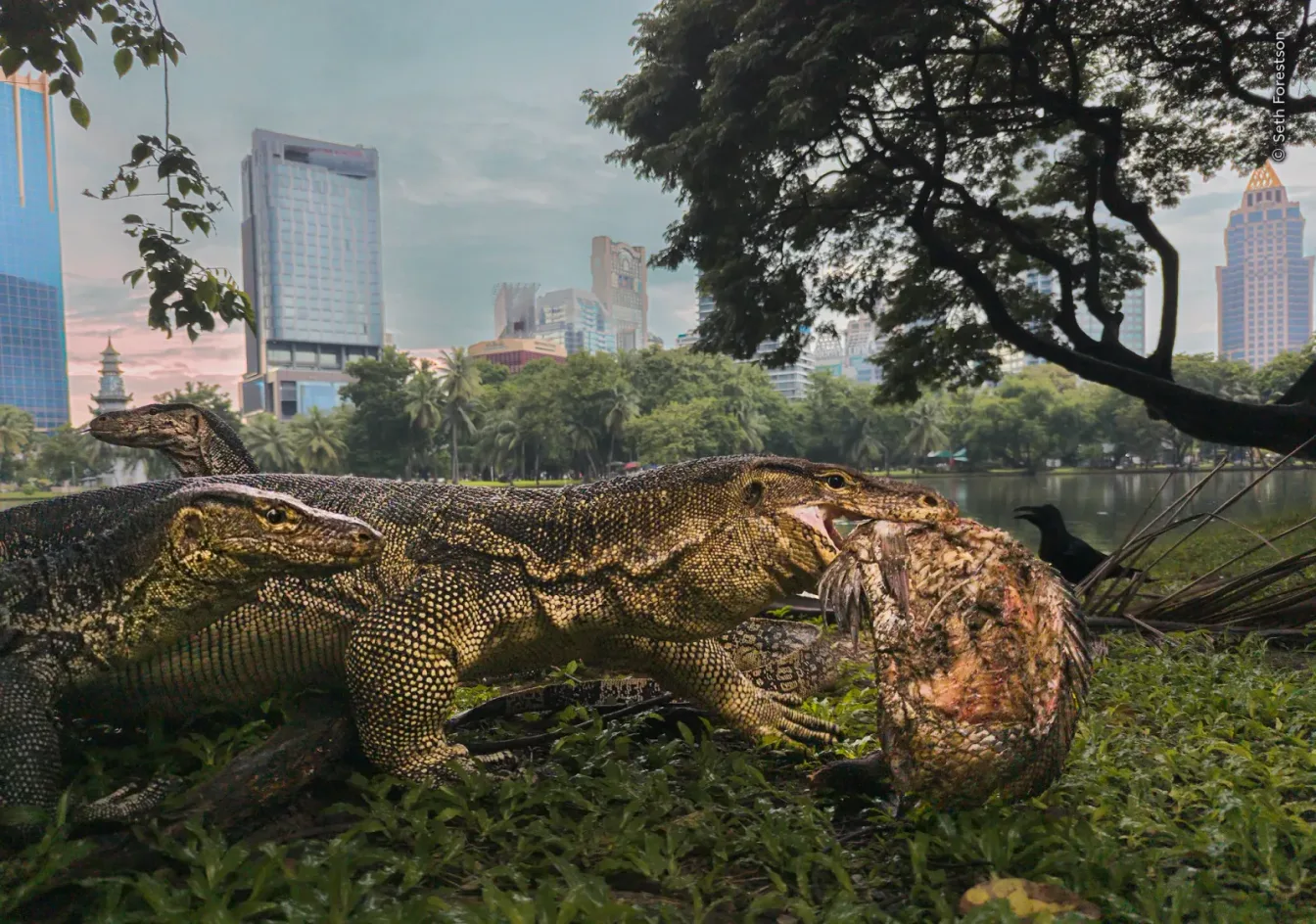
Winner, Urban Wildlife
The challenge wasn’t finding these lizards, but catching them in action, as they spend most of the day basking in the sun. When Seth spotted this one, he lowered himself down onto the mud to frame this city dragon against the Bangkok skyline.
Common water monitors have successfully adapted to living within cities across South and Southeast Asia. They will take whatever food source is available, such as the plentiful supplies of catfish and koi in the lakes of Bangkok’s Lumphini Park.
Credit: Seth Forestson / Wildlife Photographer of the Year 2026
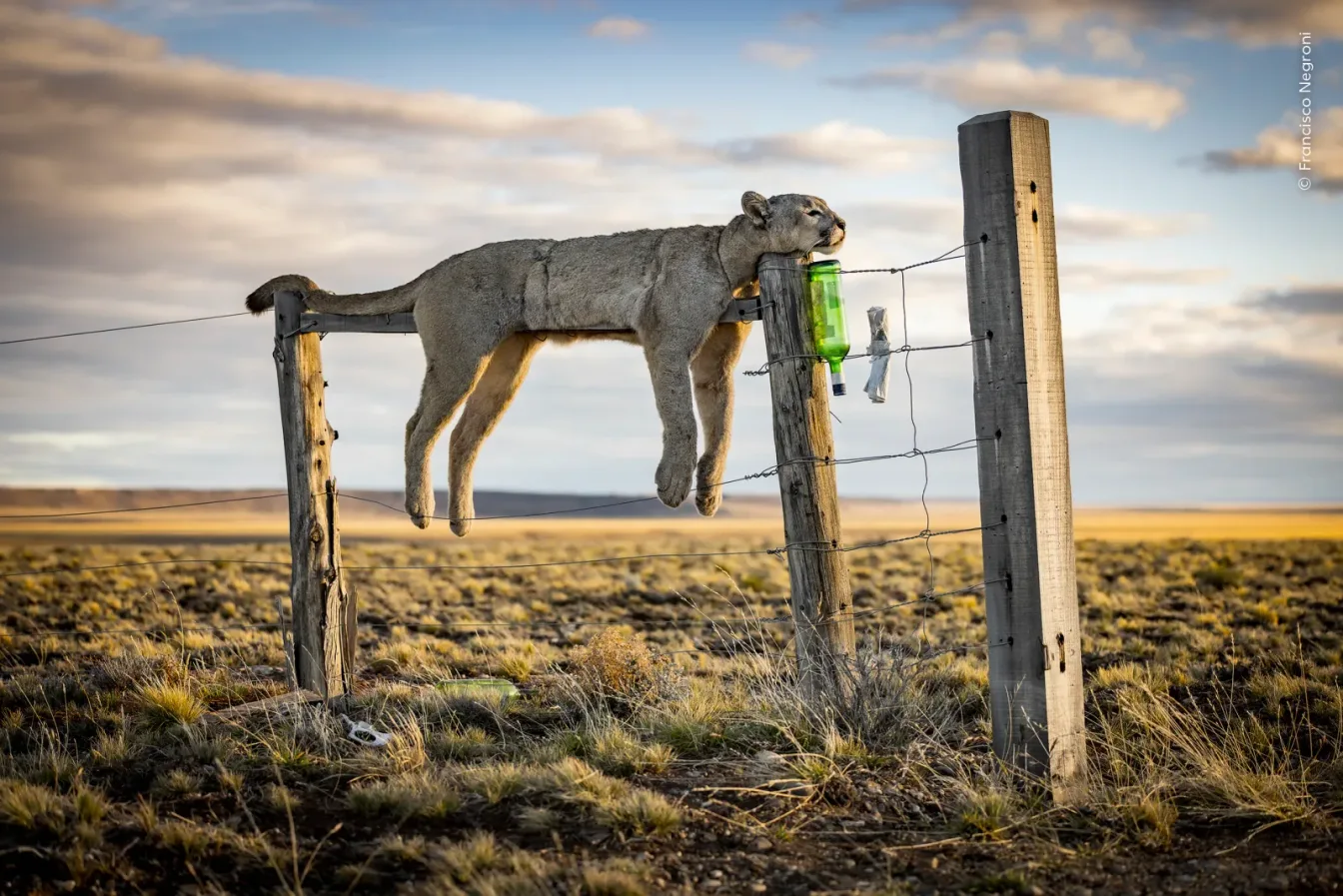
Winner, Photojournalism
Tied to the fence and presented as a hunting trophy, this display was one Francisco had ‘never witnessed or photographed before’. In 2025, Santa Cruz banned the hunting of pumas, but illegal persecution continues.
Livestock predation is one of the major causes of human–puma conflict, and it’s suggested that enclosing sheep at night and using guard dogs can significantly reduce the loss of livestock without resorting to hunting. In southern Chile, some owners have even abandoned sheep farming in favour of puma tourism.
Credit: Francisco Negroni / Wildlife Photographer of the Year 2026 Francisco Negroni
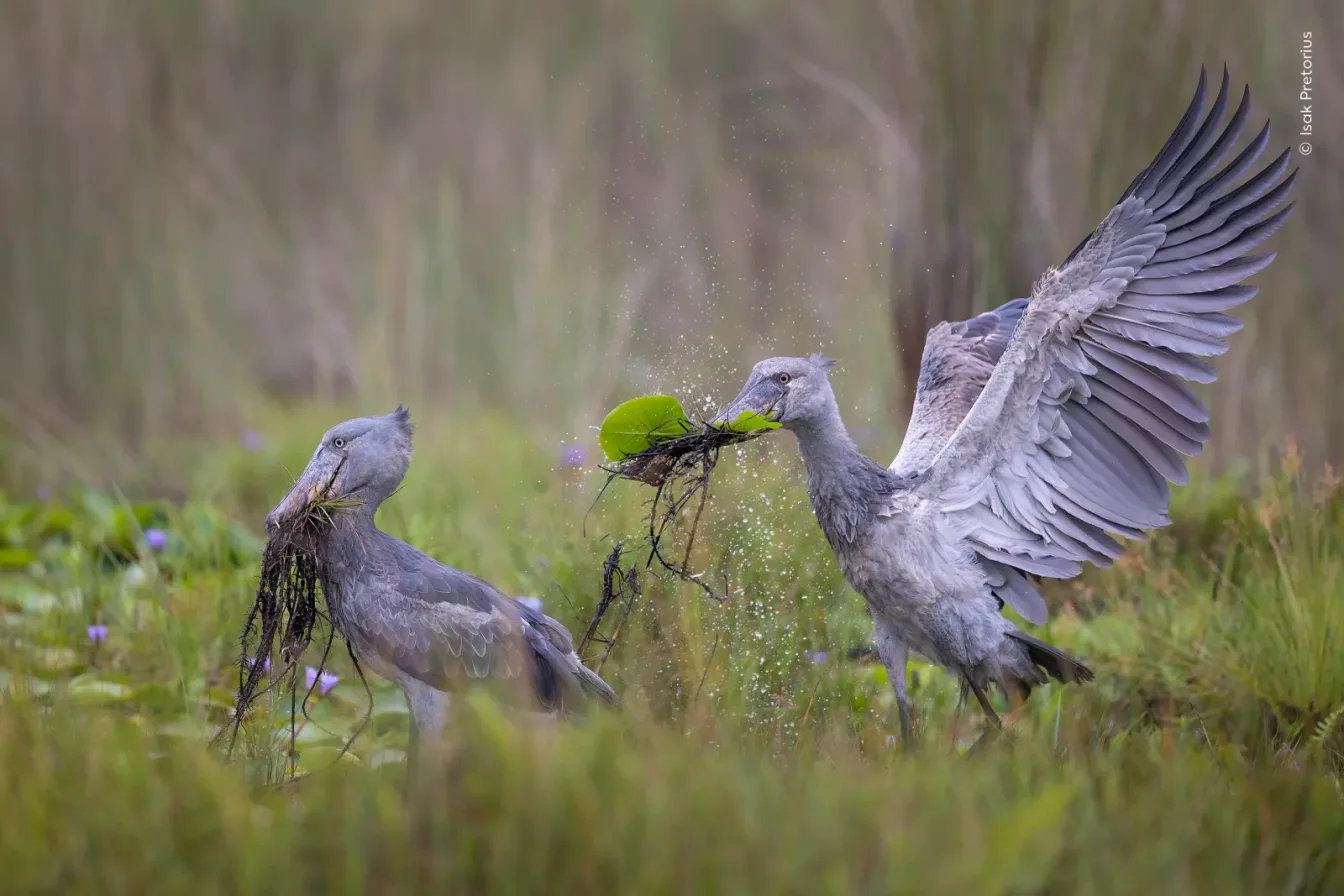
Winner, Behaviour: Birds
Exploring the swamp in a narrow canoe with a guide, Isak felt exceptionally lucky to see not one but two elusive shoebills. The birds pulled out vegetation, dropped it and then repeated the process several times. It’s likely this is a breeding pair gathering nesting material.
Though often called the shoebill stork, these large birds are more closely related to pelicans, herons and ibises. Fewer than 5,300 mature shoebills survive across their entire range and their numbers are decreasing.
Credit: Isak Pretorius / Wildlife Photographer of the Year 2026
Wildlife Photographer of the Year is developed and produced by the Natural History Museum, London. The winning images will be on display at the museum until July 11, 2027.