Silver linings: Hurrah for neighborhood potlucks
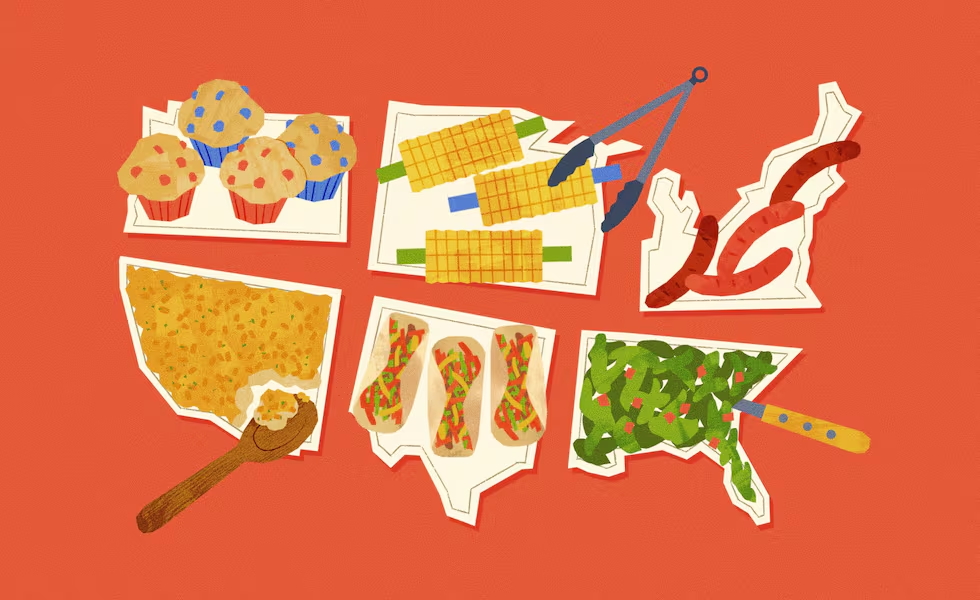
During the late autumn of each year, we invite everyone in our neighborhood to a potluck supper in our backyard. It’s a come-as-you-are affair. Two weeks beforehand, I go door-to-door extending a personal invitation to each neighbor. Not everyone comes, but most neighbors join us in this backyard get-together.
Rad Patel comes. He is from southern India and typically has Hindu holidays that we plan around. Peter from Germany and Maria from the Philippines come as long as they are not out on a planned group hike. Tom and Bill, who are partners, only come occasionally. Jamal rarely comes, but I invite him anyway. He has five different soccer subscription services, so we talk about the Premier League when I extend his invitation.
Others who have moved to the area from California, Idaho, Minnesota, and various parts of Utah also come. We usually have around 40 people in our backyard.
As a potluck, everyone can bring something, but it’s not required. Some dishes are homemade with exotic flavors from another country; others are from Costco. All are welcome.
Silver linings: The way we were — bygone products and their legacy
More than just the food
Garrison Keillor once famously said, “A potluck supper is a feast of the ordinary.” It is a reason to get together, but not the goal of getting together.
The goal is to feel a sense of belonging, to celebrate an ordinary occasion when it isn’t a holiday. At a backyard potluck supper with plastic chairs and long tables, it doesn’t matter who is a doctor or who is a UPS driver, who is from Mumbai or who is from Brigham City.
The usual posturing that goes on in business meetings vanishes because neighbors aren’t out to impress neighbors. These are just the same people they see regularly getting the mail or mowing the lawn. There is a certain sameness already, a social equality. And they already have something fundamentally in common that no other group or organization can match: a neighborhood.
A marvelous diversity
In a potluck supper, everyone brings something, but no one cares what you brought. No one says, “Hey, that’s mine; don’t take too much.” Instead, we hope that there is only an empty dish left over when it is time to go home.
At a potluck supper, whatever neighbors bring is accepted with equanimity. Some bring tried-and-true family dishes; others offer a three-layer dip they picked up on the way over to your house. Who cares? It is less about what you bring and more about showing up.
Of course, at any potluck supper in Utah, there most certainly will be at least one green Jello salad with shredded carrots, at least one dish of “funeral potatoes” and, for certain, at least one pan of lemon bars lightly dusted with powdered sugar.
Along with these dependable favorites, at our backyard potluck supper we’ve also had South Indian curry, Filipino achara and Midwestern tater tot casseroles. All are welcome.
Binding hearts in a shared meal
All parts of a meal — its preparation, consumption and participation — can bind or separate people. In the novel “A Lesson Before Dying,” author Ernest J. Gaines describes how the types of food and places where it is eaten build up or separate people in a community. Gaines describes societal dynamics throughout his novel, which intersect with who ate what and when and with whom.
How, when and with whom we eat are more than simple facts of life. An emerging field called “culinary psychology” looks at eating habits from collard greens to fresh lobster; use of seasonality and anticipation in types of food eaten; and how eating alone or with others affects our moods, well-being and lifespans.
My wife, Stephanie, doesn’t bother with the science or the psychology of eating. Intuitively, she simply says that “food is love.” She believes that how and when we eat has little to do with nutrition — and much more to do with hospitality.
Silver linings: Class reunions — to go or not to go?
Hospitality and belonging
True hospitality can have many benefits. It can act as a remedy to the isolation increasingly felt by many in their daily lives. Few activities embody communal belonging quite like a potluck supper. By stripping away the formality inherent in many other gatherings, this can create a unique space where authentic community can thrive.
At its core, hospitality is about creating an environment where people feel seen, welcomed and valued. A potluck supper creates radical equality by allowing everyone to contribute a dish. “Guests” are transformed from passive consumers into active co-creators of the experience. This shared responsibility immediately levels the playing field. It matters very little whether someone brings a time-honored family recipe or a simple bag of chips and dip. Every contribution is necessary for an “ordinary feast.”
This approach unlocks a deeper sense of belonging. When neighbors invest their time, effort and cultural heritage into a dish to share with others, they are offering a piece of themselves. A potluck table becomes an expression of the neighborhood.
Ultimately, hospitality is the art of making room for others. It reminds us that community is something we actively build together, one dish at a time. By gathering around a communal table, we feed so much more than just our bodies.
If your heart is longing for more connection and opportunities to share love, maybe it’s time to plan your own potluck.