A Note on Uploading Nuclear Warheads
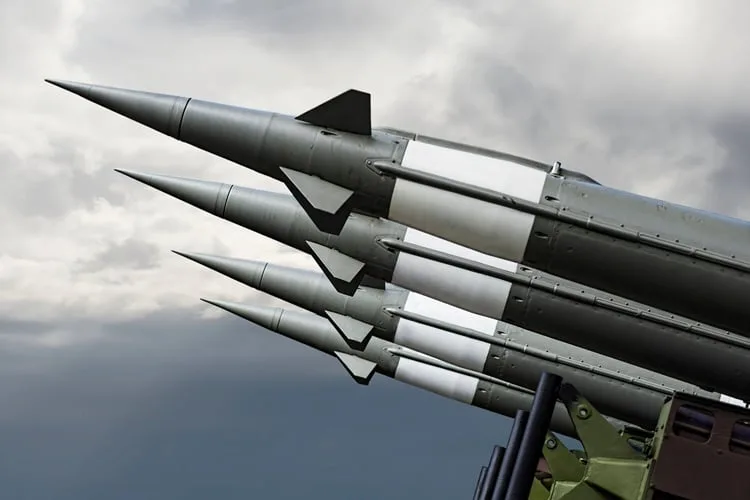
A bipartisan group of analysts in the nuclear policy community have long urged the Trump administration to begin uploading additional warheads on Minuteman ICBMs and Trident submarine-launched ballistic missiles. The New START Treaty’s expiration earlier this year seemed like a propitious moment to do so, since the US is no longer limited to 1,550 deployed strategic weapons. For months, the administration has been free to strengthen deterrence by initiating uploads, yet it has announced no decision to do so.
The reasons for getting on with the task of uploading additional warheads are well documented:
- Targeting: American nuclear forces are currently structured to hold at risk a single nuclear peer. But uploading warheads on Minuteman and Trident would allow the US to hold at risk targets associated with China’s nuclear expansion while continuing to hold Russian forces at risk. Authoritarian regimes like China and Russia value their respective nuclear forces as among the guarantors of their grip on power. Such regimes would hesitate to engage in provocations or escalations that jeopardize those forces. And the operational capability to knock out segments of adversary nuclear forces makes American escalation more credible. Thus, uploading would allow the US to strengthen deterrence in a two-nuclear-peer world.
- The Triad: Bombers, ICBMs, and submarine-launched ballistic missiles have distinct but complementary attributes that, in combination, strengthen America’s nuclear deterrence. Bombers are the most flexible delivery system and, in times of peace, crisis, or open conflict, provide the president with the ability to signal his resolve to adversaries and allies alike. Trident-armed submarines are stealthy, difficult to find and track, and the most survivable leg of the triad. The Minuteman fleet is the most prompt strike option at the president’s disposal, and its dispersed silos also complicate adversary targeting. Because an adversary would have to counter all three legs at once to conduct a disarming attack, uploading Minuteman and Trident warheads raises the cost of that attack and therefore strengthens the whole of America’s deterrence. In a world of two nuclear peers, that added margin matters.
- The Moral Dimension: Failing to hold at risk targets associated with China’s strategic offensive buildup would come at a serious moral cost. Forgoing such a capability would weaken America’s ability to limit damage to the homeland—and thereby weaken its ability to defend American lives. Putin may not care about the hundreds of thousands of Russians whom he has sacrificed in Ukraine to make only incremental territorial gains. But the US is not Putin’s Russia: It values the individual aspirations of its citizens, who are not expendable units that serve the interests of the state. This moral dimension of deterrence is one that Cold War–era American strategists like Albert Wohlstetter and Fred Iklé took seriously, and it is no less important today.
However, there is one more reason for uploading additional warheads—especially on the Minuteman fleet—that might deserve a place on this list.
Russia is preparing to deploy an ICBM vastly larger than America’s. These Russian ICBMs have heavier payloads and therefore carry many more warheads than a max Minuteman loading of three. China has also deployed a heavier ICBM, which can reportedly carry as many as five warheads.
To be sure, matching China’s and Russia’s total warhead count is no reason to upload additional warheads on strategic missiles. Nor is it reason enough for the US to develop and deploy a heavier ICBM—though a persuasive case has been made that such an option is worth considering.
But ifChina and Russia value the capabilities that their Hydra-headed ICBMs provide, and ifthey assess the US ICBM fleet on that same basis, then that is one more reason for the Trump administration to load additional warheads on strategic missiles. After all, it is the distinctive calculations of the adversary—not those of American strategists—that the US nuclear force posture is designed to shape.
When designing the US nuclear force posture of the late Cold War, the Jimmy Carter and Ronald Reagan administrations took seriously the calculations of the adversary they were deterring. In the late 1970s, Leon Sloss led a nuclear targeting review that included a careful assessment of Soviet calculations. One of its conclusions was that the Soviets valued the counterforce potential of their heavier ICBMs and that they assessed the US nuclear posture on that basis. This finding served as one of the reasons Reagan deployed the PeacekeeperICBM in 1986, which dramatically improved America’s counterforce capabilities. Because deterrence lives in the mind of the opponent, Reagan was right to shape Soviet assessments.
Today, the Trump administration would be right to upload warheads for all of the long-established reasons listed above. And a closer look at adversary assessments of multiple-warhead ICBMs may add another important consideration to that list.