Maybe Canada wasn’t the problem after all
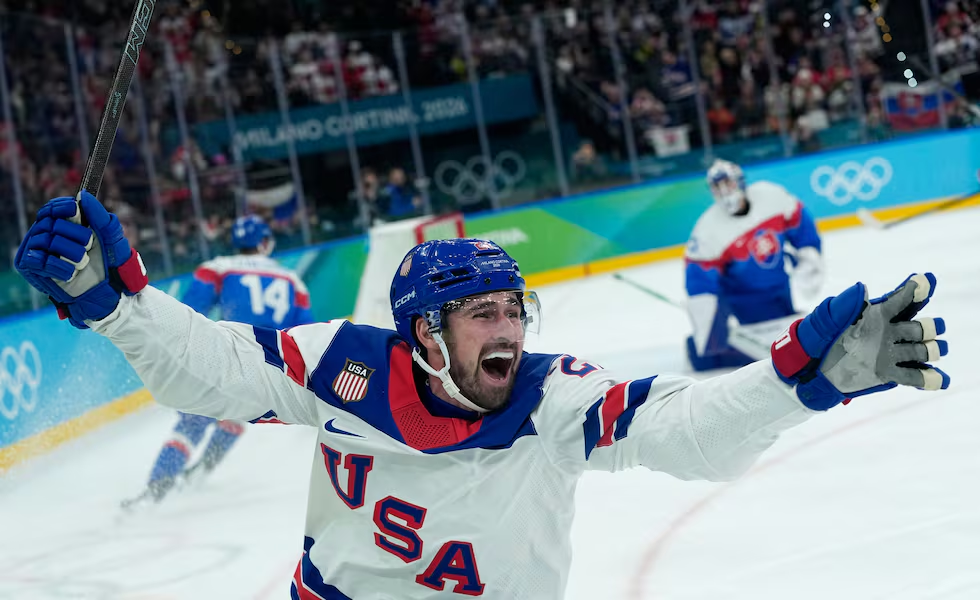
The hockey world would have been so much simpler if Nathan MacKinnon’s shot on Feb. 22 had gone a few inches to the right.
Instead, Team USA survived the onslaught of Canadian high-danger scoring chances in the Olympic gold medal game — including the golden opportunity that MacKinnon rung off the post. They managed to force overtime and seize the opportunity, winning the tournament for the first time in 46 years.
No one realized it at the time, but the Americans’ win would start the greatest soap opera in NHL history.
It began during the postgame celebrations, when FBI director Kash Patel made his way into Team USA’s locker room and put the players on speakerphone with President Donald Trump. The president made a joke at the expense of the women’s national team, at which many of the players laughed, putting them in hot water with the public.
During the following days, the team sparked more controversy as it toured the eastern United States rather than the players returning to their NHL teams — to the great dismay of their bosses, in many cases.
They partied at a club in Miami before flying to Washington, D.C., to attend the State of the Union address. It was at that point that Connor Hellebuyck, the star goalie who kept the Americans alive, received the Presidential Medal of Freedom for his efforts in the game.
The NHL is (unintentionally) creating its own version of the NCAA transfer portal
Sebastian Cossa is suddenly saving Utah’s season. Here’s what he’s doing differently now
In a vacuum, none of that would have invoked the type of distaste that it did from the hockey world. But there are no vacuums in the real world.
In reality, it happened in the midst of unprecedented political tensions between the U.S. and Canada. People are hypersensitive to any perceived conflicts between the two sides.
In reality, many of those American players were the faces of Canadian NHL teams. For the first time ever, the fans who wear those players’ jerseys to every game saw their favorite players as the bad guys.
In reality, the players’ employers needed them back at work. Many of them chose to show up late.
The latter was reportedly part of the conflict between Dylan Larkin and the Detroit Red Wings.
Larkin grew up in the Detroit area. He cheered for the Red Wings as a kid and attended the University of Michigan as a young adult. Being drafted 15th overall by his hometown team was a dream come true, and eventually being named captain was an honor.
You can imagine the shock Red Wings management must have felt upon learning over the summer that Larkin wanted out. He no longer wanted to play for his childhood team.
Hellebuyck, then of the Winnipeg Jets, demanded a trade in similar fashion. So did former Ottawa Senators captain Brady Tkachuk and, albeit briefly, Columbus Blue Jackets superstar Zach Werenski. That exodus followed that of former Vancouver Canucks captain Quinn Hughes, whose trade request had been granted months earlier.
Particularly in the cases of Hellebuyck, Tkachuk and Hughes, it led to a notion that American stars don’t want to play in Canada. Larkin changed that perception on Sunday when he was traded to the Montreal Canadiens.
Larkin, like most NHL stars, has a full no-movement clause. He can only be traded, waived or sent to the minors if he signs off on it. So, when the Montreal Canadiens announced Sunday evening that they had acquired him, it meant he was fine with being traded to Quebec.
In a press conference on Monday, Canadiens GM Kent Hughes gave a simple but profound answer to the question on everyone’s minds.
“Hockey players are happy when hockey is good,” he said.
Did you catch all the Easter eggs in Utah’s new Winter Classic jersey?
The truth of the matter is that the Red Wings have the longest active playoff drought in the league, and their chances of busting that slump anytime soon are slim. Larkin wants to win the Stanley Cup before he retires, and at age 30, he has just five playoff games under his belt.
Hellebuyck claims his trade request had more to do with his family’s safety than anything else, but no one denies the notion that he wasn’t going to accept a trade to a bottom-feeding team.
Hughes was far from the only one who wanted to get off of the sinking ship that is the Canucks, and he’s lifted the Minnesota Wild into true Stanley Cup contender status.
Tkachuk wanted to play with his brother in Florida.
Sure, most Canadian provinces have higher taxes than the majority of American states. Sure, the weather is colder in many instances. Sure, players get bothered in public more.
But if the hockey is good, the team’s management cares, and the locker room has good culture, any day with an NHL logo on your chest is a good day — regardless of which side of the border you’re on.