How long does it take to travel through the Universe at 1g?
Here on Earth, we constantly experience Earth’s gravity: 1g, or 9.8 m/s².
 This image shows a person in free-fall close to Earth’s surface. They still accelerate toward the center of the Earth at 1g, but have no normal force acting on them. As a result, for the brief moments from when this photo is taken until they hit the water, they effectively experience weightlessness.
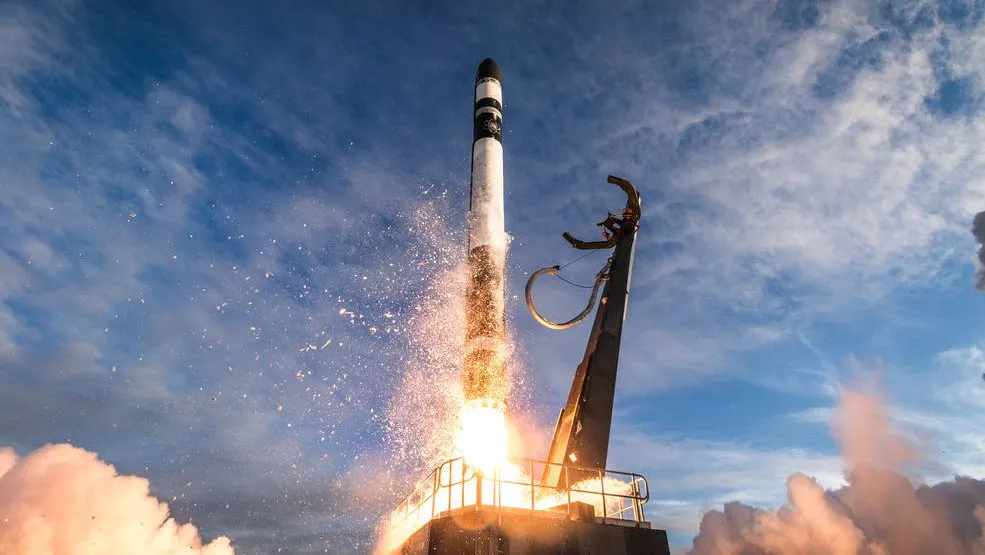
Astronauts only experience weightlessness once their rocket’s thrusters cease.
 Shown here, two astronauts experiencing weightlessness aboard the International Space Station demonstrate, together, the conservation of angular momentum. A consequence of the symmetry of rotational invariance, the astronaut spins faster only because a torque is applied to him from another astronaut’s body. The amount of angular momentum transferred to the spinning astronaut is canceled out by the equal-and-opposite amount of angular momentum transferred back into the other astronaut-ISS system.
As long as there’s acceleration, an astronaut’s experience is indistinguishable from gravity.
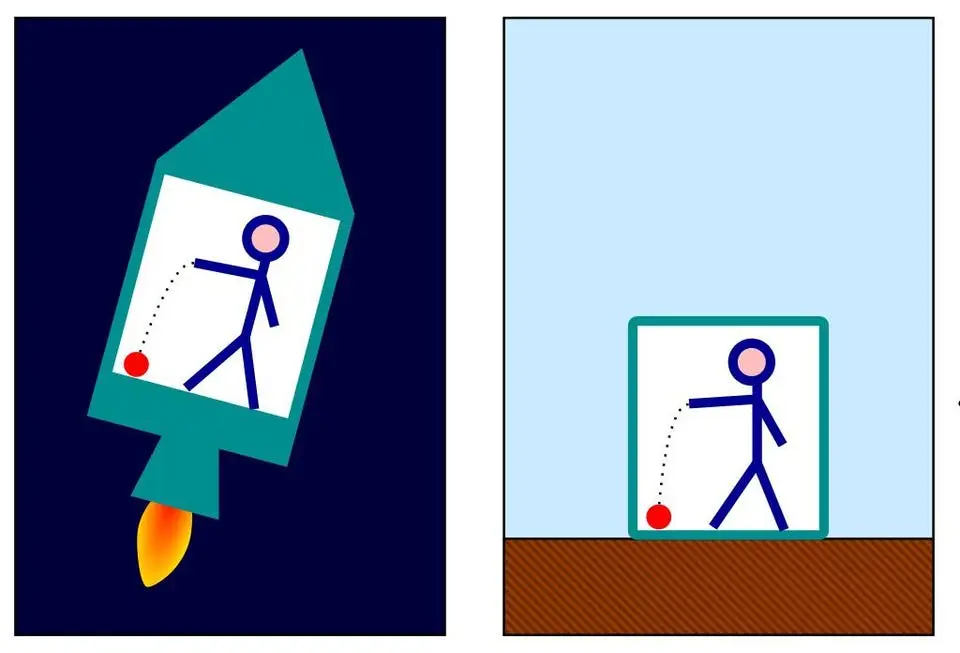 The identical behavior of a ball falling to the floor in an accelerated rocket (left) and on Earth (right) is a demonstration of Einstein’s equivalence principle. If inertial mass and gravitational mass are identical, there will be no difference between these two scenarios. This has been verified to better than ~1 part in one trillion for matter through torsion balance experiments, and was the thought (Einstein called it “his happiest thought”) that led Einstein to develop his general theory of relativity. Recently, the ALPHA-g experiment confirmed that this is true for antimatter as well.
Realistically, rockets run out of fuel after 8-10 minutes of acceleration.
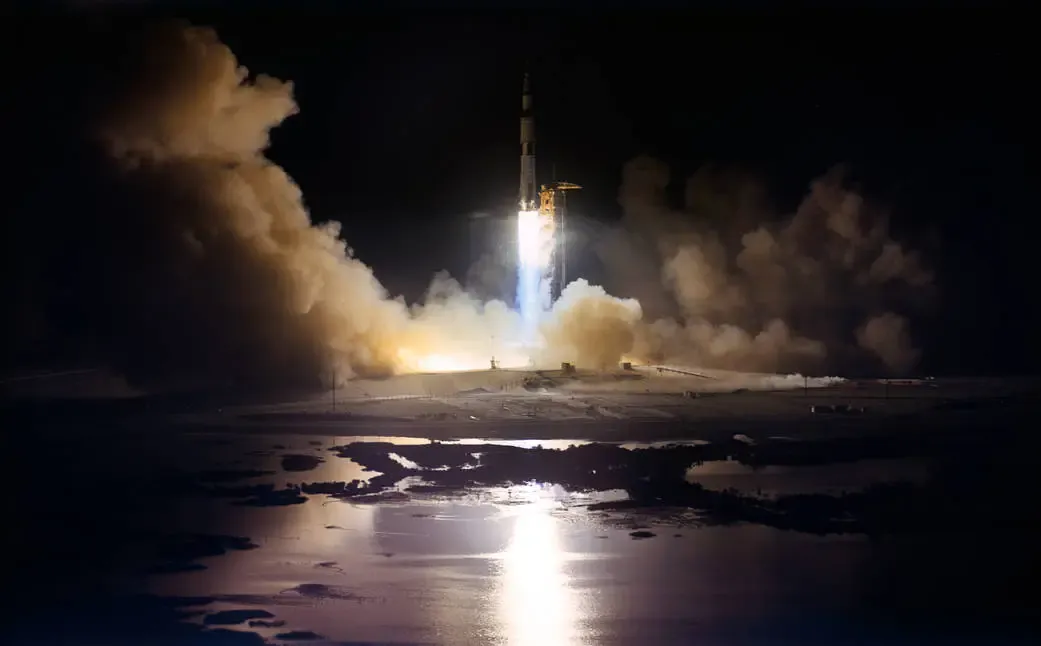 The launch of Apollo 17, the ninth and final crewed mission to the Moon as part of the Apollo program, was also the first nighttime liftoff of a Saturn V rocket, occurring on December 7, 1972. The Saturn V remains the heaviest launch vehicle in history, capable of carrying the greatest masses to low-Earth orbit of any rocket ever.
Credit: NASA
With future fuel sources — nuclear fission, fusion, or antimatter — much longer accelerations are achievable.
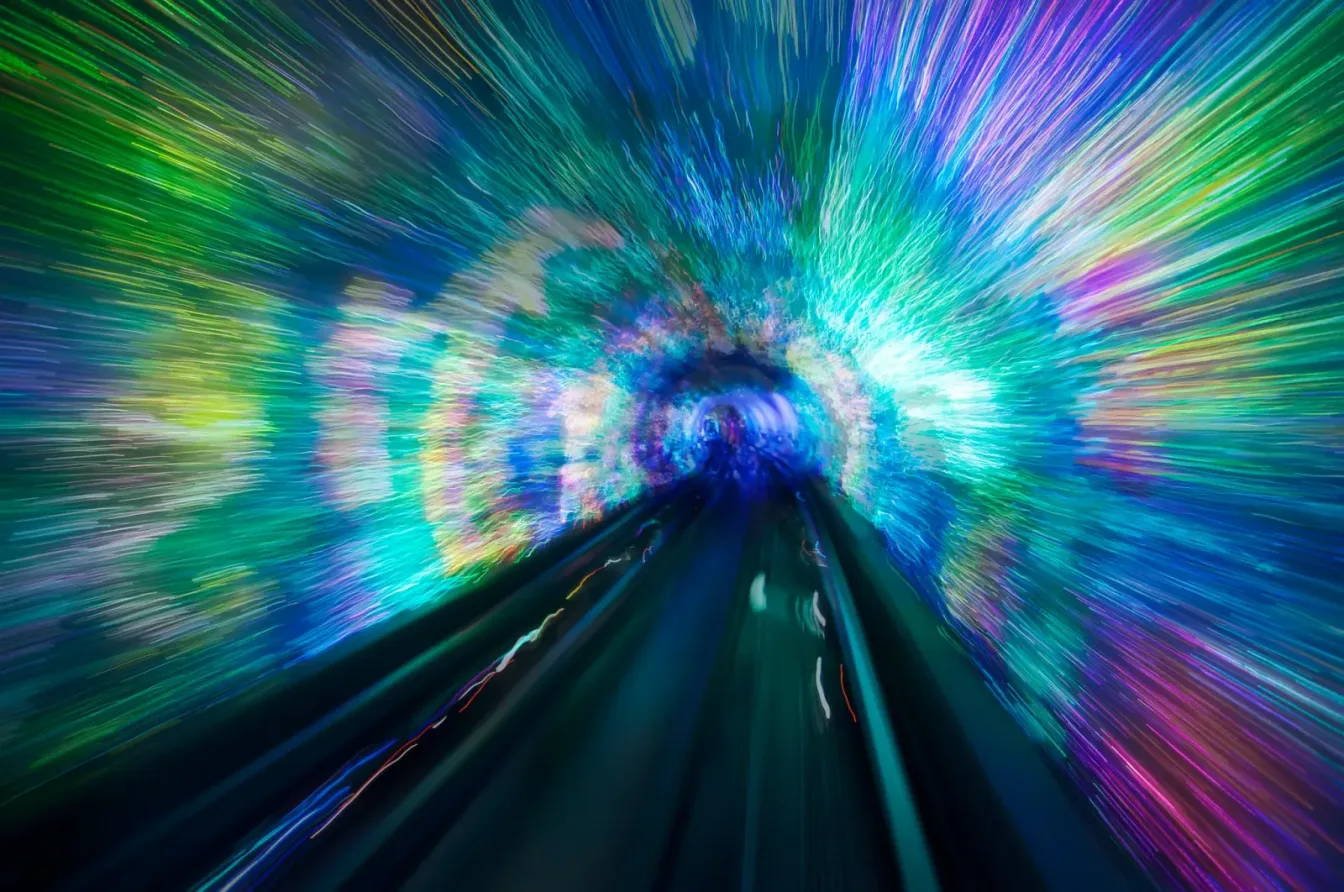 Whereas normal matter and antimatter particles can only move at (if they’re massless) or below (if they’re massive) the speed of light, another possibility is that there’s a negative-energy state or imaginary mass state that’s possible: a tachyonic state. If that mathematical possibility is physically borne out in our Universe, then faster-than-light travel is a necessity.
If a spacecraft never exhausted its fuel, continuously accelerating at 1g, we could go anywhere.
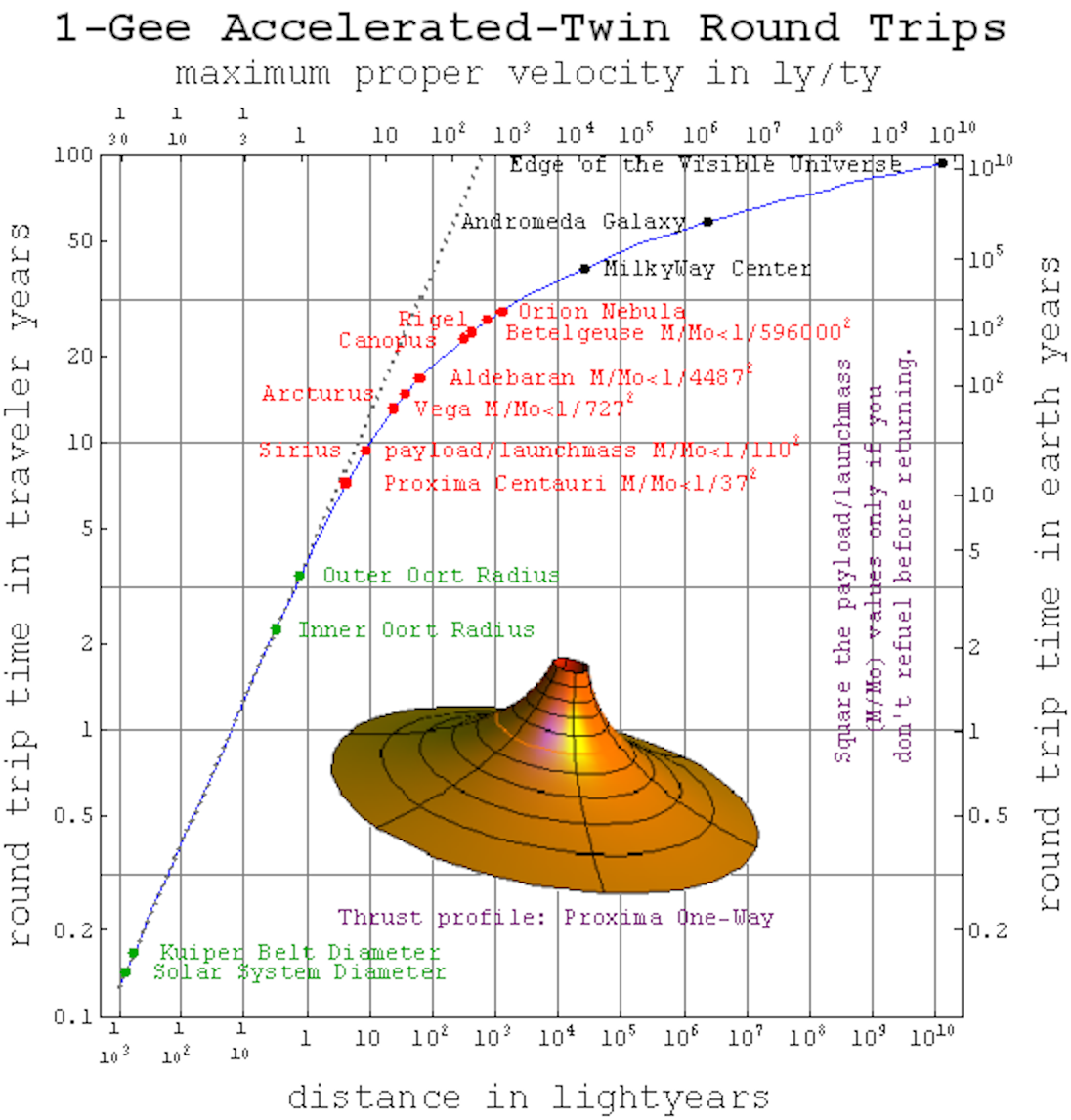 If you were to get in a spaceship and accelerate at 1g (Earth’s acceleration) for the entirety of the trip, you could travel at nearly the speed of light after only a few years of acceleration. As you increased your speed ever closer to the speed of light, the effects of time dilation would get progressively more severe. In theory, distances of many light-years could be traversed in experienced times of much less than a year, but one must reckon with the weight of realistic fuel sources as well.
Mars, at closest approach, is attainable after 1 day, 5 hours, and 42 minutes.
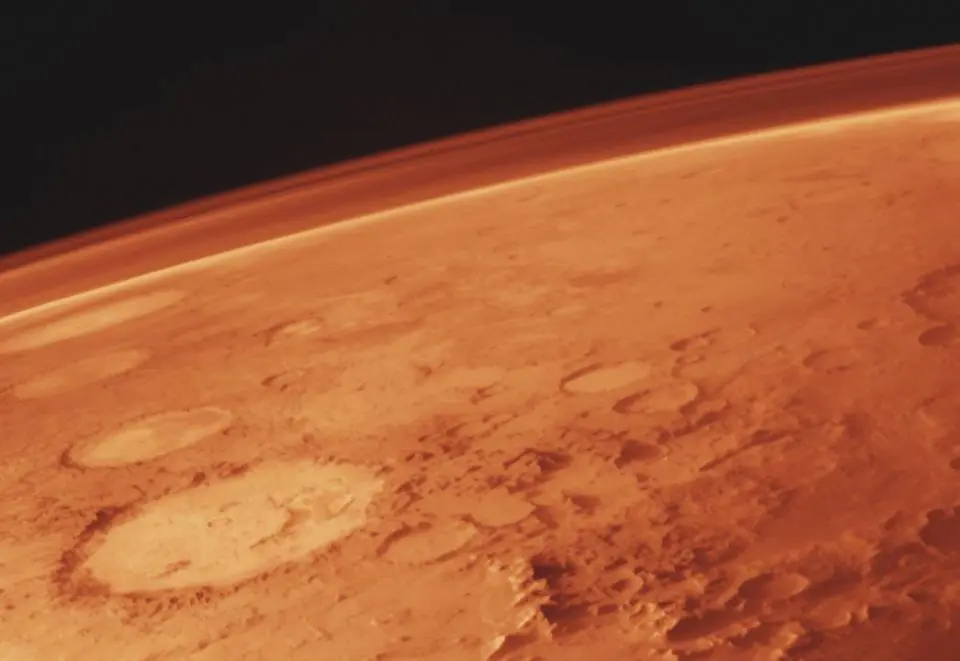 Mars, like most rocky worlds in the Solar System, is full of craters and has an impact-rich history. Despite how easily visible the Martian atmosphere is from orbit, it’s very thin, just 1/140th the thickness of Earth’s atmosphere and less than 1/200th of the mass of Earth’s atmosphere. With current technology, gravity does most of the driving on a journey to Mars, but the journey takes several months with current technology.
Credit: NASA/Viking 1 orbiter
We’d reach the Kuiper belt’s end — the Kuiper cliff — after just over 2 weeks.
After 4 weeks, we’d pass Voyager 1: today’s most distant human-made spacecraft.
After 3 months, we’d reach the inner Oort cloud, traveling at 25% the speed of light.
After 1 year and 7 months, we’d depart the outer Oort cloud at 92% light-speed.
Credit: NASA/JPL-Caltech
After 2 years and 4 months, we’d reach Proxima Centauri.
Credit: Skatebiker at English Wikipedia
The galactic center, 26,000 light-years away, requires just under 11 years.
Credit: ESA/Gaia/DPAC
Andromeda, 2.5 million light-years distant, takes 15 cumulative years.
Credit: Adam Evans/flickr
The Coma Cluster, 321 million light-years away, is reachable after 20 years.
All destinations within the observable Universe are achievable in 25 years, maximum.
Mostly Mute Monday tells an astronomical story in images, visuals, and no more than 200 words.
This article How long does it take to travel through the Universe at 1g? is featured on Big Think.