Hasbro’s New Playbook: More Magic, Fewer Big Bets
Hasbro’s brands span Monopoly, Dungeons & Dragons, Transformers, Nerf, and Play-Doh, but its latest results show how much its business and future now rest on Magic: The Gathering. In the third quarter of 2026, tabletop revenue rose 39% to about $613M, while Digital and Licensed Gaming grew 3% to roughly $134M. Management reported that ~$40M of Magic sales shifted forward from the fourth quarter, boosting the comparison, but tabletop is still the clearest source of momentum.
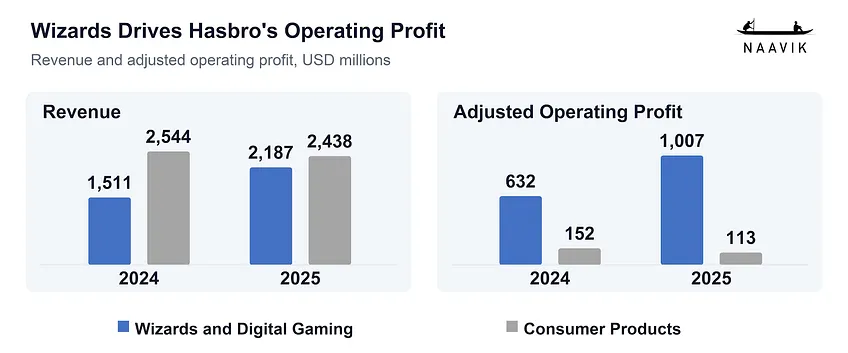
In 2025, Hasbro as a whole generated $4.7B of revenue and $1.14B of adjusted operating profit. Wizards and Digital Gaming, the segment that includes Magic, Dungeons & Dragons, digital games, and related licensing, generated about $2.2B of revenue and ~$1B of operating profit (the vast majority of Hasbro’s operating profits). Consumer Products, its toys and licensed-products business, grew revenue 4% to $828M in the latest quarter, though tariff refunds supplied about $48M of the segment’s roughly $178M in adjusted operating profit.
Magic has been the primary catalyst and can keep Hasbro growing for years. Its success also points toward a more profitable company built around complementary partners. Hasbro makes Magic and borrows other companies’ worlds to bring in fans; conversely, in video games, it increasingly supplies its IP while partners bring the development and operating expertise. As Hasbro centers its strategy more on where it offers the most value versus its partners, the company’s next phase partly depends on how well those IP crossovers sustain Magic and how well its video game strategy succeeds in creating hits at lower internal development costs while picking the right partners to license or co-develop the rest. That’s what we’ll explore today.
Why Magic Keeps Customers
A Final Fantasy fan now has several ways into Magic. A newcomer could buy a starter kit containing two ready-to-play decks, choose a themed Commander deck for casual multiplayer, collect booster products, or play the set through Arena, Hasbro’s digital Magic game. For example, the Limit Break ready-to-play deck features Cloud from Final Fantasy VII, turning a recognizable character into a functional way to begin playing. These products serve players and collectors with different levels of interest rather than prescribing one route through the franchise.
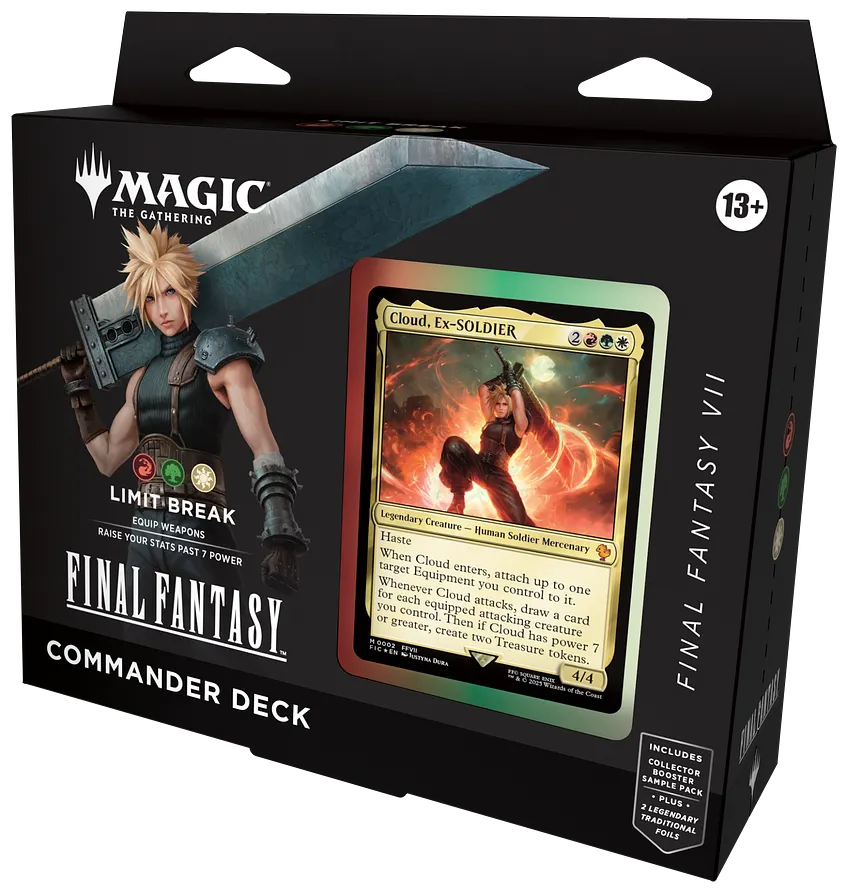
For physical Universes Beyond products, Hasbro makes and sells Magic cards under licenses from outside rights holders. Those partners license familiar characters for a royalty fee, and Hasbro embeds them into the game, giving customers reasons to keep buying and playing. A player who starts with the Cloud-led Limit Break Commander deck can add eligible cards from later releases that meet its color identity and other Commander requirements, changing the strategy without replacing the entire deck. Since 2025, main Universes Beyond booster sets have also been designed for Standard, a format that periodically rotates older sets out of its eligible card pool. There are different paths to continued play, but most licensed additions add both a new entry point and an upsell path to keep playing.
Stores and organized play make that continuity useful. Hasbro’s third-quarter presentation reports more than 13,000 Wizards Play Network stores, over one million unique organized-play players in 2025, and average player tenure above five years. Management also said participation during the first nine months of 2026 exceeded the full-year 2024 level by more than 40%. Although this comparison does not represent conventional YoY growth, it indicates increased participation in Magic’s organized-play infrastructure. Stores give each release somewhere to be discovered, played, and revisited.
Universes Beyond also works when some customers never move beyond the franchise that first attracted them to Magic. A Final Fantasy collector who buys cards as character objects can still be valuable, just as Pokémon enables collecting and trading favorite cards alongside casual and competitive play. Obviously, converting a new buyer into a long-term Magic player is ideal, but it is not the only acceptable commercial outcome. Hasbro can serve collectors, active players, and customers who both collect cards and play, provided the products remain compelling and the release cadence does not exhaust them.
What the Growth Proves
In the latest earnings call, management said sales from previously released sets — its “backlist” — had already exceeded the prior full-year level and were growing faster than new-release sales, even though new releases still supplied most revenue. Foundations, Final Fantasy, and The Lord of the Rings were among the quarter’s strongest backlist performers, showing that demand can persist beyond launch across both Magic-owned and licensed worlds. Rising organized-play participation adds to that positive picture. Hasbro has not disclosed how many newly acquired crossover customers explore other franchises or how long they remain engaged, but some newcomers are likely to become repeat buyers as they discover the wider game.
Magic’s sales growth can come from several obvious yet valuable sources. A strong license may attract new buyers or franchise-specific collectors, existing players may spend more, and premium products may improve the sales mix. Larger initial production runs also help Hasbro meet demand it previously could not fill. Royalty payments reduce returns on each licensed product, but the additional sales can more than compensate. The strategy appears to be working: as noted earlier, Wizards’ 2025 operating profit grew 59% to $1B, while revenue increased 45%. That is segment profit, including businesses beyond Magic, but this recent period of major crossover releases is a clear catalyst.
It’s important to note, though, that game stores have reported both release fatigue and supply problems. Marvel Super Heroes coverage included complaints about collector pricing and fatigue alongside strong sales; The Hobbit coverage described stores running short despite taking preorders. In response, Hasbro is expanding printing capacity and increasing initial production runs. It’s also planning six major sets in 2027, each including Commander decks and a full range of collectible products. Larger print runs should help address availability concerns, while more product options within each set could better accommodate different budgets. However, release fatigue remains a risk. Slowing a production engine that generates high growth and profitability may be difficult; Hasbro will need to watch for signs that fatigue is becoming a headwind.
Who Should Build Hasbro’s Games?
Arena takes Magic’s rules and cards to mobile and desktop, letting players buy or earn cards and enter events without organizing an in-person game. Arena is a meaningful business, having generated nearly $1B cumulatively from its 2019 introduction through mid-2026. Physical crossovers can also provide a route in: Codes to enable a player’s physical cards inside the digital game appear in selected physical products, and even the Final Fantasy Starter Kit includes Arena codes in select regions. Although we don’t know how often new physical buyers become Arena players (or vice versa), the two products clearly share an audience and give fans a way to play Magic at any time, often using cards they already own.
For Hasbro’s other brands, complementary game development capabilities often sit outside the company. Scopely’s Monopoly Go, the most obvious example, generated $168M in royalties for Hasbro in 2025 and another $127M in the first nine months of 2026. Much has been said about Monopoly Go, but its success is increasingly shaping Hasbro’s approach to internal development and its reliance on complementary partners.
After cancelling unnamed games planned for 2028 and beyond, management is shifting toward more co-development and co-publishing while focusing internal investment on trading card games and RPGs. It’s understandable why that is. By year-end 2025, Hasbro had accumulated $385.6M in capitalized software development costs since 2022, nearly all related to game development, including payments to third parties under publishing deals. This included $135M from development work in 2025 alone. Recent game cancellations also led to a $56.4M impairment. These are major expenses that pull down near-term profitability and have real risks around whether future returns will materialize.
The CFO now expects digital game-development investment to fall 20%–25% by 2028. Management is increasingly emphasizing co-development, co-publishing, and partner-funded economics. Even beyond mobile, Hasbro has already enacted PC and console licensing deals including Larian’s Baldur’s Gate 3 and Gameloft Montreal’s untitled D&D survival/action RPG. These developments signal a deeper shift toward a partnership-oriented strategy. Hasbro is still committed to internal game development, but its ambitions have shifted from building its own aggressive AAA publishing capabilities to a more selective hybrid model. After all, why take on hundreds of millions of dollars in development risk if the biggest wins have come from external partner studios?
Hasbro’s internally retained projects reflect this narrower ambition. Exodus, a science-fiction action RPG from Wizards studio Archetype and co-developed with Certain Affinity, is a new franchise rather than an adaptation of an existing Hasbro brand. It is due April 7, 2027, on PC and consoles. CEO Chris Cocks pointed to its team’s BioWare experience and the appetite for Mass Effect-style RPGs in a May interview. Based on responses to the gameplay footage, which was released right after EA announced the closure of BioWare and the cancellation of the next Mass Effect, players appear quite open to the game filling the Mass Effect-sized holes in their hearts. We’ll see if it sticks the landing.
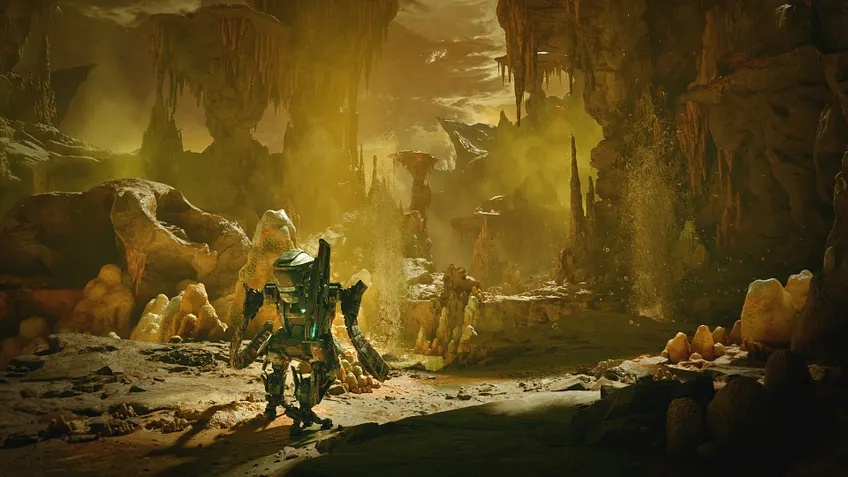
Warlock: Dungeons & Dragons, from Wizards studio Invoke, is a single-player, open-world action-adventure game planned for 2027, using real-time spellcasting and melee combat. Gameplay premiered at Gamescom a couple of months ago, and sentiment has so far leaned positive.
Management has identified genre fit, large potential audiences, and franchise-expansion opportunities as reasons to retain both projects. Both make more sense as selective franchise bets than as reasons to rebuild a broad publishing slate. Hasbro still faces substantial launch risk and expects Wizards’ operating margin in the high 30s in 2027 as prior development spending on Exodus and Warlock starts being amortized against profit.
Over the next few years, Hasbro is likely to become a more profitable business by getting clearer about what to make itself and what to leave to partners. In Magic, external IP brings fans to a game Hasbro already knows how to sell and sustain. Elsewhere, Hasbro’s brands give skilled developers a reason to work with it, without requiring Hasbro to build every capability itself. Magic should remain a dominant earnings engine, and while owned games can make results lumpier, 2027 will be a crucial year for showing how well these internal investments are paying off. Not every game needs to replicate the success of Monopoly Go, but more selective investment and complementary partnerships should allow Hasbro to generate greater returns from the strengths it already has.
Sponsor: #1 With Zero Paid Marketing: Highway Racer Pro Case Study
Highway Racer Pro hit #1 in the U.S. with zero paid marketing. When launch-day traffic surged past forecasts, Heroic Labs’ engineers handled the troubleshooting, allowing Spektra’s small team to focus on the racing their game deserves, not worrying if the backend could hold.
Learn MoreIn Other News
Funding and M&A:
- CI Games secures $32M loan to finish and self-publish Lords of the Fallen 2
- South Korea-based chatbot game messenger company AIZ Entertainment has raised $14.9M
- India-based social brain games platform Matiks has raised $10M in a pre-Series A round
- Rise of Fearless raises $1M to expand its gaming platform
- U.S.-based video game commerce company Xsolla has acquired Italy-based web games platform GamePix for an undisclosed sum
- Ubisoft reportedly seeking to acquire Arkane Lyon from Xbox
Business & Product:
- Pokémon Trading Card Game Pocket celebrates second anniversary with $233M
- Remedy Q3 revenue triples to €39.6M following launch of Control Resonant
- Pikmin Bloom blossoms in fifth year with record $36M
- PlayStation raises full-year forecast after revenue growth in network services and first-party software
- US court restricts Papaya Gaming from moving assets outside the country
Miscellaneous:
- Anthropic restricts Claude from recreating existing games amid AI cloning concerns
- Tripwire Presents expands publishing business to support smaller indie developers
- OEM advertising for every model: Understanding mobile game user acquisition
- DMCC and Wild Unlimited team up to bring Dubai landmarks to Fortnite
- Advertising Standards Authority bans mobile ads from King, Scopely, and others for misrepresenting gameplay
Content Worth Consuming
Tomer Waintroub & Avi Asher: Mad Brain Games on 40 Games, Zero Artists, Weekly Launches & AI Agents. (Unpredictable Hits): “Five years ago it took 27 artists to make the content for a single game. Today there are more than 40 games in production, a new one ships every week, and there are zero artists on the team. Tomer Waintroub, Co-Founder and CEO at Mad Brain Games LTD, and Avi Asher, Co-Founder and CTO at Brain Games, met at Playtika, have run the same daily call together for 14 years, and started the studio seven years ago on the bet that a small team with the right infrastructure beats a big one. Talking with Amit, they break down the infrastructure that makes a weekly launch possible, why you cannot build the platform first and have to grow it alongside the games instead, where new game ideas actually come from now that nobody discovers games in the store, and how they send daily spend and revenue to every employee from management down to the newest hire.”
Why Embark Had to “Pull the Handbrake” on Arc Raiders (The Game Business): “This week, we return to Arc Raiders developer Embark to look at the game one year on from its launch. The shooter went up against Battlefield and Call of Duty and came out smiling, with 16M sales. But since the start of the year, it has faced numerous challenges and player numbers have tumbled. Chris speaks with CEO Patrick Söderlund and executive producer Aleksander Grøndal to hear about the game’s journey so far, how they’ve adapted to the challenges, the reaction to its new update ‘Frozen Trails’ and whether it should add a PvE mode. They also discuss advising other studios, AI controversy, The Finals, not being just a live-service studio, Patrick’s new role at Nexon and Hollywood’s interest in their games.”
From Riot to 2K and the Power of Transmedia with REL Hunt (The AIAS Game Maker’s Notebook): “Adam Orth chats with REL Hunt, Senior Director, Global Creative at 2K. Together they discuss her journey in games and creativity; her work in music and ideas on building a framework of music strategy for games; transmedia around live-service IP; and her new role as a Creative Director leading a team building a new project.”
Videogame Growth, M&A, and Convergence, or Lack Thereof (Game Crossroads): “A game company CEO sits down with three investment bankers to debate three questions about the health and future of the videogame industry, questions that get answered wrong more often than right. Is the videogame market still growing? Is there a theme to game industry M&A? And is the long-promised convergence of tech, media and games finally happening, or is it still just talk?”
“I Realised I Might Only Have Time to Make One More Game, so I Wanted to Try Something New” — Tekken Director Katsuhiro Harada on Starting VS Studio (gamesindustry.biz): “When Katsuhiro Harada announced his departure from Bandai Namco last December after more than three decades, fighting game fans were left dejected. Many feared the retirement of the driving force behind Tekken would deprive the genre of one its remaining greats, particularly so soon after the passing of Dead or Alive creator (and Harada’s sparring partner) Tomonobu Itagaki two months before. Those fears proved unfounded when the combative creator announced the creation of VS Studio, bankrolled by SNK. Harada says his decision to leave his longtime employer wasn’t due to any one reason, but more about a feeling that it was time to take a new path.”
Waking the Southeast Asian Giants (nikopartners.com): “This joint market intelligence report by Niko Partners and Xsolla highlights Indonesia, Thailand, and Vietnam as the three premier growth powerhouses driving the Southeast Asian gaming market. Together, these three countries generated $3.8 billion in game revenue last year (accounting for 68.5% of the region’s total spending) and represent 226.1 million gamers in 2026.”