Nearly 3 in 5 kids want video game gifts this holiday season | ESA
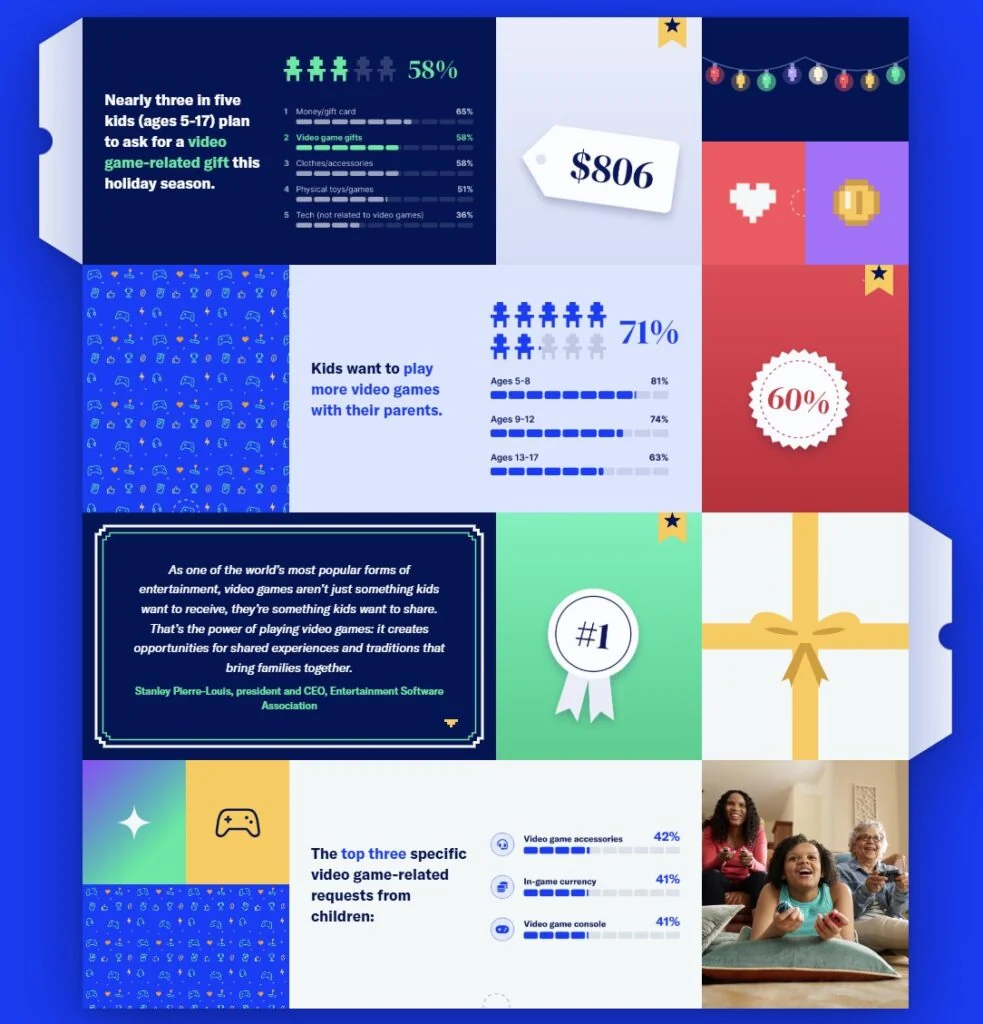
Nearly three in five (58%) kids ages five to 17 plan to ask for a video game-related gift this holiday season.
According to the Entertainment Software Association’s (ESA) annual holiday survey, money and gift cards (65%) top kids’ wish lists, with video game gifts and clothes/accessories (58%) tied at second.
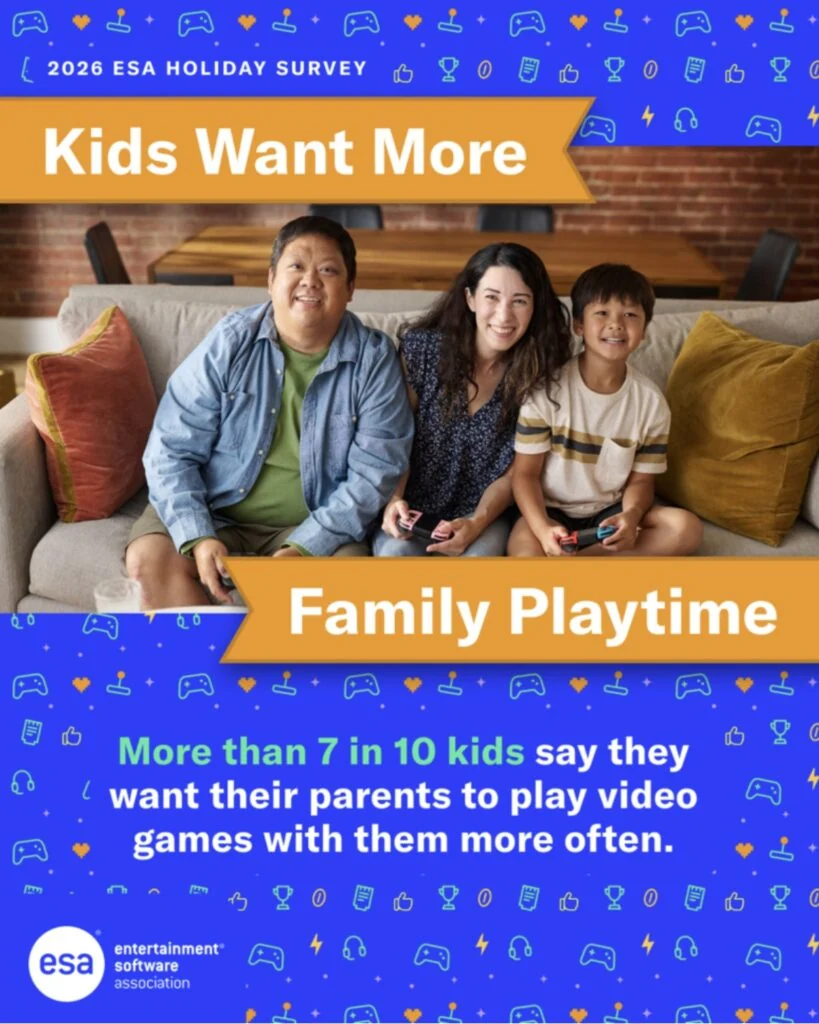
While it may not surprise parents to learn that kids want games for the holidays, their other wish could surprise and delight: 71% of kids surveyed say they want their parents to play video games with them more often (up from 58% in 2025). That number jumps even higher for younger age groups, with 81% of kids ages five to eight, and 74% of kids ages nine to 12, wanting more video game play time with their parents.
“As one of the world’s most popular forms of entertainment, video games aren’t just something kids want to receive, they’re something kids want to share,” said Stanley Pierre-Louis, president and CEO, Entertainment Software Association, in a statement. “That’s the power of playing video games: it creates opportunities for shared experiences and traditions that bring families together.”
Other key findings from ESA’s 2026 holiday survey include:
- Video games are the top requested item for boys ages 5-17 (69%) and nearly half (46%) of girls ages 5-17 are asking for video games.
- Video game accessories (42%), in-game currency (41%) to spend on a game they already play and video game consoles (41%) are the top three video game-related requests for children.
- Children 5-8 are most interested in a new console.
- Children 9-12 are hoping for in-game currency.
- Boys and teens are the most likely to request video game accessories.
- Among parents who say they are planning to buy video game gifts this year, the average amount they intend to spend on video games is $806.
- Three in five kids (60%) see playing video games as a family holiday tradition.
‘Tis the season to put parental controls in play
ESA reminds parents about the numerous safeguards available to make the most of their family’s playing experience this holiday season. Parental controls help parents manage the games their kids play, how much time they spend playing, who they interact with online and what they can purchase.
“Parents don’t have to choose between giving their kids what they want and feeling confident about whether it’s appropriate for them,” said Orit Michiel, president, Entertainment Software Rating Board (ESRB), in a statement. “Ratings, parental controls and other resources can provide peace of mind by helping parents choose age-appropriate experiences and establish suitable boundaries for their families’ video game play.”
Here’s the list – check it twice:
- Check each game’s age rating and content descriptors and assess its appropriateness for your family. The ESRB assigns age ratings and content descriptors for video games and mobile apps to help parents decide which are appropriate for their kids. Three in four parents check the ESRB ratings on video games all or most of the time before allowing their children to play. Parents have the key information they need with ESRB’s three-part rating system, consisting of:
- Age Rating categories that suggest a game’s age appropriateness. Age ratings include E for Everyone, E10+ for ages 10 and older, T for Teen (13+), M for Mature (17+) or AO for Adults Only (18+). Most video games have content that is appropriate for kids – of the 6,761 ESRB ratings assigned in 2025, 90% were rated E, E10+ or T.
- Content Descriptors highlight the content that led to the assigned age rating. ESRB has more than 30 content descriptors to let parents know if a game includes language, suggestive themes, violence and more.
- Interactive Elements provide upfront notice about interactive or online features that are important to parents but do not influence the rating assignment of a game. This includes user-to-user communication or whether players can spend money inside the game.
ESRB rating information is located on the front and back of video game boxes and on product detail pages before purchase or download on digital storefronts. Parents can also look up rating information by conducting a search using a game’s title on ESRB.org and the ESRB mobile app.
- Set up parental controls on game devices.
Nearly 90% of parents of kids ages 5-8 use parental controls on some or all of the devices their kids use to play games, and 87% of parents of kids of all ages require parental approval before making in-game purchases. Tools exist on virtually all video game devices to help parents, caregivers and players easily and efficiently manage the gameplay experience.
Parental controls can:
- Filter or block games by age rating
- Manage time spent playing games
- Control – or prevent – spending
- Limit – or block – communication with other players
- Use PIN and password settings to prevent unwanted changes
- Provide parents with regular playtime reports
Always enter accurate birthdays for your children when signing up for a new platform, game or service. In addition to protecting your kids’ private information, doing so can ensure that default safety settings are activated for your children’s accounts.
- Talk with your child(ren) about playing online with other people.
A growing number of games allow players to interact with others online, which can be a fun way to stay in touch with friends and family who live further away. Families should decide if this is allowed in their household and, if not, buy single-player games or use parental controls to limit or block interactions with other players.
If children are allowed to interact with others online, discuss appropriate behavior, like treating other players kindly and respectfully, and have conversations with children about interacting with strangers so they know what to do if they encounter inappropriate behaviors online. Remember: kids can always mute, block and report a player and, if they’re unsure about someone’s actions, they can talk to a trusted adult for advice. Kids should never move a conversation with someone they meet on a game platform to another chat service.
To learn more about facilitating conversations around video games in your home, visit ParentalTools.org and follow the ESRB blog.
2026 Survey Methodology
YouGov and ESA conducted a seven-minute online survey in the U.S. from Oct. 2-16, 2026, among 3,557 respondents ages 5-65 recruited from YouGov’s proprietary online panel. Data is weighted to be representative of the overall U.S. population in terms of age, gender, ethnicity, education and census region. Respondents ages five to 17 were asked to complete the survey under the supervision of a parent.