CPU-Z Validator sees shift back towards lower-capacity RAM
CPU-Z Validator data is showing an unusual shift towards lower-capacity memory configurations, with 16GB and 8GB systems increasing their share of submissions while 32GB and 64GB setups lose ground. According to one of CPU-Z's developers, it is the first year-over-year decline in system memory capacity recorded by the validator.
Based on CPU-Z Validator statistics (via TechPowerUp), 32GB remains the most common memory configuration, accounting for 37.2% of submissions. However, its share has fallen by 2.5% compared to the same period last year. Higher-capacity configurations also lost share, with 64GB dropping 18% to 7.3%, while 96GB and 128GB systems each fell by more than 26%.
Meanwhile, lower-capacity configurations increased their share of submissions. Systems equipped with 16GB of RAM increased 12.9% to 33.0% of submissions, while 8GB systems grew 5.5% to reach 11.0%.
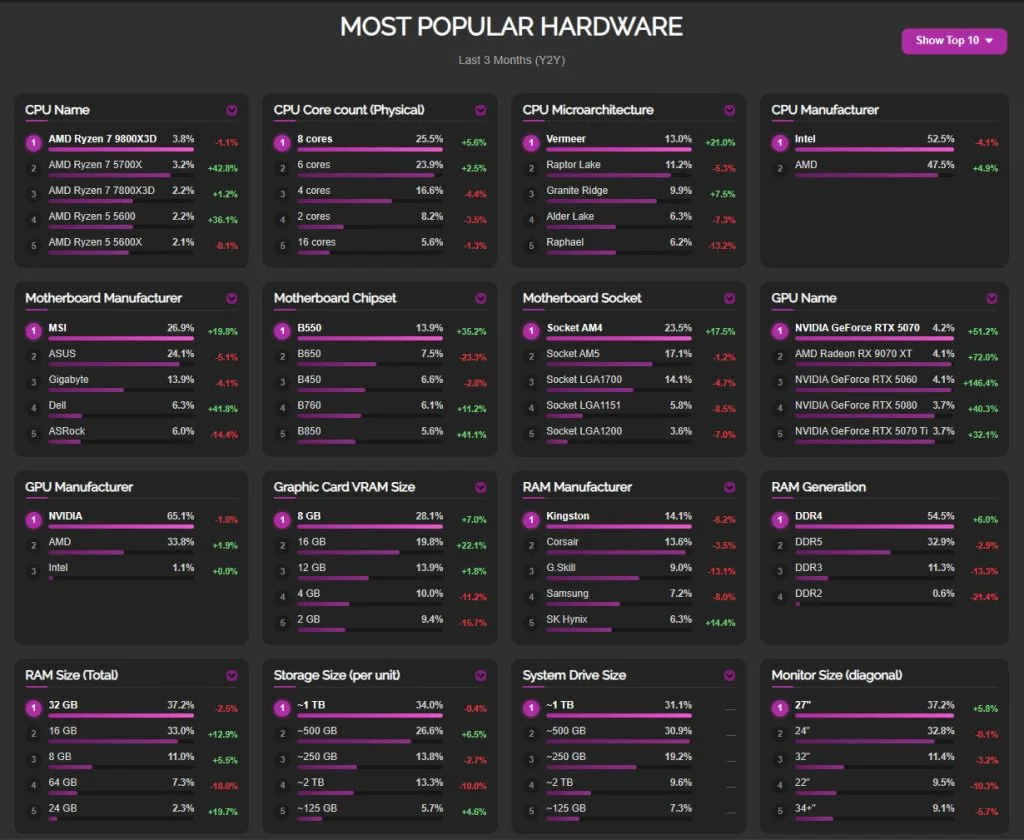
The same dataset also shows DDR4 increasing its share of validator submissions. DDR4 accounted for 54.5% of systems submitted during the period, up 6.0%, while DDR5 fell 2.9% to 32.9%.
It is worth keeping the source of the data in mind. These figures only cover systems submitted to CPU-Z Validator over the past three months rather than the wider PC market. While the data does not point to a specific cause, memory pricing remains one possible factor. As we recently reported, Exceleram believes current RAM shortages are continuing to worsen, potentially impacting upgrade decisions for some builders.
KitGuru says: CPU-Z's validator data paints an interesting picture, but it will be worth watching whether larger datasets show the same trend over the coming months.
The post CPU-Z Validator sees shift back towards lower-capacity RAM first appeared on KitGuru.