Make Financial Tips and Fintech Explainers Visual With Text-to-Video
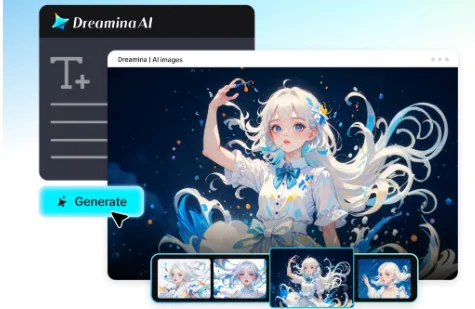
In financial contexts, there are many processes that are abstract, terms that readers don’t know, and relationships between numbers that are hard to comprehend. Compounding interest, budgeting, online payments, and saving schemes are easier to explain using meaningful visual sequences. Dreamina AI streamlines the process of converting text descriptions into video scenes, allowing creators to produce explanatory videos without the need for complex production capabilities. These visuals can be used in fintech explainers, social media educational content, product walkthrough ideas, and personal finance education. But for financial communication to be effective, it’s important to have accurate information, understandable illustrations, and a responsible explanation that never confuses illustrations with verified financial information.
Choose Financial Topics That Benefit From Visual Explanation
Certain financial ideas are more easily understood when one can see the relationships, movements, and changes over time. For creators, AI video generator feature is a valuable tool for crafting scenes that illustrate these relationships, making the content more engaging and accessible. Budget planning can reveal money going to things like spending, saving, and essential expenses. An accumulation of growth over a number of periods can be illustrated by a succession of progressively enlarging shapes with compound interest. Payment scenes can be represented in a digital fashion, showing a customer, merchant, payment device, and confirmation screen. Goals for savings can be set around milestones, and subscription management can identify repeat charges on a month-to-month calendar. Security illustrations can show questionable messages and authentication that is safe. Do not give calculations and financial advice as facts without checking them yourself first.
Turn Abstract Financial Concepts Into Clear Visual Metaphors
Visual metaphors make complex financial relationships easy to understand, and without the need for long explanations. For instance, different money flows can be shown through separate pathways, such as income and spending, savings and dissolution. Growing shapes can help to show compounding but should not suggest an investment will increase. Comparing expense categories can show budget trade-offs but not necessarily indicate that all households will make the same trade-offs. A simple network can help to illustrate the relationship between customer, merchant, payment processor, and financial institution. Branching paths can simply be used to model the uncertainty associated with financial events, without having to assign unsupported probabilities to possible outcomes. Timelines and checkpoints can help to show progress toward saving or repayment. During the editing process, add precise figures, labels, and charts, which can be verified for their accuracy and readability.
Steps to Make Financial Tips and Fintech Explainers Visual With Text to Video
Step 1: Sign in and outline your finance prompt
- First, sign up or log in to Dreamina so you can begin turning money topics into video.
- Next, open the “Create” tab from the left menu and select the “AI video” option.
- Later, enter a detailed prompt covering the tip, the visuals, the sound, the background, the theme, and the concept.
Step 2: Choose a model and configure the output
- Next, scan the bottom of the dialogue box and select the model that suits your explainer.
- You can pick Dreamina Seedance 2.5, Dreamina Seedance 2.0, Dreamina Seedance 2.0 Fast, Dreamina Seedance 2.0 Mini, Dreamina Seedance 1.0, and more.
- Click “Omni reference” to guide the AI with multiple reference images such as charts, app screens, and icons.
- Pick a custom frame shape and quality level from the “Aspect ratio” and “Resolution” tabs.
- Finally, hit the “Generate” tab to start creating your fintech explainer.
Step 3: Polish the explainer and export it
- If the message feels unclear, use “Edit prompt” or “Regenerate” to sharpen the result.
- You can also improve the finished clip using the “Edit video” option.
- Moreover, “Edit segment” lets you correct one section of the explainer without redoing everything.
- Use “Extend video” to give complex ideas more time, or choose “Creative upscale” to raise the quality.
- Dreamina gives you complete freedom to shape your finance content the way you like.
- Finally, click the “Download” tab at the top right to save the video on your device.
Build Fintech Explainers Around a Clear Visual Narrative
A coherent narrative ensures that the audience grasps the significance of a financial process and how its steps are related. These techniques can organize your educational video:
- The Everyday Problem: Present a common problem, like a need to keep track of household expenses.
- Process Visualization: Demonstrate the steps of budgeting, paying bills, or establishing savings.
- Before-and-After: Unorganized Expense Overview vs. a well-organised budget.
- Conceptual Breakdown: Break down a complex financial concept into manageable visual steps.
- Data Reveal: Leave room for any verified statistics, calculations, diagrams, charts, etc. that you will add during editing.
- The Practical Takeaway: Leave with a brief point on education rather than the promise of financial success.
Write Precise Prompts for Financial and Fintech Visuals
A focused prompt specifies the area of finance, the key relationship(s) within it, and the sequence of images needed for explanation. Select a suitable context, for example: in a home office, at a cashier, or in a digital banking environment. Refer to the movement of objects or conceptual aspects, and use limited colors that do not interfere with the visual clarity. Include an uncluttered composition and blank space for validated labels, explanatory text, and numerical information. Don’t use generated text of the interface for any details of transactions, accounts, fees, or financial disclosures.
For instance, instruct Dreamina AI with: “Generate a clean educational animation where there are different visual groups for income, essential expenses, discretionary spending, and savings; groups can overlap when moving from one to another, using a neutral modern color palette, simple geometric shapes, and having space for verified labels; all labels are added monthly. Check the result and make sure to add accurate information while editing.
Ensure Financial Accuracy, Privacy, and Responsible Communication
Financial presentations should be interpreted carefully, as a visual can inadvertently convey a false message. Check their own interest rates, percentages, fees, dates, calculations, and other numbers. Differentiate conceptual sketches and banking interfaces, transaction history, and banking products. Do not give false returns or guaranteed investments as an expectation. Do not post numbers, authorization codes, confidential financial documents, or customer-identifiable information as references. Verify payment abilities and security claims with official paperwork. If applicable, explain that content is meant to give general education and not individual financial advice. Check every text overlay and symbol before publishing.
Conclusion
Dreamina AI assists creators in crafting visual explanations of budgeting, saving, digital payments, and fintech processes. When each scene produced has a definite educational objective, the created scenes can help clarify abstract relationships. Choose one idea for each scene, create a clear prompt, and meticulously develop the visual outcome. Provide accurate figures in the editing process and then review the video to ensure accuracy, privacy, and clarity. Good visualisation helps financial education be more readily available without complicating the facts that viewers need to know.