← Technology, Science & Infrastructure
▣ Distilled locally
Giving the Wii Remote an AI Upgrade
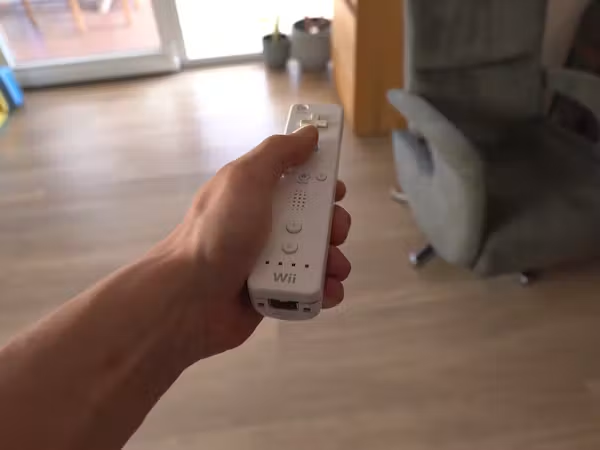
The Nintendo Wii might be pushing 20 years old, but its classic motion-sensing remote still has plenty of life left in it. Sure, it may not be much use for playing the latest games, but that doesn't mean it has to spend the rest of its days collecting dust in a drawer. Electronics enthusiast GreatScott! decided to give one of these aging controllers a second chance by transforming it into an AI-powered universal remote that can control appliances around his house simply by pointing at them. Unlike standard universal remotes, which require users to memorize button combinations or scroll through menus, GreatScott!'s creation uses a camera and machine learning to figure out what it's pointing at. Aim it at a lamp, television, or roller shutter, press the Home button, and the remote identifies the target. A quick beep confirms recognition, and pressing the A button sends a command to toggle the appliance. This is made possible with the help of a Seeed Studio XIAO ESP32S3 Sense development board, which includes a camera, Wi-Fi connectivity, and enough processing power to run a small neural network. GreatScott! paired it with a custom-trained image classification model that recognizes seven different scenes, including an unknown category for anything that doesn't match. To train the model, he first wrote firmware that allowed him to preview the camera feed through a web interface and save images to an SD card. He then collected over a thousand images covering different viewing angles, distances, and lighting conditions. Using TensorFlow, he trained a convolutional neural network on 80% of the images and reserved the remaining 20% for validation. After 50 training runs, the best model achieved an accuracy of 87.78%. The trained model was quantized to 8 bits, reducing its size to just 34.9 KB. That's small enough to run directly on the ESP32, without relying on a cloud service for image recognition. To get everything inside the original Wii remote, GreatScott! had to gut it. Unnecessary plastic was removed, then the camera sensor was relocated to the front of the case with the help of an extended ribbon cable. He also wired the original Home and A buttons directly to the ESP32 and added a piezo buzzer for audible feedback. Once assembled, the remote communicates with a Home Assistant server over Wi-Fi using MQTT. Home Assistant then controls the appropriate smart relay or plug connected to the chosen appliance. The finished remote isn't perfect. While the model performed well during validation, real-world recognition only worked about two-thirds of the time. Changes in furniture placement or similar-looking appliances can confuse it, since it's recognizing entire scenes rather than individual objects. Still, turning a 20-year-old gaming controller into a working AI-powered smart home remote is a pretty clever way to recycle old hardware. It might not be ready to replace every remote in the house, but at least this Wii remote has found something useful to do after retiring from virtual bowling. Using a Wii remote to control a smart home (📷: GreatScott!) Installing the new hardware (📷: GreatScott!) Wiring the buttons to the dev board (📷: GreatScott!)
↑ Back to top
Originally published by Hackster News ↗
· rebuilt here from its own full-text RSS feed · all rights
remain with the publisher, please read and support them there.