← Technology, Science & Infrastructure
▣ Distilled locally
Amazon's Ring Unveils Its First Smart Lock — With a Hand-Crank Generator for When the Battery's Dead
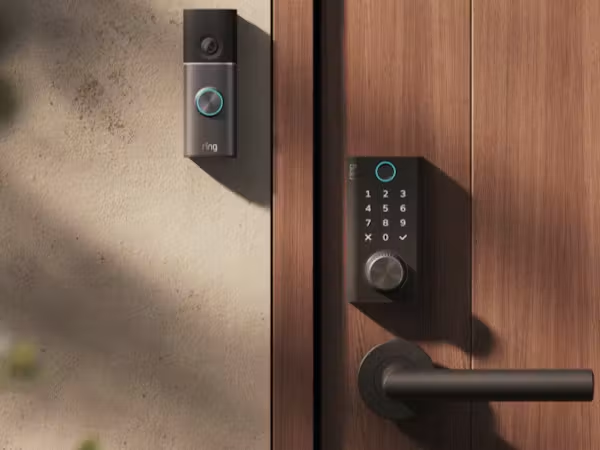
Ring, Amazon's smart home security subsidiary, has announced its first-ever smart lock — and promises to "end smart lock anxiety" by adding a hand-crank handle to generate power if the battery runs out. "Almost everything in our lives today is digital, yet we still carry around little pieces of metal in our pockets," says Ring founder and "chief inventor" Jamie Siminoff, in an apparent effort to make physical keys seem outdated. "That's because of smart lock anxiety. A lock has to work every time, and until now, a dead battery could leave you locked out of your own home. With Ring Smart Lock, we're solving that — no backup key or battery to carry, no locksmith to call, no worries if the battery runs down. Just peace of mind knowing your home is secure." Smart locks work by placing the locking mechanism under the control of a motor, activated upon entry of a valid personal identification number (PIN), the presentation of a registered biometric like a fingerprint, the use of radio-frequency identification (RFID) or Near-Field Communication (NFC) tags, or through connection to a smartphone app. These only work, however, when the smart lock has power — fine if it's permanently wired, bar power cuts, but not when it relies on manual battery changes or charging. To prevent the user from being locked out, most smart locks have some form of backup. This can range from a keyhole for one of those oh-so-old-fashioned "little pieces of metal" to terminals for a 9V battery — but if you accept Siminoff's framing that a key is too annoying to have about one's person then you're unlikely to have a 9V battery in your pocket either. Ring's answer: a "power dial," a hand-crank generator that can be used to put enough juice into the battery to spring the lock back to life long enough for you to open the door. The company is being a little cagey on how much effort is required for this, however, stating only that the dial needs to be turned "a few times" to charge the battery enough for the lock to operate. The Ring Smart Lock, to give the product its official title, connects over Amazon's Sidewalk Internet of Things (IoT) network, rather than Wi-Fi, and links in to the company's existing app — complete with the ability to connect with existing doorbells, cameras, and alarms. Unsurprisingly, it's also compatible with the Amazon Alexa ecosystem. The new lock is due to go on sale in the US some time in early 2027, at an as-yet unannounced price; at the time of writing, Amazon was still awaiting clearance from the US Federal Communications Commission. Ring is entering the smart-lock market with a novel boasting an unusual feature: a hand-crank generator for if the battery runs out. (📷: Ring) The lock is designed to link in to existing Ring installations, including doorbell cameras and alarm systems. (📷: Ring)
Originally published by Hackster News ↗
· rebuilt here from its own full-text RSS feed · all rights
remain with the publisher, please read and support them there.
↑ Back to top
© 2026 PaperWeb. Content remains property of respective publishers. · Privacy Policy · Terms