← Technology, Science & Infrastructure
▣ Distilled locally
Picothermal Turns Your Smartphone Into a Thermal Camera
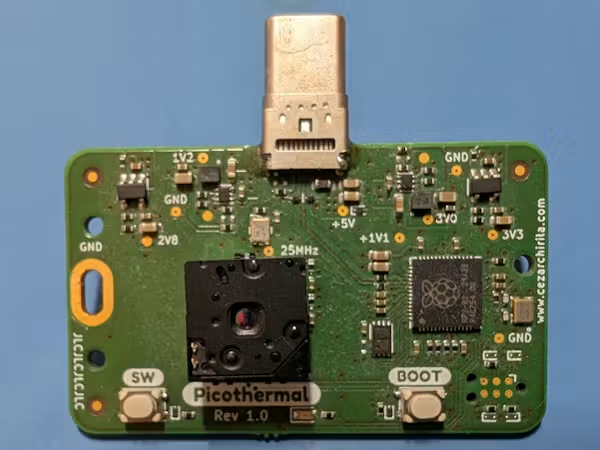
Thermal cameras are useful for everything from diagnosing electrical problems to finding heat leaks in buildings. But they tend to be relatively expensive, especially when high-resolution imaging is involved. There are cheaper alternatives that connect to smartphones, but many of those rely on proprietary apps that may eventually stop working. To get around these limitations, Cezar Chirila designed and built Picothermal , an open source thermal camera that connects to a smartphone or computer over USB-C and works directly in a web browser. This isn't Chirila's first attempt at building a thermal camera. An earlier project used an MLX90640 infrared sensor with a resolution of just 32×24 pixels. While that was enough for basic thermal imaging, Chirila wanted something with better image quality, a larger display, and longer battery life. Rather than building all of those features into another standalone device, he decided to take advantage of hardware already available in smartphones. The biggest upgrade is a FLIR Lepton 3.5 thermal imaging sensor, which provides a resolution of 160×120 pixels. That's 19,200 thermal pixels compared to just 768 on the MLX90640 — a 25-fold increase in resolution. The sensor also provides radiometric data, allowing the camera to measure temperatures rather than simply displaying relative differences in heat. The rest of the hardware includes an RP2040 microcontroller that handles communication with the sensor and sends the data to the connected device over USB-C. A buck converter steps the USB supply voltage down from 5 V to 3.3 V, and several low-dropout regulators provide the additional voltages required by the components. There is no battery, charging circuit, storage, or display because the connected smartphone or computer already provides them. Chirila designed a custom PCB for the electronics and had boards manufactured in both 0.8 mm and 1.6 mm thicknesses. He ultimately selected the thicker version because it was sturdier and easier to solder, despite the USB-C connector being intended for thinner boards. A 3D-printed enclosure completes the device. Picothermal uses WebUSB instead of a traditional smartphone application, so users can simply connect the camera to an Android phone, open the project's web interface in a browser, and start viewing thermal images. This eliminates the need to install or maintain a dedicated app, although WebUSB's lack of support in some browsers limits compatibility. Picothermal's hardware design, KiCad files, enclosure models, and firmware are all available in its GitHub repository under an MIT license. Chirila hopes to eventually add USB Video Class support, which would allow the camera to work with a wider range of software without relying on WebUSB.The Picothermal hardware (📷: Cezar Chirila) A high-resolution thermal image captured by the device (📷: Cezar Chirila) A phone supplies the display and battery (📷: Cezar Chirila)
↑ Back to top
Originally published by Hackster News ↗
· rebuilt here from its own full-text RSS feed · all rights
remain with the publisher, please read and support them there.