ULA’s Vulcan rocket plans return to flight with launch of 40 Leo satellites for Amazon
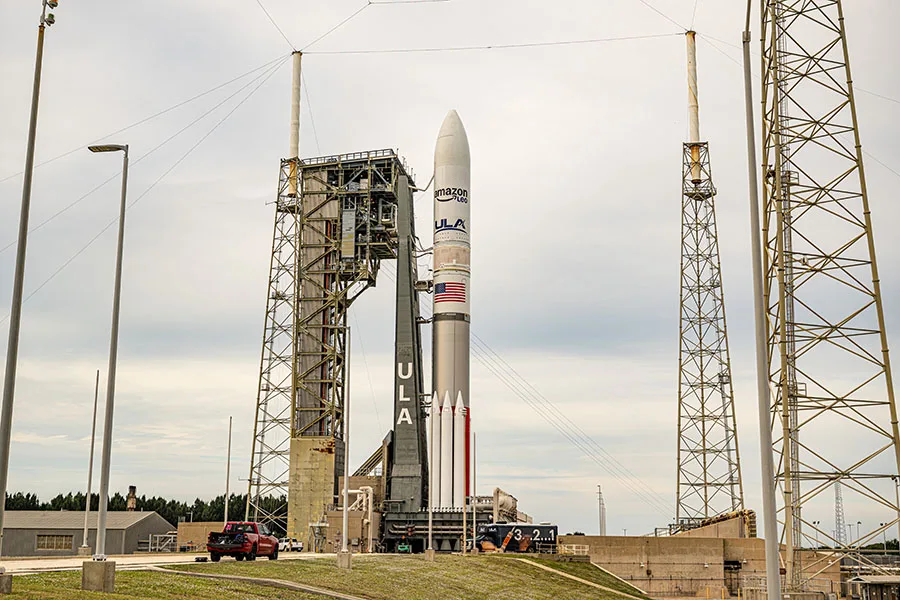
United Launch Alliance is set to return its Vulcan rocket to flight Friday, nine months after a solid rocket booster malfunction prompted the U.S. government to pause its use of the 215-foot-tall, non-reusable rocket.
The upcoming mission, Amazon Leo LV-01, serves a private customer, Amazon, which tasked ULA with carrying 40 broadband internet satellites to expand its Leo constellation — the first of 38 Vulcan launches Amazon purchased.
Liftoff from Space Launch Complex 41 at Cape Canaveral Space Force Station is scheduled for 12:54 p.m. EST (1754 UTC), at the opening of a 29-minute window. The rocket will fly on a northeasterly trajectory upon leaving the pad.
Spaceflight Now will have live coverage beginning 30 minutes prior to liftoff.
Space Force weather forecasters predict a 90 percent chance of acceptable weather, with scattered high clouds and northwest winds of 15 to 20 knots.
After two burns of the Vulcan’s Centaur upper stage, the satellites will begin separating about 70 minutes after liftoff, roughly 285 miles up, in 16 separation events over about 25 minutes, according to a ULA mission diagram.
The launch will be the first flight of a redesigned booster nozzle — a part that failed on half of Vulcan’s first four flights. Vulcan’s return to flight also comes as an investigation into the most recent failure, which occurred Feb. 12 during a Space Force national security mission, is still open.
The launch will also be the first flight of a Blue Origin-manufactured BE-4 engine since the Jeff Bezos-owned space company saw one of its New Glenn rockets explode on the pad during a test in May. The New Glenn and Vulcan both use BE-4 engines, the latter employing two to power its first stage, producing more than 1 million pounds of thrust.
Ahead of Friday’s launch, ULA officials said engineers had redesigned Vulcan’s booster nozzle and that Blue Origin had installed a retrofit kit for the rocket’s BE-4s, which the Blue Origin qualified through hot-fire testing.
“Every flight generates data and every flight teaches us something,” ULA President and CEO Mark Peller said in a statement released by the company. “And we’re going to look to this flight to get some more useful data in a flight environment on the effectiveness of the corrective action that we’ve implemented.”
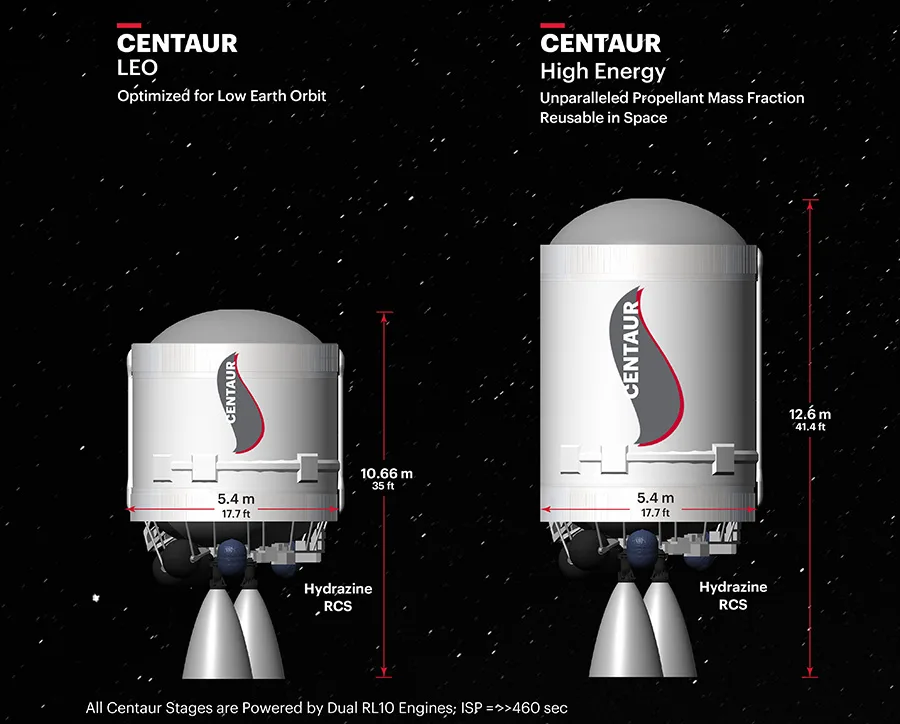
The Vulcan rocket at the ready to launch from SLC-41 will fly in a configuration ULA calls VC6L, referring to its use of six side-mounted solid rocket boosters built by Northrop Grumman and a 70-foot-long payload fairing. It will be the first Vulcan to fly with six boosters and the first to use a shorter version of its Centaur 5 upper stage built for low Earth orbit.
ULA says the rocket will carry more than 50,000 pounds of payload, a company record.
Vulcan last flew Feb. 12 as part of the USSF-87 mission for the Space Force. About 20 seconds after liftoff, one of the rocket’s four solid rocket boosters appeared to suffer a burn-through of its nozzle, the bell-shaped exhaust outlet at the bottom of the motor. Despite the malfunction and the rocket appearing to roll more than usual as it climbed, its main engines and upper stage compensated, and the mission’s payloads reached their planned orbit.
But it was the second such failure in four Vulcan flights. In October 2024, a nozzle came off one of the boosters on Vulcan’s second certification launch. ULA later traced that problem to a manufacturing defect in an internal nozzle part.
“Until this anomaly is solved, we will not be launching Vulcan missions,” Col. Eric Zarybnisky, the Space Force’s portfolio acquisition executive for assured access to space, said two weeks after the February launch.
ULA said the subsequent investigation by the company, Northrop Grumman, the Space Force and other government agencies included laboratory materials testing and a full-scale test firing of the Graphite Epoxy Motor 63XL solid rocket booster utilized by Vulcan.
The team identified three credible causes and took steps to mitigate all of them, the company said, through changes to the nozzle’s design and to how it is built. ULA has not said what the causes were. The investigation will continue after Friday’s flight, and the Space Force will weigh its results.
“They’ve publicly stated that they want us to get through this first commercial flight and they want to review the data before they make a decision,” Peller said with regard to the Space Force pause on Vulcan’s use for national security missions.
Adding additional power-related intrigue to the return to flight are the Vulcan’s BE-4 engines.
On May 28, a New Glenn — which uses seven BE-4 engines — exploded during a static-fire engine test, heavily damaging its Cape Canaveral launchpad. Blue Origin CEO Dave Limp later said the failure “originated at the main oxygen valve on one of the BE-4 engines.”
“That BE-4 engine and main oxidizer valve are common to the BE-4s we fly on Vulcan,” Peller told Aviation Week.
In that same interview, Peller acknowledged that “what we do here is not without risk.”
Blue Origin developed a retrofit kit for the valve and qualified it in engine test firings, and the kit has been installed on the engines for Friday’s launch, according to Peller. He said the change doesn’t affect how Vulcan flies.
New Glenn remains grounded. In early November, Blue Origin submitted a filing to the Federal Communications Commission listing the operational window for “pre-flight” checkouts and the “launch” of a New Glenn rocket from Launch Complex 36 as beginning Jan. 15. The window, which also includes post-flight work, extends through April 15, according to the filing.
The 40 satellites atop the Vulcan in its VC6L configuration are the largest batch Amazon has launched at once. The company has rocketed nearly 400 Leo satellites to orbit across 14 missions since April 2025, using a mix of Atlas 5, Falcon 9 and Ariane 6 rockets, but none since July.
That still leaves Amazon far behind SpaceX, which boasts more than 11,000 Starlink satellites in orbit, according to statistics maintained by astronomer Jonathan McDowell. The FCC expects Amazon to have its first-generation constellation of 3,232 satellites in orbit by July 2029.
“Vulcan will launch close to half our first-generation constellation, making it our primary workhorse over the next several years,” said Melissa Wuerl, Amazon Leo’s director of launch systems, in a statement.
The Vulcan set to fly Friday was assembled in a new Amazon-funded hangar south of the pad that enables ULA to prepare two Vulcans at once. Amazon has said its second Vulcan mission could follow within weeks. Peller has said he eventually wants to launch Vulcan twice a month.
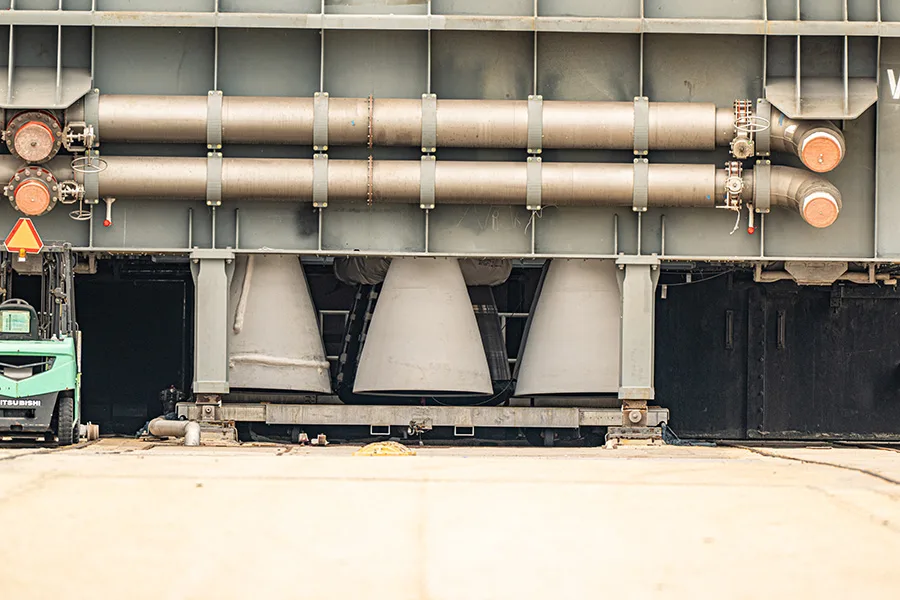
In another step toward serving Amazon’s long-term requirements, Friday’s mission makes use of what ULA calls a “second Vulcan Launch Platform,” which the company “dedicated and customized for Amazon Vulcan missions.”
“With a height of 179 feet, the platform includes more than four miles of pneumatic tubing, 24,000 feet of electrical cabling and 44 ordnance devices that fire to release the rocket at liftoff,” ULA said in a statement Thursday as its Vulcan rocket began a successful rollout to SLC-41.