← Technology, Science & Infrastructure
▣ Distilled locally
You Can Build a Better Camera with a Raspberry Pi
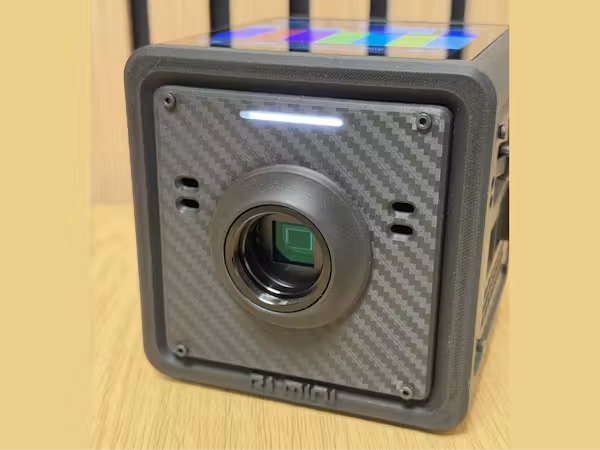
Digital cameras do a great job of capturing high-quality images, but most are closed systems that give users little control over their hardware or software. That doesn't sit particularly well with makers who would rather customize their equipment than settle for whatever features the manufacturer provides. For more flexibility, Reddit user jpotter124 has built the R1 Mini , a fully functional digital camera designed around a Raspberry Pi 5. The R1 Mini is housed in a custom 3D-printed enclosure measuring 100x100x100 millimeters. Inside is a Raspberry Pi 5 with 4 GB of RAM, an Arducam IMX477 HQ camera module, and a 10,000 mAh Mophie Powerstation battery. A C/CS lens mount offers flexibility when choosing optics, and a four-inch Waveshare display with a 720x720 resolution serves as the camera's primary interface. To keep things nice and clicky, the camera has physical buttons for adjusting the frame rate, ISO, and white balance, along with a separate button for putting the display to sleep or safely shutting down the system. An MPU6050 accelerometer provides tilt sensing, and a USB 3.0 drive handles the substantial storage requirements of video recording. The camera can operate for five to six hours while recording, or eight to nine hours while idle. All of the enclosure's components were modeled in Autodesk Fusion, with removable panels and internal shelves providing access to the electronics. Cooling was particularly important because the Raspberry Pi 5 generates enough heat to deform some 3D-printed parts. An active cooler keeps operating temperatures around 50 to 55 degrees Celsius, while one problematic PLA button was replaced with an ABS version to prevent warping. On the software side, the R1 Mini runs ApertarOS, an open source camera operating system that supports multiple image sensors, physical controls, Wi-Fi management, and a web interface. The creator customized it with button mappings, startup graphics, and camera identification in image metadata. The image sensor supports video resolutions up to 2028x1520 at 30 frames per second, with lower resolutions allowing up to 60 FPS. Still images can be captured in formats including RAW DNG, PNG, TIFF, and JPEG. Video is recorded as CinemaDNG image sequences that can be processed in DaVinci Resolve. A vibration motor salvaged from an Xbox controller provides haptic feedback for button presses and USB drive insertion, while a status LED indicates recording activity. The motor is automatically disabled during recording to prevent unwanted vibrations. Although the R1 Mini is still a work in progress, it is already fully functional, and the creator is offering to share the STEP design files with anyone interested in building one. With its customizable hardware and open source software, the R1 Mini offers a nice alternative for photographers who want more control over their equipment.The R1 Mini is a Raspberry Pi-powered camera (📷: jpotter124) A display is available for image previews and configuration (📷: jpotter124) Physical buttons handle common functions (📷: jpotter124)
↑ Back to top
Originally published by Hackster News ↗
· rebuilt here from its own full-text RSS feed · all rights
remain with the publisher, please read and support them there.