← Technology, Science & Infrastructure
▣ Distilled locally
Meet Fetch, the AI Robot That Loves to Play Ball
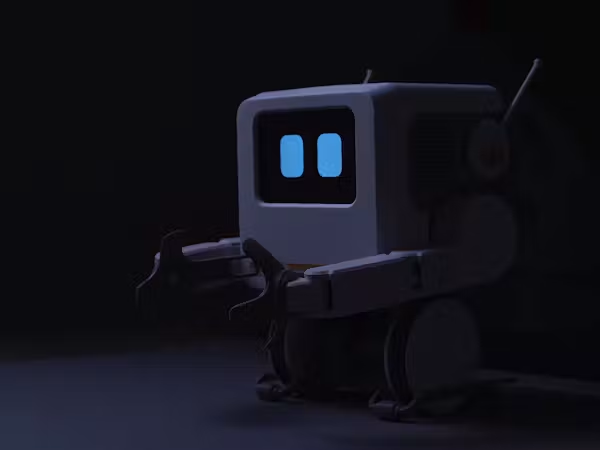
Playing fetch is usually something you do with a dog, but there's no reason a robot can't get in on the fun. YouTuber SECTOR 07 has built an adorable little robot named Fetch that uses artificial intelligence (AI) and computer vision to chase down a ball, scoop it up, and return it to its owner. The entire project is built around an inexpensive Arduino development board, showing how accessible AI-powered robotics has become for hobbyists. Fetch was created to be an affordable, beginner-friendly AI robot. It combines the chunky styling of a 1990s portable television with a personality reminiscent of WALL-E. The robot has a large, boxy head, expressive eyes, a pair of mechanical arms, and two motorized wheels. Part of its charm is the slightly wobbly way it gets around — but don't worry, small supports keep Fetch from tipping over completely. The brains of the operation are provided by an Arduino UNO Q, which combines a Qualcomm Dragonwing processor running Linux with an STM32 microcontroller. This arrangement allows the robot to handle computationally demanding tasks and low-level hardware control simultaneously. The Linux side runs Python code for camera processing and object recognition, while the microcontroller handles motor control, servo movements, audio playback, and other real-time functions. SECTOR 07 designed the robot's enclosure in CAD, paying particular attention to making it easy to assemble. One of the smarter design decisions involved the head, which was created as a foldable structure. Rather than trying to install electronics inside a cramped enclosure, the individual panels can be laid flat for wiring and soldering before being folded into a box. Snap-and-slide connections also helped reduce the number of fasteners needed. The arms required several rounds of revisions. An early design used belts and multiple joints, but problems with tension and slipping made it unreliable. Eventually, SECTOR 07 settled on a simpler arrangement with single rotating linkages that provided enough torque and movement to scoop up a ball. To give Fetch its fetching abilities, a custom computer vision model was trained to recognize balls and human hands. Images captured under different lighting conditions, backgrounds, and angles were used for training. During operation, the software examines the position and size of bounding boxes around detected objects to determine which direction to steer and approximately how far away a target is. Early navigation problems caused Fetch to drive in circles, and the camera would lose track of the ball when it got too close. The solution was to use computer vision for the initial approach, then lower the arms and drive forward for a fixed amount of time to scoop up the ball. Fetch can then locate a person's hand and return the ball to it. For more details about this build, and all the information you need to get started on your own Fetch, be sure to check out the video below. Fetch loves to play fetch (📷: SECTOR 07) The project was built around an Arduino UNO Q (📷: SECTOR 07) Playing with the robot (📷: SECTOR 07)
↑ Back to top
Originally published by Hackster News ↗
· rebuilt here from its own full-text RSS feed · all rights
remain with the publisher, please read and support them there.