← Technology, Science & Infrastructure
▣ Distilled locally
There's a Microchip in Your Toothbrush, and It Can Unlock Your PC
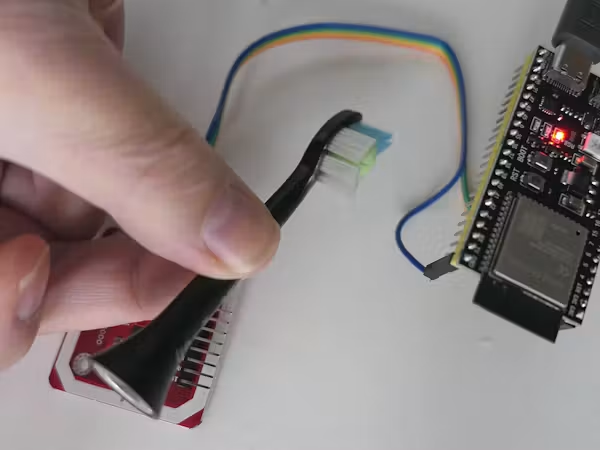
A toothbrush seems like one of the last things that would need a microchip. A plastic stick with some bristles at the end is all it takes to clean your teeth, after all. Nevertheless, Philips has been embedding tiny NFC chips into its Sonicare toothbrush heads for years. Curious about what these chips actually do, YouTuber Circuit Helper decided to investigate. What he discovered was a surprisingly sophisticated tracking system. Naturally, he then hacked the system to serve an entirely different purpose. The chip is hidden beneath a small brown dot near the base of the brush head. It uses near-field communication (NFC) technology to exchange information with the toothbrush handle, allowing the handle to identify the brush head and monitor its usage. The chip doesn't even need a battery, instead drawing power wirelessly from an electromagnetic field generated by the reader. To find out exactly what information was being exchanged, Circuit Helper assembled a custom NFC reader using an ESP32-S3 development board and a PN532 NFC reader module. The two components communicate over I2C, while a USB connection links the ESP32-S3 to a computer running a custom application. With this setup, Circuit Helper could place a toothbrush head near the PN532's antenna and read its contents. The reader generates a 13.56 MHz magnetic field that powers the chip, which then transmits its stored data back through the reader and microcontroller to the computer. As it turns out, your toothbrush knows quite a bit about your brushing habits. By comparing the memory contents of a brand-new brush head with those of a heavily used one, Circuit Helper discovered that the chip tracks total brushing time down to the second, along with operating power levels and brush head wear. One used brush head had accumulated more than five hours of runtime. Circuit Helper found that brushing too hard accelerates the wear counter. When the toothbrush's pressure sensor detects excessive force, the system effectively multiplies the recorded usage time. That means the brush head can reach its replacement threshold sooner if you're particularly aggressive with your brushing. Circuit Helper also wanted to see if he could modify the stored data. The memory is password protected, but thanks to some past reverse engineering work, open source tools are available to write new values. Using these tools, he successfully modified the stored wear data to make a used brush head report 50% remaining life. Finally, Circuit Helper dismantled an old brush head and extracted the tiny chip and its antenna coil. To demonstrate that it wasn't limited to dental applications, he repurposed the assembly as an NFC authentication token capable of unlocking a computer. The next time you replace your toothbrush head, consider what's hiding inside. You might be throwing away a perfectly good NFC chip that could find a second life in your next electronics project. Reverse engineering a toothbrush (📷: Circuit Helper) A high-level overview of the readout circuit (📷: Circuit Helper) Examining the data transmissions (📷: Circuit Helper)
↑ Back to top
Originally published by Hackster News ↗
· rebuilt here from its own full-text RSS feed · all rights
remain with the publisher, please read and support them there.