← Technology, Science & Infrastructure
▣ Distilled locally
This DIY Lockpicker Has AI on Its Side
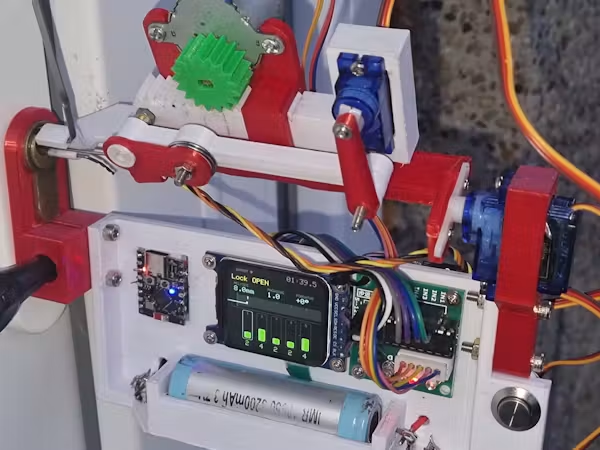
Lockpicking is a skill that traditionally requires a steady hand, a good sense of touch, and plenty of patience. But what if you could hand the job over to a robot instead? Dr. Kun Dániel has built a machine that does just that, combining an ESP32 microcontroller, 3D-printed mechanics, and AI to automatically pick pin tumbler locks without any human intervention. The DIY lockpicking robot is designed to mount directly onto a door's lock cylinder, where it manipulates the internal pins until the lock opens. Rather than relying on brute force or a predetermined sequence of movements, the system uses force feedback to determine how the pins are responding and adjusts its approach accordingly. It is more or less an automated version of what an experienced locksmith does by feel. At the core of the machine is an ESP32-C3 Mini development board, which handles the local control logic and communicates with Anthropic's Claude over Wi-Fi. The mechanical assembly consists of just one stepper motor, two servo motors, and two load cells. These components work together to position the picking tool, manipulate the lock's pins, and measure the forces encountered along the way. Nearly everything else is 3D printed, including the chassis, mounting hardware, and rack-and-pinion mechanism that translates rotational motion into the linear movement needed to probe the pins. A rechargeable lithium-ion battery powers the electronics, and a small OLED display provides real-time feedback about the picking process. To speed up the process, the ESP32 doesn't simply execute a fixed set of instructions. Instead, it gathers force measurements from the load cells and sends information to Claude, which analyzes the feedback and helps determine what the robot should do next. By probing each pin individually and adjusting its movements based on real-time resistance, the machine systematically works through the lock. The OLED display provides status updates and pin measurements throughout the process until the cylinder finally rotates to open the door. Dániel demonstrates the system successfully opening a lock in his video, although he notes that the project isn't quite finished. He has already invested more than 200 hours into its development and is continuing to fine-tune the hardware and software to improve reliability. Once that happens, Dániel plans to release the source code, STL files, and complete documentation. That should make it possible for other makers to build their own versions and experiment with the technology.This robot uses AI to pick locks (📷: Dr. Kun Dániel) The device mounts to a lock cylinder (📷: Dr. Kun Dániel)
↑ Back to top
Originally published by Hackster News ↗
· rebuilt here from its own full-text RSS feed · all rights
remain with the publisher, please read and support them there.