Validate Sovereign AI Sites Before You Commit Capital: eBook
Sovereign AI raises the stakes on every infrastructure decision. When data residency, operational control, and compliance requirements limit where workloads can run, there’s far less room for error. A site that looks viable on paper can become a costly problem if cooling, airflow, or resiliency assumptions don’t hold up under real operating conditions.
That’s why early validation matters. The Cadence Reality Digital Twin Platform helps teams create high-fidelity digital representations of AI infrastructure to evaluate power, cooling, thermal performance, site conditions, and operating scenarios before deployment. In one case, a data hall appeared sound in review, but once leakage and a cooling failure were modeled, more than half the cabinets ran too hot. The design itself hadn’t changed, only the assumptions behind it. Inside, you’ll see how teams can uncover issues like these early, before they turn into expensive constraints.
Download the eBook to discover:
- Why sovereign AI makes infrastructure decisions harder to reverse and more expensive to get wrong
- How to validate site readiness under real operating conditions, not just ideal design assumptions
- How sovereign constraints can expose hidden performance gaps in airflow, cooling, and facility operations
- What it takes to support dense AI workloads when relocation and fallback options are limited
- How to plan for infrastructure drift, hardware refresh cycles, and rising density demands
- A working checklist for what to validate before commitment, during design, and after deployment
When fallback paths are limited, real-world validation matters more. This eBook shows how physics-based validation helps teams make better siting decisions, avoid preventable retrofits, and sustain performance over time.
Read the ebook here.
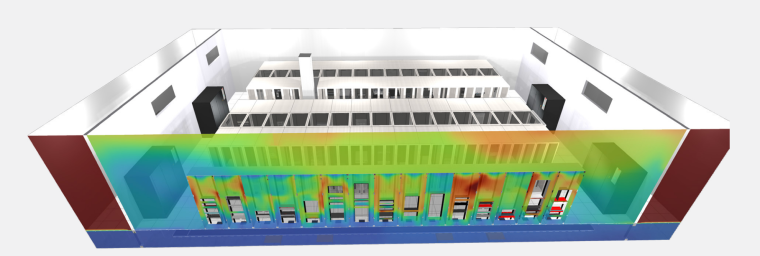
Fig.1: Thermal conditions across racks, the underfloor area, and adjacent air paths, highlighting where power, cooling, and airflow mismatches surface in operating data center environments. Source: Cadence.