← Technology, Science & Infrastructure
▣ Distilled locally
What's in a Name? Home Assistant 2026.11 Brings a Big Overhaul to Entity and Device Naming
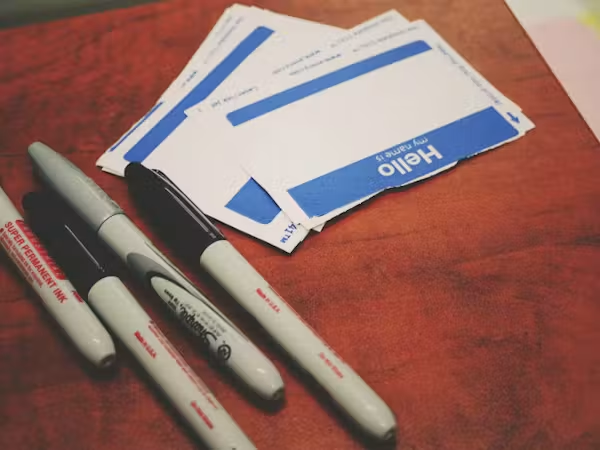
Home Assistant has announced the launch of a new, simplified naming system for devices and entities in its eponymous smart home management platform — after delaying the plan from its originally-scheduled April release to incorporate beta testers' feedback. "Just before the 2026.4 release, we pulled a change to entity naming in Home Assistant," Home Assistant's Artur Pragacz explains. "You'd tested it in beta, told us what you didn't like, and we listened. It took a few extra months, but we believe it's now in a better place. We know many of you spend hours getting your names just right. Most will carry over the way you expect. Some will look different: particularly any entity names that don’t currently start with their device name." The new naming system, due for release in the imminent Home Assistant 2026.11, is designed to simplify naming while expanding it via the addition of child device naming. Where originally Home Assistant supported only one name per device written directly in its YAML configuration file, updates in 2018 introduced a central registry, in 2019 added dedicated area naming, in 2022 added standalone integration name entities appended to the device name, while 2024 saw the addition of floors and labels as independent names. "Each of these steps made sense at the time," Pragacz says, "but together they left us with rules that didn’t always agree. We’ve been untangling them for several years, and this release is the next step." The naming changes will see a consistent set of rules applied across Home Assistant, Pragacz promises, in which entities are named just once rather than being repeated. "Your floor is 'Ground floor,' your area 'Kitchen,' your device 'Coffee machine'” and its entities 'Power' and 'Energy.'" Pragacz explains by way of example. "No name repeats another. Home Assistant will then show context as required: on the Kitchen’s area page, the area is already clear, so the device is listed as just 'Coffee machine,' not 'Kitchen coffee machine.' On the Coffee machine's device page, the header already names the device and its area, so the entities are listed as just 'Power' and 'Energy.' In an entity picker that lists every power sensor in the house, each row also shows the device and area, so you can tell them apart. On a dashboard card, you pick which parts to show: entity, device, parent device, area, or floor, in the order you like." The biggest shift is the introduction of "child devices," designed for devices made up of multiple parts — such as a power strip with multiple independently-controlled sockets. "Our goal," Pragacz says, "is for you to no longer need a naming scheme to keep things tidy. The defaults should be right, and if you do want to rename something you’ll only need to do it once, in one place, because no name holds a copy of another." The new naming convention, covered in more detail on the Home Assistant blog , will be introduced on update to Home Assistant 2026.11, with existing names being migrated automatically; "friendly names" will be retained for backwards-compatibility for now, Pragacz says, but will be retired in the future. Grouped child device support, meanwhile, will only be available on Z-Wave, MQTT, and ESPHome device at launch, along with "some Tuya devices and other integrations," with support for Matter and ZHA a work-in-progress. Home Assistant's next update aims to simplify and unify device naming, with an automatic migration on update. (📷: Home Assistant) The changes are not expected to impact existing automations, while aliases will mean voice control integrations continue to work as normal. (📷: Home Assistant)
↑ Back to top
Originally published by Hackster News ↗
· rebuilt here from its own full-text RSS feed · all rights
remain with the publisher, please read and support them there.